
Improving your home's insulation creates a strong thermal barrier. This barrier slows down heat transfer, keeping your house warmer in the winter and cooler in the summer. The plan involves sealing air leaks, adding insulation in your attic and walls, and upgrading to energy-efficient windows.
Taking these steps cuts down the strain on your HVAC system. More importantly, it lowers your energy bills.
Why Better Insulation Is a Smart Move for Your Home

Many homeowners in Salinas and Monterey watch their energy bills go up, especially when our coastal climate brings chilly nights or heatwaves. Often, the real problem is poor insulation. It lets comfortable, conditioned air sneak out while uncomfortable outside air comes in.
Think of insulation as a protective blanket for your house. It helps your home’s temperature stay stable, just like a thermos keeps coffee hot. This simple barrier is one of the best ways to lower your energy use and make your home more comfortable all year.
The Real Cost of Poor Insulation
When your home isn’t insulated well, your heating and cooling systems work overtime. This constant effort leads to higher utility bills. It also puts unnecessary wear and tear on your expensive HVAC equipment.
The U.S. Department of Energy found that homeowners can save an average of 15% on heating and cooling costs. They do this by air sealing their homes and adding insulation in attics, floors, and crawl spaces.
For homeowners here in Monterey County, this is an investment in comfort and home value. A well-insulated home is cheaper to run, quieter, and more appealing to future buyers. It's a practical upgrade that pays for itself over time.
A well-insulated home acts as a complete system. While attic and wall insulation are crucial, old, drafty windows can undo much of that hard work. Upgrading to modern, energy-efficient windows completes the thermal envelope, ensuring maximum efficiency.
For a full approach to home improvement, consider every part of your home's structure. Proper care, from the foundation to the shingles, contributes to energy savings. This includes maintaining your roof, a smart step in protecting your home's efficiency.

Find Your Home's Weak Spots with an Energy Audit
Before you buy new materials, you need to know where the problems are. Think of it as a detective mission in your own house. A quick visual energy audit can show weak spots where expensive conditioned air is escaping.
This doesn't have to be a complicated project. Grab a flashlight and map out key areas where heat loss and gain are common. For most homes here in Monterey County, that means checking the attic, basement, and areas around windows and doors.
What to Look for During a DIY Inspection
When you look in the attic, check the insulation level. If you can see the tops of the wooden joists, you don’t have enough insulation. Good insulation should look thick and fluffy, not matted down or wet.
As you walk through your home, look for other common problems:
- Visible Gaps and Cracks: Check where pipes, vents, and wiring come through the ceiling from the attic. Any gaps are like open doors for air to travel.
- Dirty Insulation: Dark, dirty spots on insulation are a sign that air is filtering through. This is a clear sign of an air leak.
- Drafty Windows and Doors: On a windy day, run your hand along window frames and exterior doors to feel for drafts. You can also explore how energy-efficient windows create a much tighter seal.
It’s a startling fact, but buildings in the United States are responsible for a massive 43.5% of the nation's total energy consumption. A well-insulated home doesn't just lower your bills; it makes a real environmental difference.
If your DIY inspection finds several problem areas, it might be worth calling a professional. An expert can use tools like thermal cameras to find hidden issues. This ensures you put your money where it will deliver the biggest boost in comfort.
Seal Air Leaks for an Immediate Comfort Boost
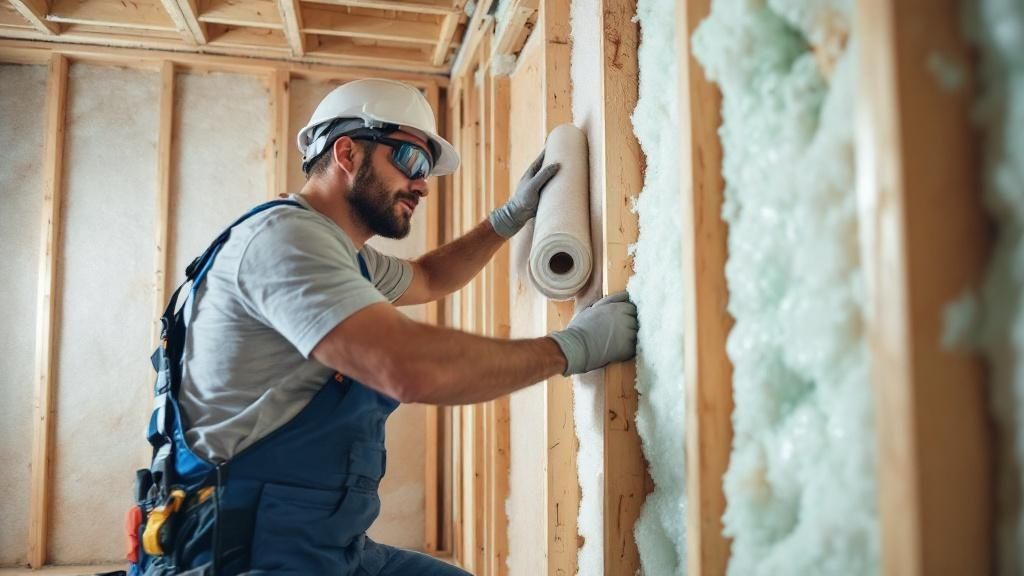
Sometimes the biggest improvements don't come from a huge project. The fastest and most affordable wins often come from tackling small air leaks.
Think about the tiny gaps around your windows, doors, and outlets. Together, they can add up to leaving a window open all year. Those drafts make your HVAC system work overtime, especially during cool Monterey mornings or hot Salinas afternoons.
Sealing them up is a perfect weekend project that pays off right away. You’ll feel fewer drafts and see a drop in your next energy bill.
Your Action Plan for Sealing Drafts
Finding and plugging these air leaks is a straightforward job. The usual suspects are easy to spot and fix with a trip to the hardware store.
Here’s a simple checklist to get you started:
- Windows and Doors: Look at the frames on all exterior windows and doors. Fill any cracks between the frame and your siding with a quality exterior-grade caulk.
- Weatherstripping: Check the seals on all your doors and windows that open. If the weatherstripping is cracked or missing, replace it.
- Outlets and Pipes: For outlets on exterior walls, put a foam gasket behind the faceplate. For bigger gaps around pipes, a can of expanding foam sealant works wonders.
Older sliding glass doors can be a huge source of drafts. Learning about modern energy-efficient patio doors shows how much a replacement can help your home's comfort.
The U.S. Department of Energy has found that homeowners can save an average of 15% on heating and cooling costs just by air sealing their homes and adding insulation. It's a powerful first step to take before bigger insulation jobs.
Living on the coast, you’ll want materials that can handle our climate. Look for durable products like silicone caulk that can manage temperature swings. Focusing on these simple fixes is a huge step toward a more comfortable home.
Choosing the Right Insulation for Your Home
Walking into the insulation aisle can feel overwhelming. You'll see rolls of fiberglass, bags of cellulose, and cans of spray foam. To make the best choice for your home in Salinas, it helps to understand what these materials do and where they work best.
The first thing to know is R-value. It measures how well the material stops heat from moving through it. A higher R-value means better insulation. Different parts of your house need different R-values.
Comparing Common Insulation Types
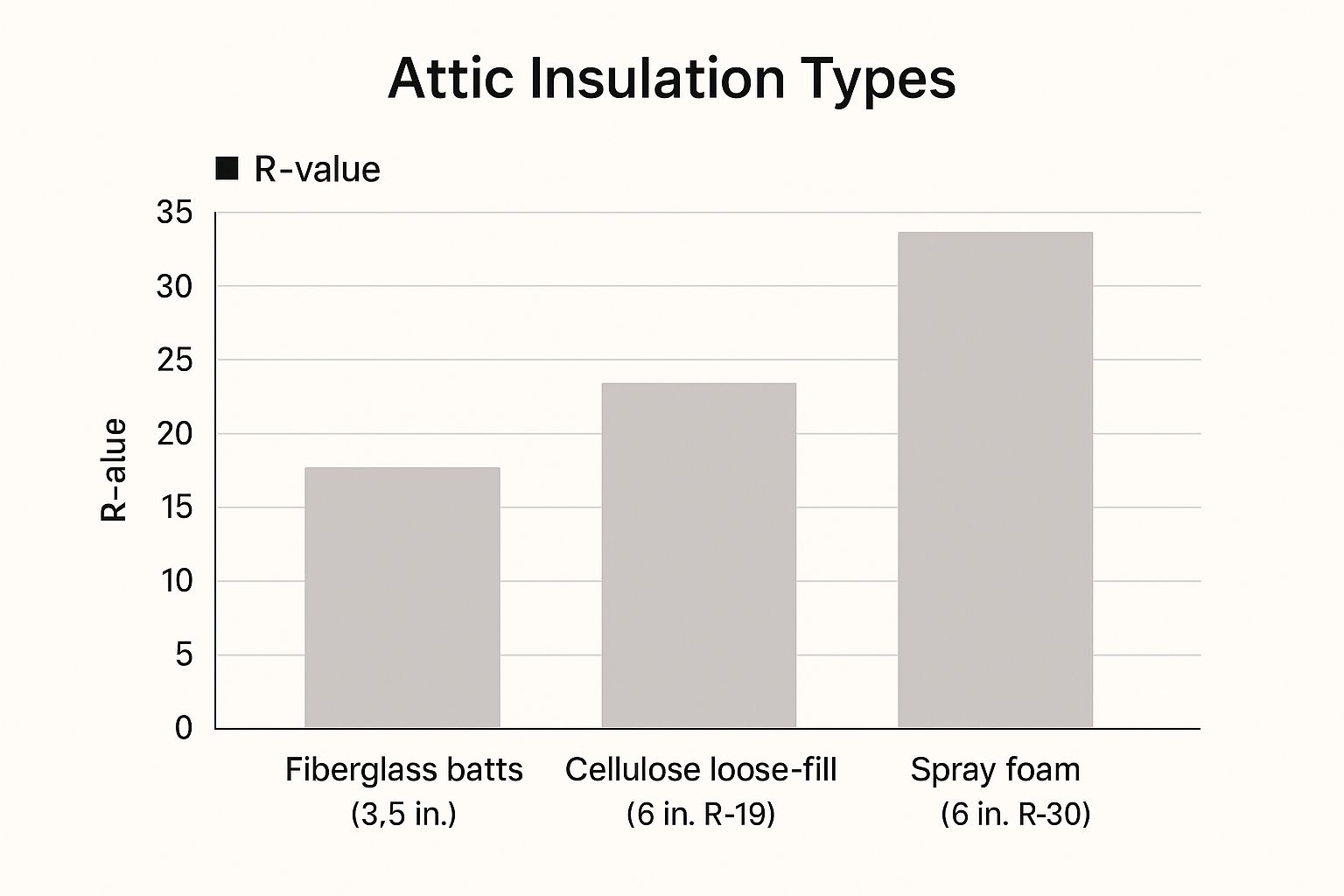
For most homeowners in Monterey County, the choice comes down to a few popular options. Fiberglass batts are good for DIY projects in attics with standard spacing. Blown-in cellulose is great for adding insulation on top of what you already have.
Spray foam offers the highest R-value but is more expensive and needs a professional installer. Knowing these differences helps you match the right material to your home's needs and budget.
| Insulation Type | Average R-Value per Inch | Best For | Pros | Cons |
|---|---|---|---|---|
| Fiberglass | R-2.2 to R-3.8 | Attics, walls, floors with standard spacing | Inexpensive, widely available, DIY-friendly | Can lose effectiveness if compressed, irritant |
| Cellulose | R-3.2 to R-3.8 | Existing walls, attics, irregular spaces | Eco-friendly (recycled), good sound dampening | Can settle over time, requires special equipment |
| Spray Foam | R-3.5 to R-6.5 | Anywhere, especially for air sealing | Highest R-value, excellent air and moisture barrier | Expensive, requires professional installation |
| Rigid Foam | R-4.0 to R-6.5 | Basement walls, exterior sheathing | High R-value, moisture resistant | Not flexible, flammable without a fire barrier |
The push for better home insulation is getting stronger. The global market for home insulation was valued at around $140 billion in 2025. Wall insulation has become a major focus for homeowners looking for serious performance gains.
Remember that improving home insulation is a holistic process. You can insulate your attic perfectly, but if other areas are overlooked, you're still losing energy and money.
When you're looking at insulation, don't forget other parts of your home's thermal envelope. Consider investigating insulated fiberglass garage doors as another smart upgrade. For more ideas, check out our 8 home energy efficiency tips.
Upgrade Your Windows to Complete the Seal
You’ve insulated your attic and walls, but your home still feels drafty. The problem is often your windows. Old, single-pane windows are like holes in your home's thermal shield. They let your heated or cooled air escape.
Upgrading your windows is the final step to creating a complete thermal envelope. Modern windows are a key part of your home’s energy efficiency. For residents in coastal communities like Carmel, this upgrade is a game-changer for blocking drafts.
How Modern Windows Boost Insulation
Today’s high-performance windows are made to stop heat transfer. They often feature double or triple-pane glass with a sealed, insulating pocket between the panes. This gap is usually filled with a dense, harmless gas like argon. You can learn more about what argon gas in windows does to see how it improves performance.
Many new windows also come with a Low-E (low-emissivity) coating. This thin metallic layer reflects heat back to its source.
- In the summer: It reflects the sun’s heat away from your home.
- In the winter: It reflects your furnace’s heat back into the room.
This technology is a game-changer for maintaining a stable indoor temperature. It’s a smart investment that leads to lower energy bills for homeowners in Salinas and the surrounding areas.
The demand for these solutions is growing fast. The global insulation market was estimated at $69.43 billion in 2024 and is projected to climb to $127.70 billion by 2033. For comprehensive window upgrades, it's always a good idea to chat with local window contractors.
Frequently Asked Questions About Home Insulation
It's normal to have a few questions before starting a project. As a local, family-operated business, we've heard just about everything from homeowners in Salinas, Monterey, and the surrounding areas. To help, we've answered some of the most common questions we hear.
How do I know if my attic needs more insulation?
It's easy to check yourself. Look into your attic. If you can see the tops of the wooden floor joists, you probably need more insulation. For most homes in Monterey County, the U.S. Department of Energy recommends having about 13 to 18 inches of insulation.
Can I install new insulation myself?
For some jobs, yes. Laying fiberglass rolls in an easy-to-access attic can be a great DIY project. Just be sure to wear protective gear like gloves, a mask, and long sleeves. But for blown-in or spray foam insulation, it’s best to call a professional. They require special equipment and training to be done safely and correctly.
What is R-value and why does it matter so much?
R-value is a measurement of how well insulation can resist heat flow. A higher R-value means better insulating power. Your attic needs a higher R-value than your walls because heat rises, and good attic insulation is your main defense against heat loss through the roof.
Will new windows really make a big difference in my energy bills?
Yes, they make a huge difference. Swapping old single-pane windows for modern, energy-efficient models is a very impactful upgrade. According to Energy Star, homeowners can save up to 15% on their annual heating and cooling costs. You’ll also notice fewer drafts, less condensation, and a quieter home.
How much does improving home insulation typically cost?
The cost varies a lot. It depends on your home's size, the type of insulation you choose, and whether you do it yourself or hire a professional. A simple DIY air-sealing project might only cost you a few dollars for caulk. A full professional attic re-insulation can cost from several hundred to a few thousand dollars.
Ready to create a more comfortable and energy-efficient home? The team at Signature Glass and Windows, Inc. has been helping homeowners in Salinas and Monterey County for decades. As a locally owned, family-operated business, we are committed to quality craftsmanship and trustworthy service.
Contact Signature Glass and Windows today for a free in-home consultation. Visit us at https://signatureglassandwindows.com or call us at 831-754-8855 to get started.