
If you live in Monterey, Salinas, or Carmel, you may have heard about new energy rules coming soon. California is preparing to roll out updated Title 24 energy standards in 2026. These changes will impact your home's windows, especially if you're planning a remodel.
Think of it like getting a better jacket for your house. A good coat keeps you warm and comfortable, and that’s what new high-performance windows do for your home. The goal is to keep your indoor temperature steady, so your heater and air conditioner don't have to work as hard.
A Homeowner’s Guide to the 2026 Window Codes
So, what’s really changing? The new codes focus on two main things: much better insulation and smarter control over the sun's heat. This is a big deal for us in Monterey County, where the weather can change from coastal Carmel to inland Salinas.
These new rules are about making our homes more comfortable and cheaper to run. They ensure any home project you do is up to modern standards.
The Big Picture for Monterey County Homes
Starting January 1, 2026, the new 2025 California Building Energy Efficiency Standards will be required for all new construction, additions, and major window replacements that need a permit. Homes with old, single-pane windows could soon be out of compliance if the owners pull a permit for a remodel.
This is part of California’s plan to use less energy. The state believes these updates will save a lot of money on energy bills and reduce pollution. You can read the official details on the 2025 energy code webpage.
To make it simple, we broke down the most important updates below.
Key 2026 Window Code Changes at a Glance
Here's a quick summary of the important updates for Monterey County homeowners.
| Area of Change | What It Means for Your Home | Primary Benefit for You |
|---|---|---|
| Performance Requirements | Windows must meet stricter U-factor (insulation) and SHGC (solar heat blocking) values. | Your home will stay cooler in the summer and warmer in the winter, naturally. |
| Project Applicability | The codes apply to new homes, additions, and most window replacement projects needing a permit. | Any big investment you make in your home will meet the highest modern efficiency standards. |
| Energy Efficiency | The new standards are designed to make your whole home more resilient to temperature changes. | You'll have a more comfortable living space and see real savings on your PG&E bills. |
At Signature Glass and Windows, we stay ahead of these code changes. We can recommend energy-efficient windows that not only meet but exceed future requirements. We offer Energy Star-rated products and deep knowledge of California’s rules to make sure every installation is compliant, cost-saving, and ready for the future.
Understanding New Window Performance Ratings
As California's 2026 window energy codes get closer, it helps to know the language of window performance. The terms may sound technical, but they are easy to understand. Knowing them will help you make a smart choice for your Monterey County home.
The two most important ratings are the U-factor and the Solar Heat Gain Coefficient (SHGC). Let's break down what they mean.
What is U-Factor?
Think of U-factor as a measure of how well a window keeps heat from escaping your home. It’s like the rating on wall insulation, but in reverse. For U-factor, a lower number is always better.
A good comparison is a high-quality coffee mug. The better it keeps your coffee hot, the lower its U-factor would be. For your home, a low U-factor window means you stay warmer in the winter without turning up the heat.
This infographic gives a great overview of why these new rules make efficient windows more important than ever for homeowners in Monterey County.
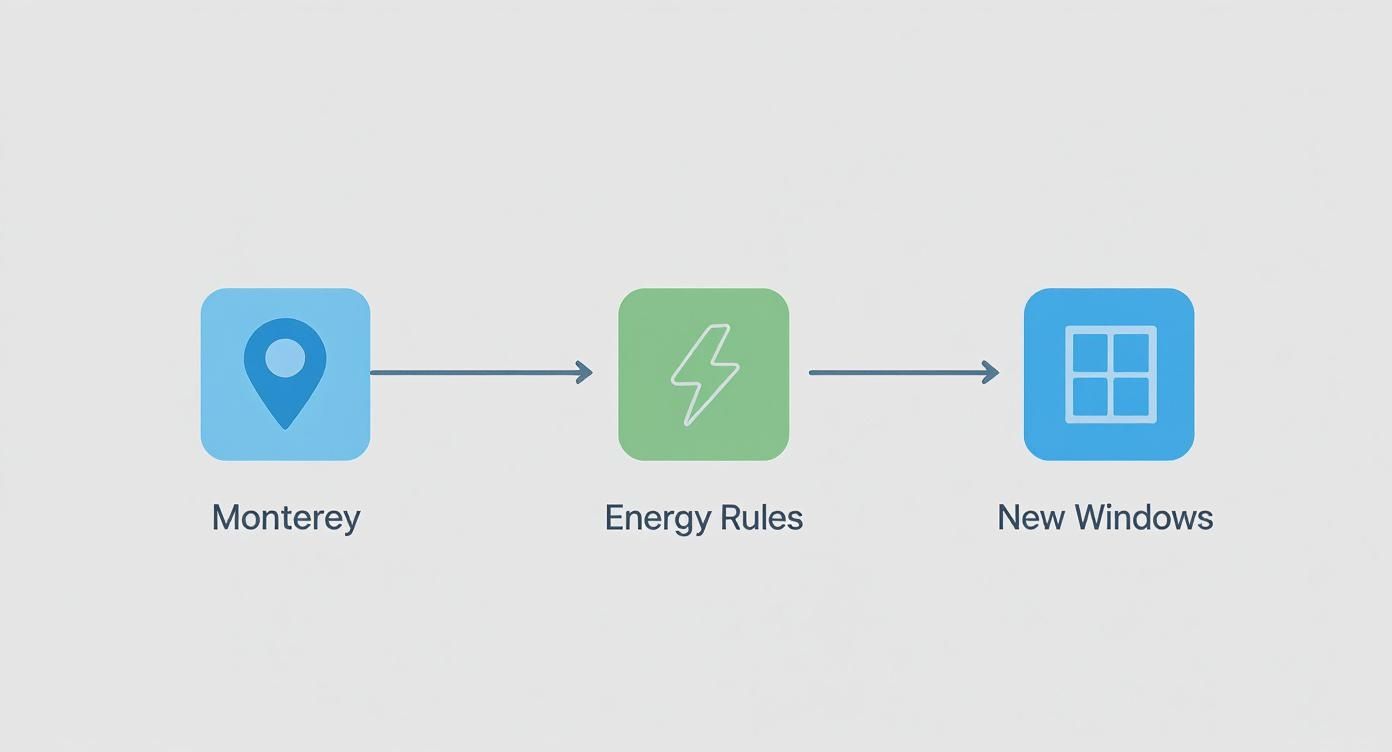
As you can see, local rules are driving the need for homeowners to upgrade their windows. This ensures homes are both compliant with the new codes and more comfortable.
Decoding Solar Heat Gain Coefficient (SHGC)
The second key rating is the Solar Heat Gain Coefficient (SHGC). This number, from 0 to 1, tells you how much of the sun's heat a window lets into your home.
Think of it like sunscreen for your house. A lower SHGC blocks more of the sun's heat, keeping your home cooler and more comfortable on sunny days.
This is very important in sunnier parts of Monterey County, like Salinas. A low SHGC can make a big difference in your summer cooling bills. In cooler spots like Carmel or Pacific Grove, you might want a slightly different SHGC to let in some free warmth from the sun.
By 2026, any window project needing a permit will require windows to meet new, stricter levels for both U-factor and SHGC. Choosing windows that already beat these standards is a smart investment.
How to Find These Ratings on the NFRC Label
So, where do you find this information when shopping for windows? It’s easy. Every good window sold in the U.S. has a label from the National Fenestration Rating Council (NFRC). This label gives you performance data you can trust.
The NFRC label clearly shows both the U-factor and the SHGC, so there’s no guesswork. You can see right away if a window meets the energy rules for our area. To learn more, you can read about how to interpret Energy Star window ratings.
Getting the right mix of U-factor and SHGC is key to keeping your home comfortable and your energy bills low. A local expert can help you pick the perfect windows for your home, especially with the 2026 changes coming.
How the 2026 Codes Affect Your Home Project
You've heard about the new 2026 window energy codes. The big question for every Monterey County homeowner is, "When do these rules apply to my house?" We get this question a lot from people in Salinas and Carmel.
Let’s clear this up: the new rules are not retroactive. You do not have to replace your current windows by 2026.
These codes only apply when you get a building permit for certain projects. The permit is the trigger. If you're just fixing a single cracked pane of glass, you don't need to worry. But for bigger projects, these standards are required.
When Do the 2026 Codes Apply to You?
The new Title 24 energy standards are tied to permitted construction work. This is how California makes sure our homes become more energy-efficient as they are built or upgraded. For homeowners in Monterey County, this means the 2026 codes will be required for projects like:
- New Home Construction: Building a new home after January 1, 2026? Every window will need to meet the new performance ratings.
- Home Additions: Adding a new room or a second story? All windows in that new space must comply with the new codes.
- Major Renovations: Planning a big remodel that includes replacing most of your windows? The new codes will likely apply, especially if you change your home's exterior walls.
The bottom line is simple: if your project needs a permit, your new windows will have to meet the stricter 2026 standards. This is where an experienced local installer can really help.
The Real-World Impact on Your Remodel
Let's look at a real-life example. Say you have an older home in Monterey with original single-pane windows. Right now, they're perfectly fine. But if you remodel your kitchen in 2026 and the plans include new windows, those specific windows must meet the 2026 code.
This can be a big problem for homeowners who aren't prepared. Installing windows that don't meet the code during a permitted remodel will cause a failed inspection. That means delays, extra costs, and the headache of replacing brand-new windows.
Working with an installer who understands local building codes isn't just a convenience—it's your best protection against costly mistakes. A good team makes sure every window is compliant from day one.
Why Partnering with a Local Expert Matters
Building codes can be confusing, but you don’t have to figure them out alone. At Signature Glass and Windows, we are a locally owned, family-operated business that stays on top of these changes. We know the exact rules for homes in Salinas, Pacific Grove, and all over the county.
We can look at your plans and tell you how the new codes will affect your project. If you're thinking about a major remodel, checking out Monterey's trusted window retrofit services is a great first step. A little planning now helps your project go smoothly and add real value to your home.
Choosing Compliant Windows for Your Home
I know that figuring out the 2026 window codes can feel like a lot. But picking the right windows for your Monterey County home is simpler than it seems. It’s a chance to upgrade your home’s comfort and value.
The key is to understand what works best in our coastal climate.
Today's windows are very advanced. Top brands design their products to meet and even beat California's tough energy standards. This means you can invest with confidence, knowing your home will be comfortable, compliant, and cheaper to run.
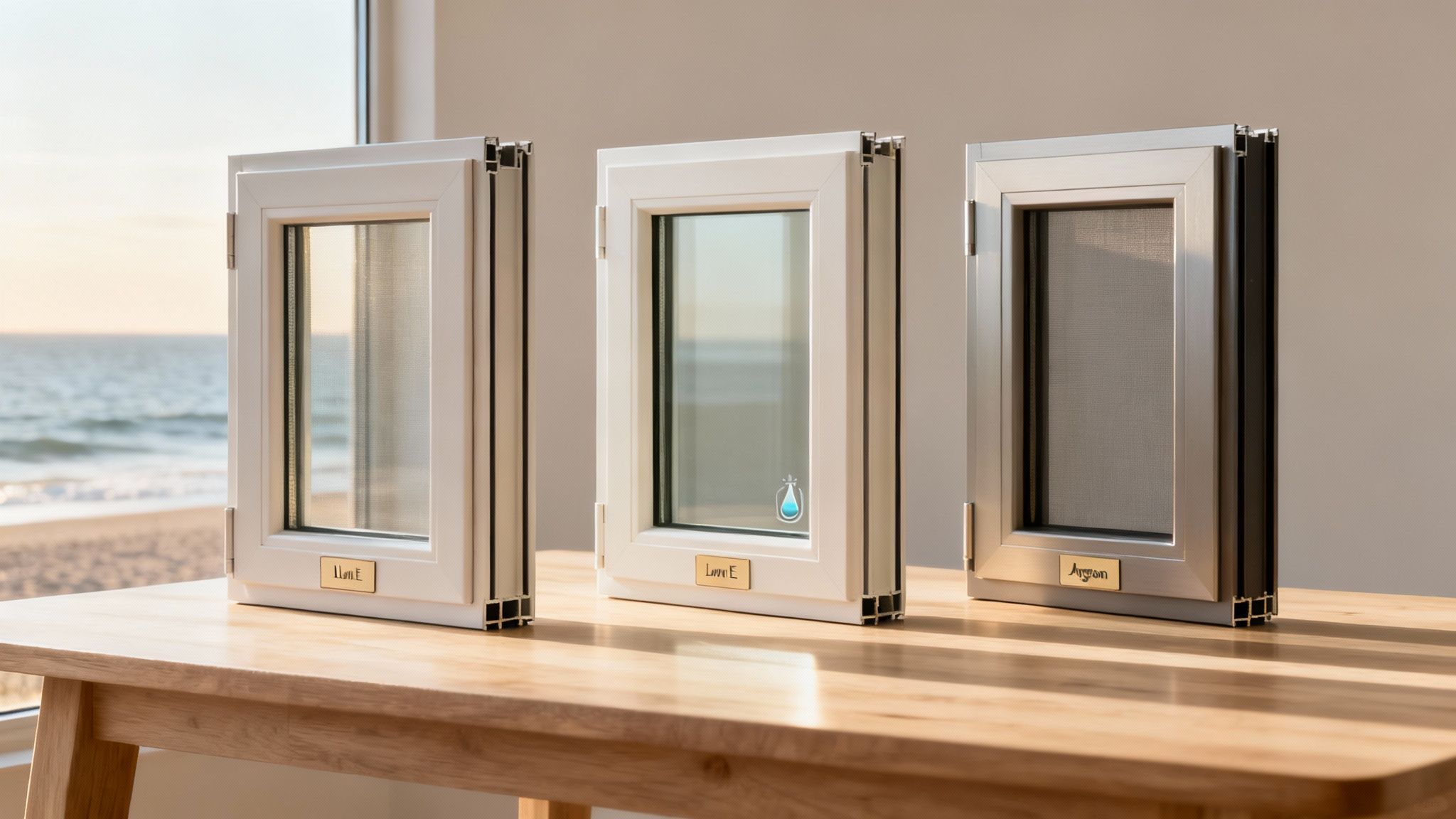
Finding the Right Materials for Our Coastal Climate
For homeowners from Salinas to Carmel, the first big choice is the window frame material. Each option offers a different mix of efficiency, durability, and maintenance.
- Vinyl: Vinyl is popular for a reason—it's a great value. Modern vinyl windows are excellent insulators, need almost no maintenance, and won’t rot in our salty air.
- Fiberglass: If you want superior strength, fiberglass is a great investment. These frames don't expand or shrink much with temperature changes, which means a tighter seal and fewer air leaks.
- Aluminum: Today’s thermally-broken aluminum frames are much better than old ones. They offer solid energy performance with a sleek, modern look.
Essential Features That Boost Energy Savings
Besides the frame, the real magic is in the glass. A few key features work together to keep your home's temperature stable and your bills down. These are the core technologies behind the new 2026 energy codes.
Double-Pane Glass is the modern standard. Two panes of glass are separated by a sealed space filled with gas. This gap creates a strong thermal barrier, cutting down on heat transfer.
Low-E Coatings are a major innovation. A Low-E (low-emissivity) coating is a super-thin, clear layer on the glass. It reflects heat back inside in the winter and blocks the sun’s heat in the summer. You can learn more about why low-emissivity windows are a smart energy upgrade.
Argon Gas Fills give double-pane windows an extra insulating boost. The space between the glass is filled with argon, a safe gas that's a better insulator than air. This improves the window's U-factor.
The combination of double-pane glass, Low-E coatings, and an argon gas fill creates a high-performance window that acts as a powerful shield against energy loss, which is what the 2026 Title 24 requirements are all about.
Comparing Window Materials for Monterey County
To help you find the right fit, here is a quick comparison of common window materials. This can help you weigh the pros and cons for your home and budget.
| Material | Energy Efficiency | Durability and Maintenance | Ideal For |
|---|---|---|---|
| Vinyl | Excellent | Very Low Maintenance | Homeowners who want great value and top energy performance without the need for painting. |
| Fiberglass | Superior | Extremely Durable, Low Maintenance | Homes in areas with big temperature swings; homeowners who may want to paint their window frames. |
| Aluminum | Good (Thermally Broken) | High Durability, Low Maintenance | Modern homes where sleek lines and a large glass viewing area are important. |
Choosing the right windows is a big decision for any homeowner planning a project. By focusing on quality materials and these energy-saving features, you can make your home in Monterey or Salinas compliant, comfortable, and more valuable.
Your Windows and Your Home's Energy System: The Big Picture
Think of your home's energy system as a team. Your HVAC system, insulation, and windows are all key players. When one player isn't doing its job—like old, leaky windows—the rest of the team has to work harder.
High-performance windows are the star of this team. They keep summer heat out and warm air in during winter. This takes a huge load off your HVAC system, so it runs less and saves you money.
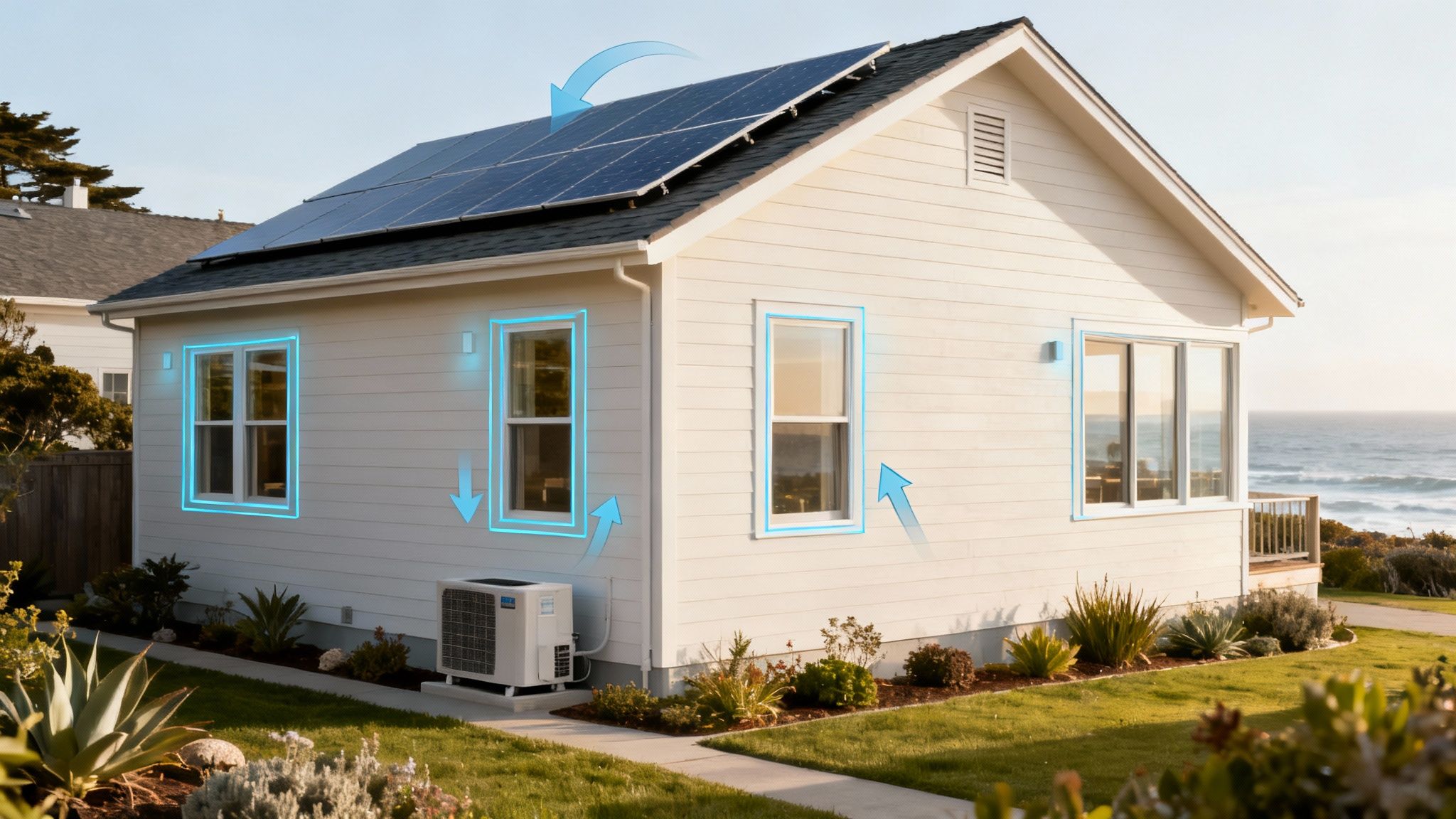
Windows: The Foundation of a High-Performing Home
The upcoming 2026 Title 24 standards are all about this "big picture" approach. The code connects window performance to better insulation, smart ventilation, and even solar power readiness. It’s a shift toward creating a truly high-performing home.
This is especially important for us in Monterey County. Smart window choices can affect everything from solar panel placement to your home's overall design. It's about working with our coastal climate.
Upgrading your windows is the most critical first step. It makes every other energy-saving effort, like installing solar panels, much more effective. After all, why generate clean energy if it just leaks out through old windows?
A Holistic View of Energy Savings
While new windows are a big part of the solution, the most efficient homes have a complete strategy. Thinking about your home's energy use as a whole system is how you unlock the biggest savings. For more ideas, check out these 8 Practical Home Energy Efficiency Tips.
It's also helpful to know a little bit about the science. U-factor and R-value are key terms in the new codes. They simply measure how well a material stops heat from passing through it.
When you see your windows as a vital part of your home's complete energy system, you're making a smart, long-term investment in a modern, comfortable, and future-ready home.
Planning Ahead for Your Window Project
If you have a home remodel planned in the next year or two, now is the perfect time to think about your windows. California's 2026 energy codes are just around the corner. A little planning now can save you headaches, extra costs, and delays later.
Waiting until the last minute is a risky move. When the 2026 deadline arrives, demand for compliant windows will likely go up, and so will prices. Planning your project now puts you ahead of the curve.
Why Acting Now Is A Smart Investment
For homeowners here in Monterey County, being proactive is a huge advantage. It gives you time to choose the right products without feeling rushed. It also lets you use current incentives that might not be around later.
For example, the federal government offers programs to encourage these kinds of energy-efficient upgrades.
The current federal tax credit lets you claim 30% of the cost—up to $600—for installing new ENERGY STAR certified windows. That’s a direct savings on your investment, but these programs can change.
Planning ahead also makes budgeting much easier. If you're thinking about how a window upgrade fits your finances, exploring your options early is smart. Many homeowners find that flexible payment plans can help, and you can learn more about window replacement financing to see what works for you.
Creating Your Proactive Timeline
Taking control of your window replacement starts with a simple plan. The goal is to avoid being surprised by the new rules and to make a smart decision that boosts your home's value.
Here's a simple timeline we suggest to our clients:
- 12-18 Months Out: This is the research phase. Start looking at different window styles and materials that will meet or exceed the 2026 standards.
- 6-12 Months Out: It's time to schedule a professional consultation. An expert can check your current windows and give you a clear estimate with compliant products.
- 3-6 Months Out: Finalize your choices and book your installation. This locks in your price and gets your project on the calendar before the deadline rush.
Homeowners planning remodels in the next 12–18 months should consider upgrading windows now to avoid delays or non-compliance down the road. Acting early can also help you use current incentives like the $600 federal tax credit.
Frequently Asked Questions
We hear many of the same questions from homeowners across Monterey County about these new energy codes. Here are the straightforward answers you need.
Do I have to replace all my windows by 2026?
No. The new codes are not retroactive, so you don't have to replace your existing windows. These standards only apply when you start a project that needs a building permit, like new construction, a home addition, or a major window replacement project.
Will new windows really save me money on my energy bills?
Yes, absolutely. The U.S. Department of Energy says that upgrading from single-pane windows to modern, ENERGY STAR certified models can save homeowners hundreds of dollars each year. It's a home improvement that pays for itself over time through lower heating and cooling costs.
How can I be sure a window meets the new California codes?
It's easy. Every new window sold in the U.S. has an NFRC label. This sticker shows certified ratings for U-factor and SHGC, the two numbers that matter most for compliance. A trusted local installer like Signature Glass and Windows will only recommend products guaranteed to meet local codes.
Are there any rebates or tax credits available?
Yes, there are often programs to make these upgrades more affordable. The federal government offers tax credits for installing high-efficiency windows, which can lower the initial cost. These incentives change, so it's smart to ask us or check the official ENERGY STAR website for the latest information.
What happens if I install non-compliant windows during a permitted remodel?
This is a costly mistake. If your project has a permit, installing windows that don't meet the 2026 energy code will result in a failed building inspection. This can lead to delays, fines, and the expense of tearing out the new windows and replacing them with compliant ones.
Not sure if your windows will meet the new 2026 energy code? Schedule a free consultation with Signature Glass and Windows, Inc. and get ahead of the changes. Visit our website or call us at 831-754-8855 to ensure your home stays comfortable, compliant, and energy-smart.