
There's a common myth that meeting California's tough 2026 building codes requires a massive, expensive full-frame window replacement. But for many homes here in Salinas and Monterey, that’s simply not the case. A professionally installed retrofit window can be compliant, and in many situations, it’s the smarter choice.
Many window providers don't explain how to verify Title 24 compliance, leaving homeowners at risk for failed permits. This guide will show you how to assess your home, understand the codes, and save thousands on unnecessary construction.
Can Retrofit Windows Really Meet 2026 Codes?
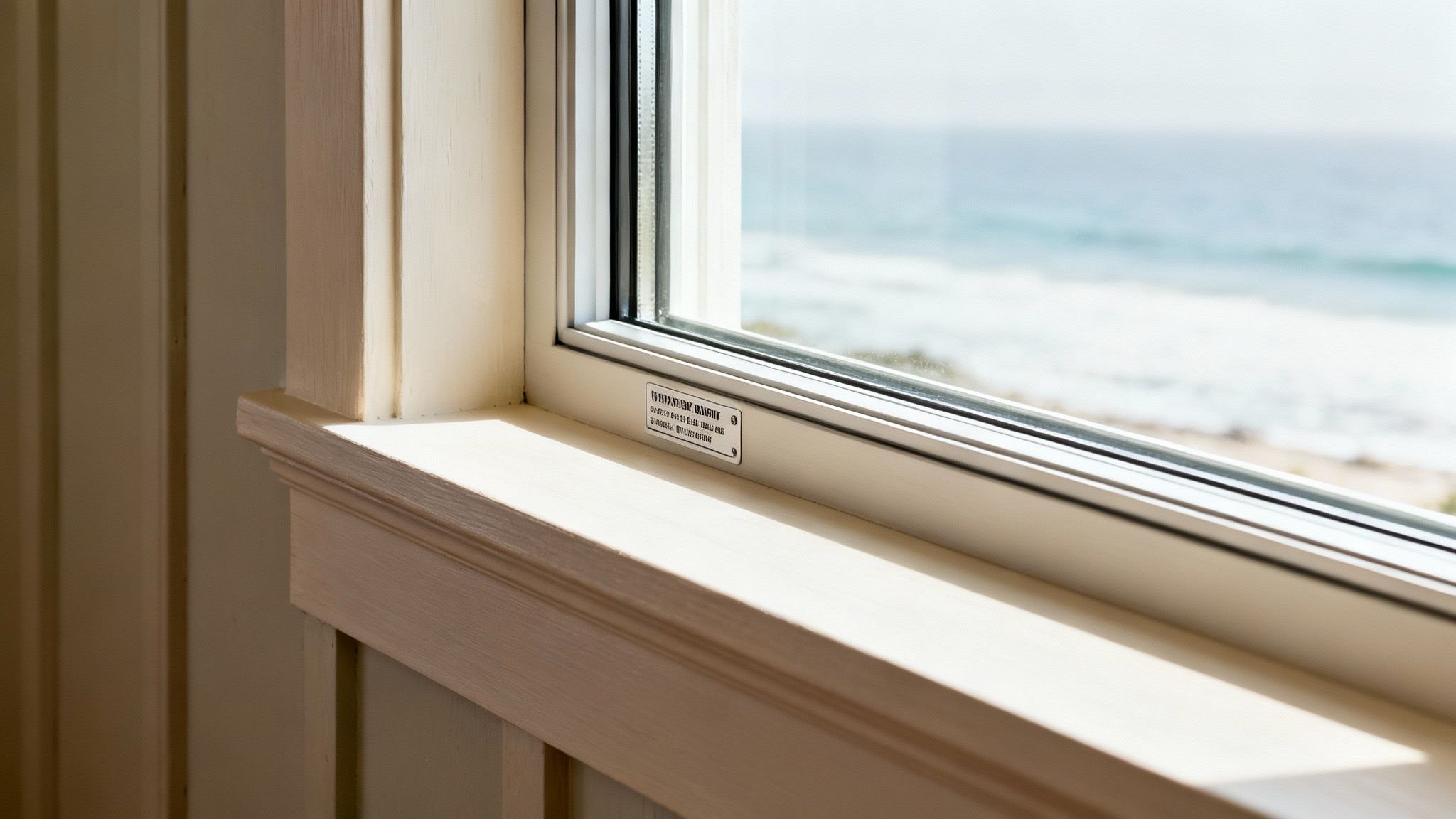
Let's clear the air on the biggest myth in window replacement for homeowners in Monterey County. Many people believe retrofit windows are a "lesser" option that won't pass the upcoming 2026 code changes, but this is a myth.
The truth is that code compliance is about the window's performance ratings, not the replacement method. A high-quality retrofit window can easily meet or exceed the energy standards of California's Title 24. This means you can get a major upgrade without the cost of tearing out your home's window frames.
Preserving Your Home's Character and Budget
For many beautiful homes in Salinas and Carmel with solid frames and custom trim, a full-frame replacement is overkill. A retrofit installation lets you preserve the architectural details you love while upgrading to modern, high-performance glass.
A successful, code-compliant retrofit project boils down to three things:
- Energy Performance: The new window must have a U-factor of 0.30 or lower and the right Solar Heat Gain Coefficient (SHGC) for our local climate.
- Proper Installation: The unit has to be flawlessly sealed within the old frame to prevent drafts and water intrusion. This is non-negotiable.
- Frame Integrity: Your existing window frames must be in good shape—structurally sound and free from rot or major damage.
When these conditions are met, you get huge improvements while saving thousands in labor costs. Modern technologies like energy efficient double glazed windows are key to making this happen.
When you choose the right product and installer, a retrofit isn't a compromise. It's a smart decision that saves money, preserves your home's style, and delivers modern comfort.
At Signature Glass and Windows, we help homeowners figure out if their property is a good candidate for this approach. We give you a clear, honest assessment with no pressure. For a closer look, check out our comprehensive guide to retrofit window installation in Salinas, CA.
Why the 2026 Window Codes Matter for Your Monterey County Home
When you hear "California Title 24 energy codes," it’s easy to tune out. But the updated 2026 standards are a game-changer for homeowners in Monterey County. They create a path to a more comfortable, efficient, and valuable home.
Think of it like a car's MPG rating. The new window codes ensure your house performs at a peak level, saving you money on heating and cooling bills every month. These rules are designed with real benefits for residents in Salinas, Carmel, and beyond.
Turning Technical Specs into Everyday Comfort
When you look at a modern window label, you’ll see key performance numbers. Instead of getting lost in technical terms, let’s talk about what they mean for your daily life.
For our unique coastal climate, two ratings are most important:
-
U-Factor: This is all about insulation. A low U-factor is your best friend on foggy Salinas mornings, keeping warmth in so your heater runs less.
-
Solar Heat Gain Coefficient (SHGC): This measures how well a window blocks the sun's heat. A low SHGC is essential for sunny Carmel afternoons, keeping your home cool without blasting the AC.
Getting these two numbers right is the secret to year-round comfort. For more details, read our guide on what Monterey County homeowners need to know about the new 2026 window energy codes. It’s all about creating the perfect indoor environment.
The High Cost of Cutting Corners
Choosing the wrong windows or an installer who doesn't know the 2026 codes can be a huge headache. The most immediate problem is a failed building inspection. This can force you into costly rework and even ripping out the brand-new windows you just paid for.
Beyond that, you miss out on monthly energy savings. Your home also becomes less appealing to future buyers, who are savvier than ever about energy efficiency.
By 2026, investing in code-compliant retrofit windows isn't just an upgrade—it's a critical step to future-proof your home's value and efficiency.
These stricter rules are arriving as the market for efficiency is growing. The demand for residential energy-efficient windows is projected to jump from USD 12.4 billion in 2025 to USD 28.0 billion by 2035. You can discover more insights about this growing market and see why acting now is a smart financial move.
Decoding Title 24: What Your Windows Actually Need to Do
Diving into California's Title 24 can feel like learning a new language. But for homeowners in Monterey County, it’s just a set of rules to make sure your new windows keep you comfortable and save you money.
Think of it as a blueprint for a high-performance home. These codes ensure every window replacement delivers real results.
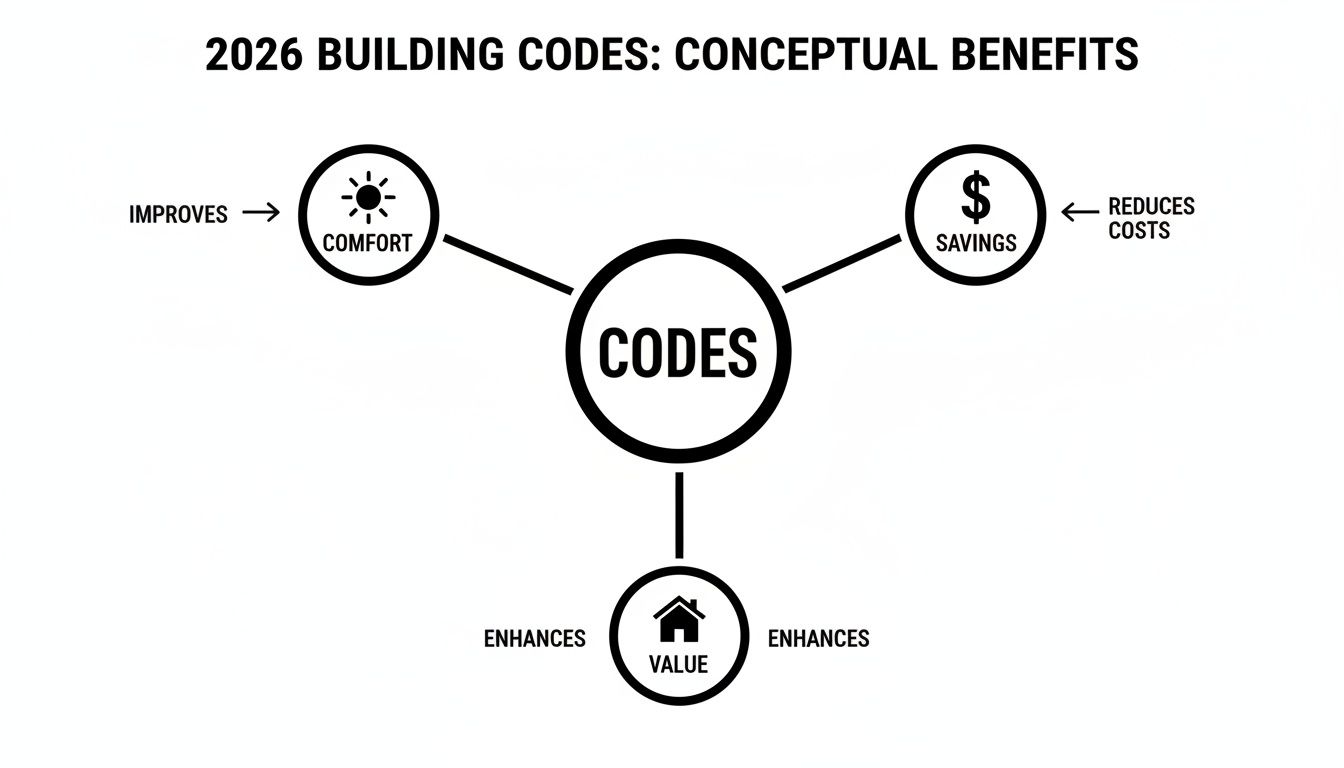
Following the code isn't just about passing an inspection. It’s about making a smart investment that pays you back in lower utility bills and a more enjoyable home.
Here's a quick rundown of the essential rules for your window project.
Key 2026 California Window Code Requirements
| Code Requirement | What It Measures | 2026 Mandate (Example) | Why It Matters for You |
|---|---|---|---|
| U-Factor | How well the window insulates and keeps heat inside. | 0.30 or less for most areas. | Keeps your home warm on cold, foggy Monterey mornings. |
| SHGC | How well a window blocks solar heat from the sun. | Varies by climate; lower is better for hot areas. | Keeps your home cooler on sunny days, reducing A/C use. |
| Egress | The window's clear opening size for emergency escape. | Minimum height, width, and area requirements. | A life-saving feature for bedrooms, ensuring a clear exit in a fire. |
| Tempered Glass | Use of safety glass that shatters into small, blunt pieces. | Required in "hazardous locations" like doors, bathrooms, and near stairs. | Prevents serious injury from accidental broken glass. |
These four elements are the pillars of a compliant and successful window installation. A good contractor will handle all of them for you.
What the NFRC Label Tells You
Every compliant window has a sticker from the National Fenestration Rating Council (NFRC). For our area, from Salinas to Carmel, two numbers on that label are crucial.
-
U-Factor (The Insulator): This shows how well a window stops heat from escaping. For 2026, Title 24 requires a U-factor of 0.30 or less in our climate zone to keep your home cozy.
-
Solar Heat Gain Coefficient (SHGC): This measures how much sun's heat the window blocks. A lower SHGC keeps things cool on bright days and cuts down on air conditioning costs.
If you want to dive deeper, you can explore the differences between U-Factor vs R-Value in our detailed guide.
It's Not Just About Energy: Safety Codes Are Non-Negotiable
While U-Factor and SHGC get a lot of attention, Title 24 also has strict safety rules. These are designed to protect your family, and skipping them is a guaranteed way to fail an inspection.
A truly compliant window installation is about more than just energy savings. It’s about ensuring the safety and security of your home.
Here are the key safety codes:
-
Egress Requirements: In a fire, a bedroom window might be your only way out. Egress codes ensure these windows are large enough for a person to escape.
-
Tempered Glass Mandates: Tempered glass shatters into small, harmless pieces. It's required by code in high-risk locations—like near doors, in bathrooms, and by stairs—to prevent severe injuries.
A knowledgeable local installer handles all of this for you. This is how you get a window replacement that not only passes inspection but also provides lasting peace of mind.
Is Your Home a Good Candidate for Retrofit Windows?
Deciding between a retrofit and a full-frame replacement doesn't have to be hard. For most homeowners in Salinas and Monterey, a quick check of your existing windows can tell you what you need to know.
Think of your current window frame like a house's foundation. If it's solid, you can build on it. Let's walk through how to check your home to see if a retrofit is the smart choice for you.
Green Flags: Signs a Retrofit Is the Right Move
A retrofit is often the perfect solution when your window frames are in good shape. By keeping them, you can save a lot on labor and materials.
Look for these positive signs:
- The Frames are Solid: Gently press on the wood or vinyl of your window frames. If everything feels firm with no give, that’s a great sign.
- The Trim is in Great Shape: If the trim around your windows is undamaged, a retrofit lets you keep that classic character.
- No Evidence of Water Intrusion: Look for dark stains or bubbling paint on the frame or the wall below it. A clean, dry area is what you want to see.
If you can check off these boxes, your home is likely a great candidate for a retrofit. This gives you all the performance of a modern window while keeping the parts of your home that are still working perfectly.
Red Flags: When You Need a Full-Frame Replacement
On the other hand, sometimes the frame is the problem. A full-frame replacement is the only way to guarantee your new windows will perform correctly and pass inspection.
An expert on-site assessment is the only way to be 100% certain, but knowing these red flags empowers you to have a more informed conversation with your installer.
Here are the big warning signs that point toward a full-frame replacement:
- Soft or Spongy Wood: If you press on the window sill and it feels soft, that's a sign of wood rot. You can’t install a new window into a rotten frame.
- Drafts Coming from Around the Frame: If you feel cold air where the window frame meets the wall, the original installation has likely failed.
- Fog or Condensation Between the Glass Panes: Moisture between the panes of a dual-pane window means the seal is broken and bigger frame issues may be present.
Getting this right is more critical than ever, as industry forecasts predict a surge in window replacement projects. About 44% of jobs will be planned replacements. You can learn more about window industry trends to see why so many are focusing on quality.
Our Process for Guaranteed Code Compliance
Picking the right window is only half the job. The installation itself is what ensures your project meets code and lasts for decades. At Signature Glass and Windows, our process for homeowners across Salinas and Monterey takes all the guesswork out of it.
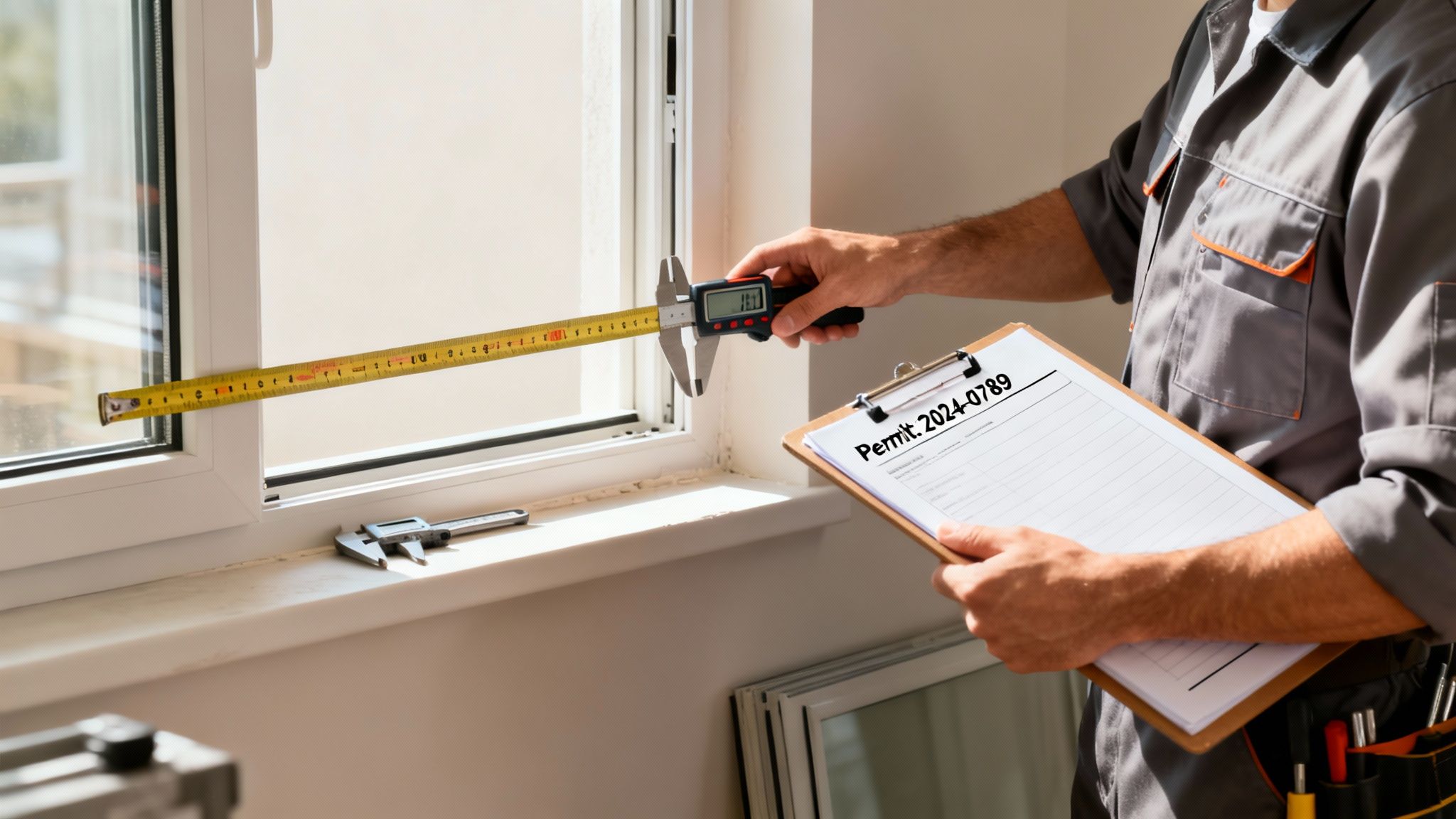
A modern retrofit in 2026 is about navigating codes as much as the physical window. The global windows market is set to grow from USD 214.2 billion in 2026 to USD 355.1 billion by 2035. You can read the full research about this market trend to see why expert installation is now a key part of the investment.
The No-Obligation Home Assessment
It all starts with a no-pressure walkthrough of your home. A team member will visit your property in Carmel, Salinas, or a nearby community to inspect your window frames. We check for rot, water damage, or structural issues.
This initial evaluation is a conversation, not a sales pitch. We’ll walk you through what we see and give you a straight recommendation based on our decades of local experience.
Precision Measurement and Product Selection
Once we confirm your frames are in good shape, we get down to the details. We take precise measurements because a perfect fit is what stops drafts and locks in energy efficiency.
From there, we help you find ENERGY STAR certified products. We'll select windows with the right U-factor and SHGC ratings to meet Monterey County's Title 24 energy codes.
A successful retrofit hinges on a high-performance window and a flawless installation. One without the other will always fall short of 2026 code requirements.
Permitting and Professional Installation
Dealing with the permitting process in Salinas or Monterey can be a headache. That's why we take it completely off your plate. We handle all the paperwork to make sure your project is fully approved before we start.
Our factory-certified installers then bring their expertise to your home. To ensure your retrofit is seamless and compliant, using professional general contractor services is often essential. We leave your home cleaner than we found it, with beautiful new windows ready for their final inspection.
Learn more about Monterey’s trusted window retrofit services and what sets us apart on our site.
Saving Money with a Code-Compliant Retrofit
Meeting the 2026 window codes is a direct route to saving money. For homeowners in Salinas and Monterey County, choosing the right window retrofit is one of the smartest investments you can make in your home.
A retrofit strategy changes the math on window projects. By keeping your home’s original frames, you avoid the high labor and material costs of a full tear-out. This can save you thousands right from the start.
Long-Term Savings on Your Utility Bills
The savings don't stop after the installation. Upgrading to modern, energy-efficient windows is a powerful way to cut your monthly energy bills.
The U.S. Department of Energy estimates that replacing old windows with ENERGY STAR certified models can lower energy bills by an average of 12–25%. This steady drop in expenses is a huge part of the overall return on investment for window replacement.
Financial Incentives That Lower Your Cost
On top of project savings and lower utility bills, fantastic financial incentives are available. These programs reward homeowners for making energy-conscious upgrades.
Many homeowners don't realize they can get money back for making their homes more efficient. These incentives directly reduce the final cost of your project.
The federal government offers a valuable tax credit to help you recoup some of the cost:
- Energy Efficient Home Improvement Credit: You can claim a tax credit for 30% of the project cost, up to a $600 maximum each year.
- How to Qualify: The windows you install must meet ENERGY STAR "Most Efficient" certification requirements.
Working with an experienced installer ensures the products you select are eligible for these credits. This helps you stack every available saving and maximize your investment.
Your Top Questions About 2026 Window Codes Answered
Diving into window replacements can feel overwhelming, especially with the upcoming 2026 codes. As local experts in Monterey County, we've heard every question you can imagine.
Here are the answers to the questions homeowners ask us most.
Common Questions from Homeowners
What happens if my new windows don't actually meet the 2026 code?
If your new windows don't meet Title 24 standards, they won't pass the final building inspection. This means your permit remains open, and you could be forced to replace the non-compliant windows at your own cost. That's why getting it right the first time with an experienced installer is so critical.
My old window frames have some minor damage. Can I still do a retrofit?
Most likely, yes. Minor cosmetic issues like scuffed paint are rarely a problem. As long as the frame is solid with no rot or warping, a retrofit is still a fantastic and budget-friendly choice for your home in Salinas or Carmel.
Do I really need a permit just to replace my windows in Monterey County?
Yes, you do. Replacing windows is considered an alteration that requires a building permit. A permit ensures the job is done correctly and triggers an inspection to verify compliance with energy codes, egress safety, and tempered glass rules.
How can I be sure my bedroom window is a legal egress window?
Egress codes are there to save lives by providing an escape route in a fire. The window’s clear opening generally needs to be at least 5.7 square feet. A professional installer will measure your openings and confirm the new windows meet this crucial safety standard.
Are there any tax credits or rebates for installing these new high-efficiency windows?
Absolutely! The federal Energy Efficient Home Improvement Credit allows you to claim a tax credit for 30% of the project cost, up to $600 per year. The key is that the windows must meet the ENERGY STAR "Most Efficient" certification. Your window professional can confirm which products qualify.
Ready to upgrade your home with total confidence? The team at Signature Glass and Windows, Inc. is a locally owned, family-operated business that lives and breathes these codes. We provide expert guidance and flawless installations to ensure your retrofit windows look great and pass inspection.
If you're in Monterey, Salinas, or surrounding areas, we can help you evaluate if your home qualifies for a retrofit that meets code and saves money. Contact us today for a free consultation or call us at 831-754-8855 to schedule a no-obligation walkthrough.