
Have you ever used a thermos to keep coffee hot or a cooler to keep drinks cold? If so, you already understand the basic idea behind Low E glass. It's a special type of window glass with a super-thin, invisible coating that reflects heat.
This coating acts like a smart gatekeeper for your home. It's a popular choice for homeowners in Salinas and Monterey because it helps manage your home's temperature all year round.
What Is Low E Glass? A Simple Guide
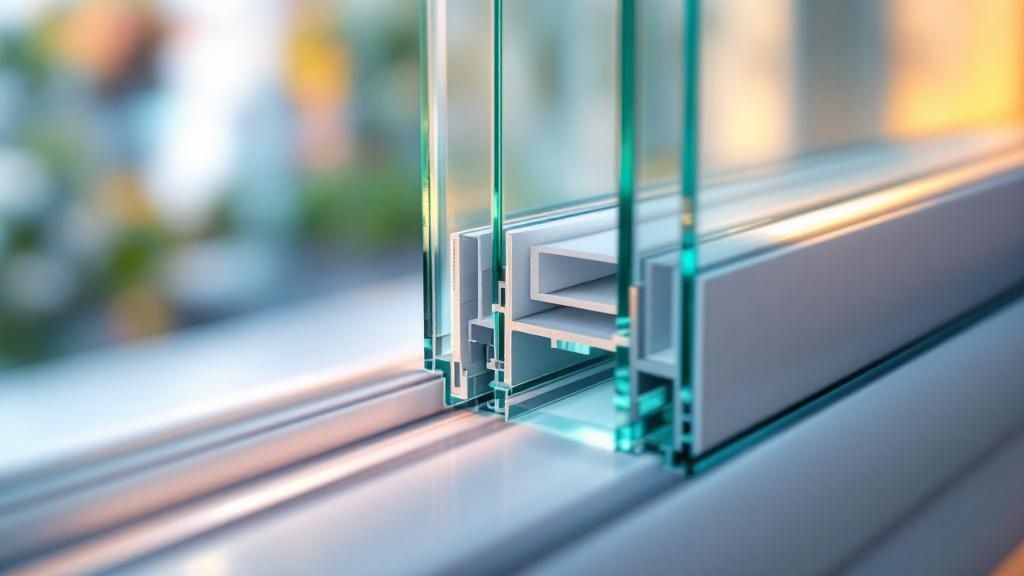
The "E" in Low E stands for emissivity. This is just a fancy word for how well a surface gives off heat. So, low-emissivity means the glass is bad at giving off heat, which is a good thing for your windows.
Think of it like a high-tech blanket for your home. During a hot Monterey summer, the Low E coating reflects the sun's heat away from your house, keeping it cooler inside. In the winter, it does the opposite by trapping your furnace's heat inside, so you stay warm and cozy.
Key Benefits for Monterey County Homeowners
For those of us living in Salinas, Carmel, and other parts of Monterey County, this technology offers real, practical benefits. It helps keep your indoor temperature much more stable. This takes a lot of strain off your air conditioner and heater.
Better efficiency means lower energy bills. According to the U.S. Department of Energy, energy-efficient windows with Low E glass can lower a homeowner's heating and cooling costs by about 15%. This is a smart investment for any home.
Low E glass is like sunscreen for your house. It blocks most of the invisible, damaging ultraviolet (UV) rays. At the same time, it lets in plenty of beautiful natural light.
More Than Just Temperature Control
The benefits don't stop with managing heat. Here are a few other reasons homeowners in our community are switching to Low E windows:
- UV Protection: It blocks up to 99% of harmful UV rays, which protects your furniture, floors, and art from fading.
- Reduced Glare: The coating helps cut down on harsh sunlight. This makes it easier to watch TV or use a computer near a window.
- Year-Round Comfort: It helps get rid of hot spots and cold drafts that often happen near windows.
Here’s a quick chart to help you see the benefits at a glance.
Low E Glass At a Glance
| Feature | What It Does for Your Home |
|---|---|
| Microscopic Metallic Coating | Reflects heat, keeping your home cooler in summer and warmer in winter. |
| High Visible Light Transmittance | Lets in natural sunlight without the extra heat or UV rays. |
| UV Ray Blocking | Protects furniture, flooring, and artwork from fading over time. |
| Improved Energy Efficiency | Reduces how hard your HVAC system has to work, leading to lower utility bills. |
| Enhanced Comfort | Minimizes hot and cold spots near windows for a more consistent indoor temperature. |
Upgrading your windows is one of the best ways to make your home more comfortable and efficient. You can find more tips in our guide on how to save energy at home.
To learn more about how different types of glass work, you can read about understanding other advanced glass properties like hydrophilic and hydrophobic characteristics.
How Low E Glass Controls Your Home's Temperature
To understand why low E glass is such a game-changer, you need to know how it acts as a gatekeeper for your home's temperature. The invisible metallic coating is very smart. It's designed to be selective about what kind of energy it lets through your windows.
It works day and night to keep you comfortable. During a hot Salinas summer, it reflects the sun's heat back outside. In the winter, it traps the warmth from your heater inside your home where you want it.
Understanding Window Performance Ratings
When you shop for new windows, you’ll see terms like U-Factor and SHGC. They might sound technical, but they are simple ratings that tell you how a window will perform. For homeowners here in Monterey County, these are the two most important numbers to look for.
Think of these ratings like the nutrition label on your food. They give you the facts you need to make a smart choice for your home's energy health.
- U-Factor: This tells you how well a window keeps heat from escaping. The rule is simple: the lower the U-Factor, the better the window insulates.
- Solar Heat Gain Coefficient (SHGC): This measures how much of the sun's heat a window blocks. Again, a lower SHGC means less unwanted solar heat gets inside your home.
In short, U-Factor is about keeping heat in during the winter. SHGC is about keeping heat out during the summer. Finding the right balance is the key to comfort in our local climate.
Putting the Ratings in Perspective
Let's use an analogy to make this clearer. Imagine your window is a pair of high-quality sunglasses for your house. The SHGC is like the tint of the lenses. A low SHGC is like dark sunglasses that block the bright glare on a sunny Monterey afternoon.
Now, think of the U-Factor as a good winter jacket. On a chilly Salinas evening, a window with a low U-Factor acts like that jacket, keeping your furnace's heat from leaking outside.
How the Coating Works with Different Energy
The genius of the low E coating is that it can tell different types of energy apart. It reflects long-wave infrared energy (which is heat) but allows short-wave visible light to pass through. This lets you fill your home with natural light without the extra heat.
To boost performance even more, we often pair low E coatings with an inert gas fill between the glass panes. You can learn more about what argon gas in windows does to improve insulation. This powerful combination creates a strong barrier against energy loss, keeping your home comfortable and your bills down.
The Real-World Payoff of Low E Windows
The science is interesting, but what really matters to homeowners in Monterey County is what these windows do for you. The benefits go beyond technical terms. You will feel and see the difference every day.
From saving money on your energy bills to protecting your furniture from fading, upgrading to low E windows is a smart investment. This technology is perfect for our Central Coast climate, handling everything from a hot Salinas day to a foggy Carmel morning.
Slash Your Monthly Energy Bills
The most immediate benefit is the savings you'll see on your energy bills. By reflecting the sun's heat in the summer and keeping warmth inside during the winter, these windows give your HVAC system a break. A system that doesn't work as hard uses less energy.
These savings can be significant over time. It is also a good idea to look into other ways to achieve HVAC energy savings.
Protect Your Home from Sun Damage
Think of low E glass as sunscreen for your house. The sun's UV rays can fade furniture, floors, and artwork. Standard windows let these harmful rays come right through.
Low E windows, however, block up to 99% of that damaging UV radiation. This powerful shield helps keep your rugs, sofas, and paintings looking new for years to come.
Enjoy Consistent, Year-Round Comfort
Do you have a room that gets too hot in the afternoon? Or do you feel a chill when sitting next to a window on a cold night? Low E glass can fix these problems.
These windows create a more stable temperature from room to room by managing heat so well. You can finally enjoy every part of your home comfortably, no matter the season. It’s a big reason why many homeowners are switching to modern energy-efficient windows.
For coastal residents in Monterey and Carmel, there’s another big plus: reduced condensation. The inside pane of glass stays warmer, which makes it harder for moisture to form and block your beautiful ocean views.
Increase Your Home's Resale Value
Upgrading your windows is a smart financial move that adds real value to your property. Today’s homebuyers want homes that are comfortable and cheap to maintain. Energy-efficient features are a huge selling point.
Installing low E windows shows that your home is well-maintained and modern. This upgrade can make your home stand out and help you get a higher price. It also helps your home meet California's Title 24 energy standards, which is important for any remodeling project.
Choosing the Right Low E Coating for Our Climate
When you look into low E glass, you’ll find that not all coatings are the same. Picking the right one is key to getting the best performance for your home on the Central Coast. It can be the difference between a good upgrade and a great one.
The two main types are soft-coat and hard-coat Low E. Think of it like choosing a jacket for Monterey's weather. A hard-coat is like a durable, all-weather shell. A soft-coat is like a high-performance jacket that gives you the best insulation.
Hard-Coat Low E Glass
Hard-coat Low E is made by applying the coating to the glass while it’s still very hot during manufacturing. This fuses the coating to the glass, making it very durable.
It performs well, but it generally offers less insulation than a soft-coat. Because it's so tough, you might see hard-coat used in single-pane windows.
Soft-Coat Low E Glass
This is where the real magic happens. Soft-coat Low E is applied in a high-tech vacuum chamber after the glass has been made. This process allows for multiple, ultra-thin layers of silver, which gives it a high-performance boost.
This advanced coating is more delicate, so it has to be protected. It’s sealed inside a dual-pane window, facing the gas-filled space between the panes. This setup provides much better insulation, which is why it’s the top choice for residential windows.
See what a difference this makes in the chart below.
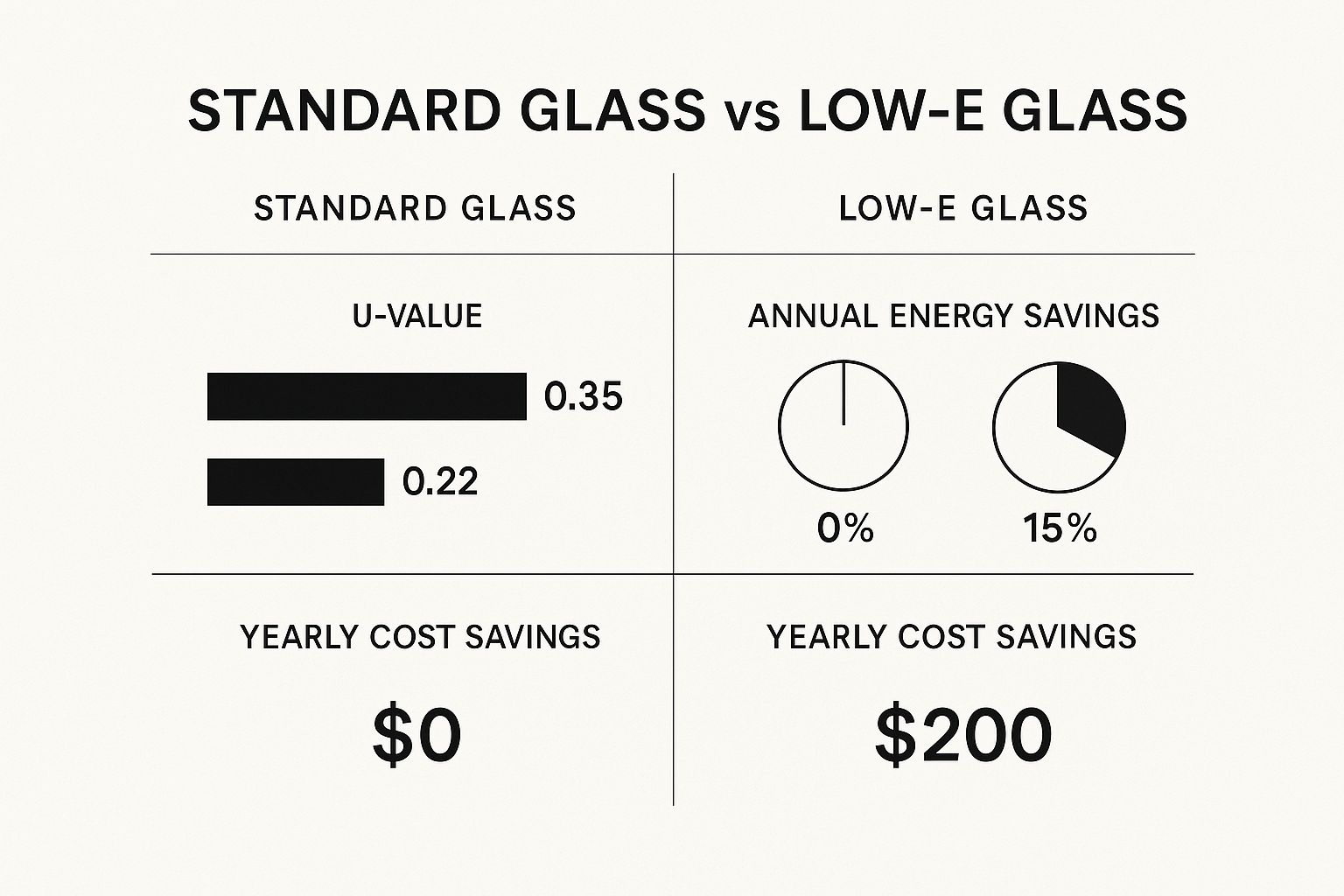
As you can see, switching to low E glass greatly improves insulation (a lower U-Value is what you want!). It can also lead to serious savings on your energy bills each year.
Soft-Coat vs Hard-Coat Low E Glass Comparison
| Feature | Soft-Coat Low E | Hard-Coat Low E |
|---|---|---|
| Performance | Superior insulation & UV blocking | Good insulation & UV blocking |
| Manufacturing | Applied after glass production in a vacuum chamber | Fused to the glass during production |
| Durability | More delicate; must be sealed inside a dual-pane unit | Highly durable and scratch-resistant |
| Clarity | Crystal clear with almost no color distortion | Can have a slight blue or gray tint |
| Cost | Slightly higher initial cost | More budget-friendly |
| Best For | Residential dual-pane windows in mixed climates | Single-pane windows, storm doors, some commercial uses |
While both are better than standard glass, soft-coat's superior performance makes it the clear winner for most homeowners.
Our Recommendation for Monterey County Homeowners
For homeowners in Salinas, Monterey, and Carmel, we almost always recommend soft-coat Low E glass. Our climate has many contrasts, from warm, sunny afternoons to cool, foggy evenings. The superior insulating power of a soft-coat proves its worth here.
It does the best job of blocking solar heat when the sun is out. It’s also the most effective at keeping your home’s warmth from escaping when it gets chilly.
The industry agrees. In North America, soft coat Low-E glass is expected to capture nearly 65% of the market share because of its superior insulation. This trend is driven by strict energy codes like California’s Title 24. You can read the full research on Low-E glass market trends to learn more.
What to Expect from Your Window Installation
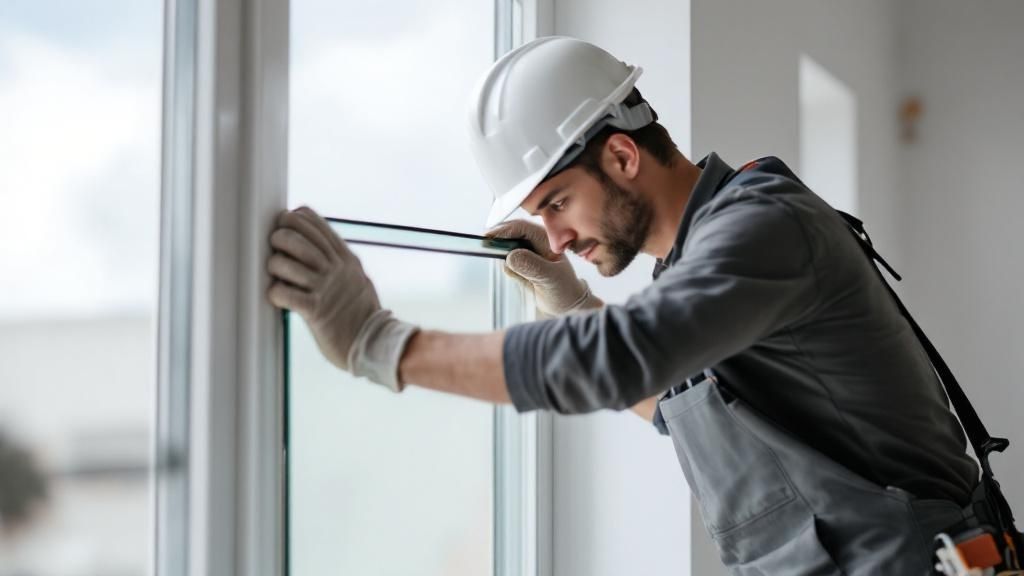
Deciding to upgrade to new low E glass windows is a big step. It's an investment that makes your home more comfortable and energy-efficient. Knowing how the installation works can give you peace of mind.
As a local, family-owned business serving Salinas and Monterey, we treat your home with care. Our process is built on quality work and clear communication. We make sure the experience is as smooth as possible for you.
The Initial Consultation and Quote
It all begins with a conversation. One of our experts will visit your home to talk about your needs, take measurements, and show you product options. We'll help you pick the right window style and low E glass package for our Central Coast climate.
After that, you'll get a clear, detailed quote. It will break down every part of the project so you know exactly what you're paying for.
We believe in being transparent. Your quote will outline the costs for the windows, frame material, and the Low E coating you’ve chosen. There are no hidden fees.
The Installation Day Process
When installation day comes, our certified team gets to work. Our top priority is protecting your home and property. We are careful and respectful from start to finish.
Our team will:
- Prepare the Work Area: We lay down drop cloths and protective covers inside and out to keep your home clean.
- Remove Old Windows: We carefully remove each old window, making sure not to damage the surrounding wall or siding.
- Install New Windows: Your new low E glass windows are fitted into place. We make sure each one is perfectly level and secure.
- Seal and Insulate: We use high-quality sealants around the frame to create an airtight barrier that stops drafts.
- Clean Up: Once the last window is in, we clean everything up. We haul away all the old materials and leave your home as clean as we found it.
The Final Walkthrough
We’re not finished until you are completely happy. We’ll do a final walkthrough with you to show you how your new windows work and answer any questions. Your peace of mind is our top priority.
A professional installation is just as important as the quality of the window. For more details, check out our window installation guide.
Frequently Asked Questions About Low E Glass
Upgrading your windows can bring up a lot of questions. We've gathered the most common ones we hear from homeowners in Salinas and Monterey. Here are simple, straightforward answers to help you make an informed choice.
1. How much more does Low E glass cost than standard glass?
Upgrading to low E glass does have a higher upfront cost. Generally, you can expect it to add about 10% to 15% to the total cost of a new window. However, it's best to see this as an investment. The money you save on energy bills over time often pays for the initial cost.
2. Can a Low E coating be added to my existing windows?
Unfortunately, no. A true low E coating is applied in a factory when the window is made. It cannot be painted on or added later. While you might see aftermarket window films, they are not as durable or effective as a factory-applied coating and can bubble or peel over time.
3. Will Low E glass make my home look dark or tinted?
Not at all. This is a common myth. Modern low E glass is designed to be almost invisible. It lets in plenty of beautiful, natural sunlight while blocking the invisible heat and UV rays. Your rooms will stay bright, and your views of the Monterey Bay or Salinas Valley will remain crystal clear.
4. Is Low E glass still effective in foggy coastal areas like Monterey?
Yes, it is very effective. The insulating power of low E glass works 24/7. On cool, foggy days, it keeps your home's heat inside. When the sun comes out, it reflects unwanted solar heat away. It also reduces condensation on your windows, keeping your views clear.
5. How can I tell if my current windows already have Low E glass?
There's an easy trick called the flame test. Hold a lit match or a small LED light near the glass. In a dual-pane window, you'll see four reflections. If one of the reflections is a different color (like green or purple), you have a Low E coating. If all four reflections are the same color, you likely have standard glass.
Ready to feel the difference that Low E glass can make in your home? As a local, family-owned business with decades of experience, Signature Glass and Windows Inc. is here to help homeowners in Salinas, Monterey, and Carmel find the perfect solution.
Contact us today for a free, no-obligation consultation. Visit us online at https://signatureglassandwindows.com or call us at 831-754-8855 to get started.