
Waking up to foggy windows is a common frustration, but the reason behind it is usually simple. That fog is just condensation, the same thing that happens when a cold glass "sweats" on a hot day. It all comes down to warm, moist air inside your house meeting the cooler surface of your window glass.
Why Your Windows Are Foggy: A Quick Guide for Homeowners

For anyone living in Monterey County, from Salinas to Carmel, figuring out why your windows are fogging up is the first step toward solving the problem. The most important clue is figuring out where the condensation is. That one detail tells you almost everything you need to know.
The science is all about the dew point—that specific temperature where water vapor in the air turns back into liquid water. Condensation forms on your windows when the warm, humid air in your home hits the cold glass. This is especially true for older, single-pane windows, which don't insulate well against the outside cold. You can find some great additional insights on this process from other industry experts.
Key Takeaway: If you can wipe the fog away from the inside, the problem is almost certainly too much humidity in your home. But if the fog is stuck between the panes of glass and you can't touch it, that’s a sure sign your window seal has failed.
Quickly Identify Your Window Condensation
Not all window fog is created equal, and it's important to know what you're dealing with. Homeowners in coastal communities like Monterey, where humidity is often high, can see different types of condensation.
This simple table will help you diagnose the issue in seconds.
| Location of Fog | What It Means | Recommended Action |
|---|---|---|
| Inside the House | The humidity inside your home is too high for the current temperature. | It's time to manage indoor moisture. Use exhaust fans, get a dehumidifier, or improve your home's ventilation. |
| Between the Panes | The airtight seal on your double-pane window has broken, letting moisture get trapped inside. | Unfortunately, this can't be fixed. The insulated glass unit needs to be replaced by a professional. |
| Outside the House | This is actually a good thing! Your high-efficiency windows are working perfectly, keeping outdoor heat and humidity from getting in. | No action needed. The fog will clear up on its own as the day warms up. |
Knowing where the fog is forming is your best tool for figuring out the next steps. Sometimes it's a simple fix, but other times it points to a bigger issue that needs an expert eye.
Understanding the Science of Window Condensation
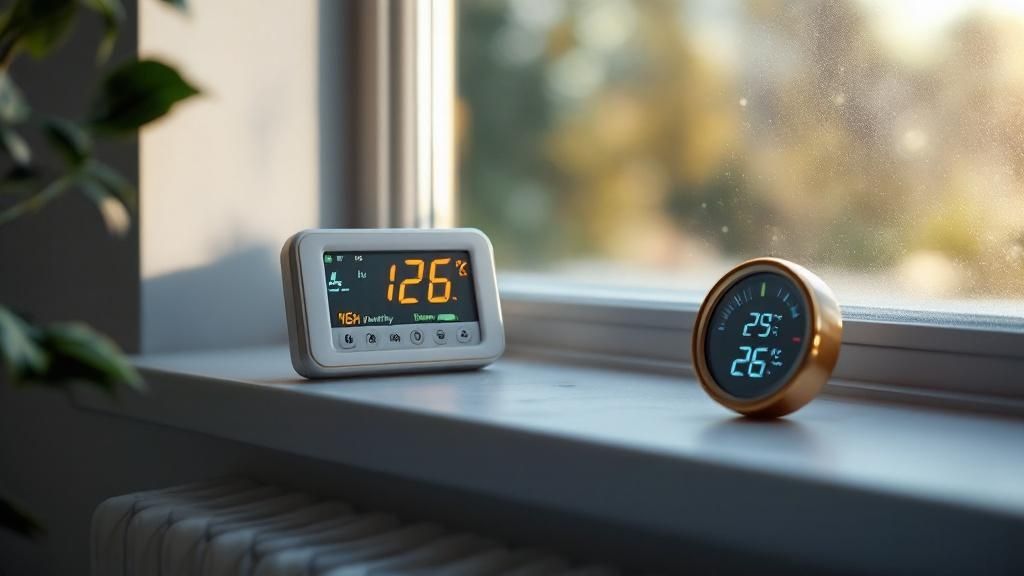
To get to the bottom of why your windows fog up, we need to touch on a simple scientific principle: the dew point. Think of the air inside your home like a big sponge that can only soak up a certain amount of water vapor. The dew point is the exact temperature where that sponge gets oversaturated and has to squeeze out the excess moisture.
When the warm, humid air inside your home touches the cooler surface of your window glass, its temperature plummets. If it drops below the dew point, the air can't hold onto all that moisture anymore. So, the water vapor turns back into tiny liquid droplets right on your window, creating that familiar foggy mess.
Where Does All the Moisture Come From?
Homeowners in coastal communities like Monterey or Carmel know the outdoor humidity from the marine layer plays a part. But you might be surprised to learn that a lot of the moisture fogging up your interior windows actually comes from inside your house.
These common tasks add a surprising amount of water vapor to your indoor air:
- Cooking and Boiling Water: That pot of pasta or soup releases a huge plume of steam into your kitchen.
- Showering and Bathing: A nice hot shower can quickly send the humidity level soaring throughout your entire home.
- Breathing and Perspiring: That’s right—even just breathing adds moisture to the air, especially with multiple people in a well-sealed home.
- Running Appliances: Clothes dryers (if not vented correctly), dishwashers, and even some humidifiers all contribute to the problem.
Key Insight: According to the U.S. Department of Energy, a typical family can release two to four gallons of water vapor into their home’s atmosphere every single day. Without good ventilation, this moisture has nowhere to escape and settles on the coldest surfaces it can find—which are almost always your windows.
This cycle of moisture being produced inside and condensing on cool surfaces is the core reason you see foggy windows. Managing these factors is key for homeowners in Salinas and beyond to keep their views clear, and you can learn more with our guide to effective window condensation solutions.
How Failed Seals Trap Fog Between Window Panes
Ever tried to wipe the fog off your windows, only to realize it’s not on the outside or the inside? When you can't get rid of that frustrating haze, you're dealing with a much more serious problem. That trapped moisture is a telltale sign that the airtight seal in your double-pane or triple-pane window has failed.
This is the most critical issue homeowners in Salinas run into with foggy windows. Modern insulated glass units (IGUs) are sophisticated systems with two panes of glass separated by a spacer, creating a sealed, airtight gap. This gap is often filled with an inert gas like argon or krypton to boost insulation, but the system only works if the seal is intact.
The Problem of Thermal Pumping
Think about what your windows go through every day, especially in sunny areas like Monterey County. This daily grind puts immense stress on the seals in a process known as thermal pumping.
As the sun beats down, the air and gas trapped inside the window expand, pushing outward on the glass panes and seals. Then, as night falls and temperatures drop, everything contracts. Day after day, this constant flexing action slowly weakens the window's seals. The International Association of Certified Home Inspectors has great insights on this mechanical stress.

Over time, this thermal stress creates micro-cracks in the seals, allowing moist, outside air to seep into the space between the panes. This graphic perfectly illustrates how a broken seal lets outside humidity get between the panes, where the temperature difference causes it to condense into fog.
When the Desiccant Fails
To handle any tiny bit of moisture left over from manufacturing, window spacers are filled with a desiccant material. It’s like those little silica gel packets you find in new products. This material’s only job is to absorb any trace amounts of water vapor.
But once the main seal is broken, humid air continuously streams into the unit. The desiccant gets overwhelmed and saturated, reaching a point where it can't absorb any more moisture. Now, that water vapor has nowhere else to go, so it condenses on the cool interior surfaces of the glass, creating that permanent, ugly fog.
The Unfortunate Truth: Once moisture gets trapped between the panes of glass, you can't clean it, wipe it away, or fix it. The window's insulating power is gone, and the only long-term solution is to replace the insulated glass unit.
Ignoring the problem does more than just ruin your view. It means your window is no longer energy-efficient, which will cost you more on your heating and cooling bills. Understanding the benefits of modern double-pane windows drives home what you’re losing when a seal fails.
Managing Interior Fog Caused by Household Humidity
Now, let's talk about the fog you can actually wipe away—the condensation that forms on the inside of your windows. This is an incredibly common issue for homeowners, especially here in the Salinas Valley during cooler months when we seal up our homes to stay warm.
Modern homes are wonderfully energy-efficient, but this tight construction can be a double-edged sword. While it’s great at keeping drafts out, it's also fantastic at trapping moisture in. When you see condensation on the inside, it’s almost always a sign that you need to manage your home’s humidity.
Pinpointing Household Humidity Sources
You might be surprised by how many everyday activities pump moisture into your home's air. For instance, cooking, especially on a gas stove, can introduce significant moisture; regular gas stove maintenance can help keep it running efficiently and safely.
Other common sources of interior humidity include:
- Steamy Showers: A long, hot shower can quickly raise the humidity level throughout your house.
- Cooking and Boiling: Making pasta, simmering soup, or even boiling water for tea sends plumes of steam into the air.
- Doing Laundry: If your clothes dryer isn't vented properly to the outside, it's pumping hot, damp air directly into your living space.
- Houseplants: Your green friends naturally release moisture into the air through a process called transpiration.
These are all a normal part of life, of course. But their combined effect can easily push your home’s moisture levels into the fog zone.
Actionable Tips to Reduce Indoor Condensation
The good news is that you have a ton of control over interior condensation. By taking a few proactive steps, homeowners in Monterey County can dramatically cut down on the fog clouding their windows. The goal is simple: give all that trapped moisture an escape route.
Energy Star recommends keeping indoor humidity between 30% and 50%. A small, inexpensive device called a hygrometer can measure your home’s relative humidity, so you know for certain when levels are too high. One of the best strategies is to improve your home’s ventilation. Make it a habit to use the exhaust fans in your kitchen and bathrooms during—and for a little while after—any moisture-producing activities.
For a more powerful solution, a dehumidifier can be an excellent investment, as it actively pulls excess water from the air. These small changes not only clear up your windows but also improve your indoor air quality and can even show you new ways for how to save energy at home.
When to Replace Your Foggy Windows
So, what’s the next step for a homeowner in Salinas or Monterey dealing with foggy windows? Figuring out what to do is all about where you see that condensation. A quick diagnosis can save you unnecessary worry—or prevent costly damage down the road.
First, check if you can wipe the fog away from the inside surface of the glass. If you can, breathe a sigh of relief. This simply means your home’s humidity is a bit high, but your windows are likely doing their job just fine. Focus on improving your home’s ventilation with exhaust fans, circulating air, and maybe running a dehumidifier.
The Only Solution for Failed Seals
Now, if you see moisture, a milky haze, or water droplets trapped between the panes of your double-pane windows, the situation is much more serious. This is a clear sign that the window's airtight seal has failed permanently.
There's no quick fix for this. "De-fogging" services are temporary at best and don't address the root cause. The only real solution to restore your window’s clear view, insulating power, and energy efficiency is to replace the insulated glass unit (IGU).
A failed seal means your window is no longer insulating your home. It’s not just an ugly obstruction; it's a hole in your home's thermal barrier that leads to higher energy bills as your HVAC system works overtime.
Letting a failed seal go unaddressed can eventually lead to rot and damage to the window frame and the surrounding wall. To learn more, check our guide on the signs that tell you when to replace windows in your home. Acting decisively will protect your home’s value and comfort.
Frequently Asked Questions About Foggy Windows
As a family-owned business that has served Salinas and Monterey County for decades, we’ve heard just about every question there is when it comes to foggy windows. Here are some straightforward answers to the concerns we hear most often from local homeowners.
Can I just repair the broken seal in my double-pane window?
Unfortunately, a broken window seal isn't something that can be truly repaired. You might come across services offering a "de-fogging" fix, but this is a temporary band-aid. The process involves drilling small holes into the glass and doesn't restore the insulating argon gas that was lost. To get your clear view back and restore your window's energy efficiency for good, the only permanent solution is to replace the entire insulated glass unit (IGU).
Is the fog inside my windows a health hazard?
While the fog itself isn't dangerous, the moisture it represents can be. When condensation is a constant presence, it creates the perfect damp environment for mold and mildew to take hold on your window sills, frames, and even the surrounding walls. This can be a real problem for your family's health, especially for anyone with allergies or respiratory issues. It's crucial to address the root cause of the moisture before it leads to bigger problems.
Why are only some of my windows foggy?
This is a very common situation. Window seals can fail at different times based on a few key factors like their age, quality, and how much direct sun they get. For instance, a window on the side of your Salinas home that bakes in the afternoon sun is under more stress than a shaded window. That thermal stress means its seal is likely to fail much sooner.
How long should my double-pane windows last?
You can typically expect the seal on a quality double-pane window to last anywhere from 10 to 20 years. However, our unique coastal climate and strong California sun can sometimes shorten that lifespan. The best way to ensure you get the most life out of your windows is to invest in high-quality products installed by experienced professionals like our team at Signature Glass and Windows.
Is it bad if my windows fog up on the outside?
Not at all! Don't be alarmed by condensation on the outside of your windows, especially on humid mornings here on the coast. This is actually a great sign! It means your energy-efficient windows are working perfectly, keeping your home's heat inside and leaving the outer pane of glass cold enough for dew to form. This kind of fog will clear up on its own as the day warms up.
If you're seeing fog, condensation, or any moisture trapped between the panes of your glass, it's a clear signal that your window seals have failed. It's best not to wait for the problem to cause more damage.
Contact the local experts at Signature Glass and Windows, Inc. today for a free, no-obligation in-home consultation. As a locally owned, family-operated business, we're dedicated to quality craftsmanship and trustworthy service. Visit us at https://signatureglassandwindows.com or give us a call to get started.