
When you hear the word “glass,” what comes to mind? For many homeowners in Salinas and Monterey, it’s often the delicate material in a picture frame. But there’s another kind of glass, made to be tough, that plays a huge role in keeping our homes safe.
It’s called tempered glass, and it’s a true safety glass. Unlike regular glass that shatters into dangerous, sharp pieces, tempered glass crumbles into small, pebble-like chunks when it breaks. This greatly reduces the risk of serious injury, which is why you’ll find it in busy or high-risk areas like doors, large windows, and shower stalls.
What Is Tempered Glass and Why Is It So Strong?

So, what makes tempered glass so tough? It’s up to four to five times stronger than regular (or “annealed”) glass of the same thickness. That’s a huge difference in strength.
This strength comes from a special manufacturing process. First, the glass is heated to very high temperatures, then it’s rapidly cooled in a process called “quenching.” This creates a strong internal tension that makes it durable.
Think of it like a tightly wound spring. The outer surfaces are squeezed into high compression, while the inner core is locked in tension. This balanced stress is the secret to its strength.
The Science of Safe Shattering
That internal stress is also why it shatters so safely. If the glass ever breaks, all that stored energy is released at once. Instead of cracking into long, jagged pieces, the entire pane crumbles into small, dull-edged cubes.
Standard glass has no internal tension, so when it breaks, it just fractures into unpredictable and dangerous shards. This is why local building codes in communities like Carmel and across Monterey County require tempered glass in certain areas. It’s all about protecting your family.
Tempered Glass vs. Standard Glass
For homeowners, understanding the main differences between these two types of glass is key to making smart decisions. This quick table breaks it down.
| Feature | Tempered Glass | Standard (Annealed) Glass |
|---|---|---|
| Breakage Pattern | Crumbles into small, dull-edged pieces. | Breaks into large, sharp, dangerous shards. |
| Strength | 4-5 times stronger than standard glass. | The most common, basic form of glass. |
| Safety Level | Considered a true safety glass. | Poses a high risk of injury when broken. |
| Common Uses | Patio doors, shower enclosures, large windows. | Small picture frames, non-hazardous areas. |
Knowing this difference is the first step to making your home in Salinas both beautiful and secure. It’s about protecting your family from accidents and creating a safer living space.
The Science Behind Safety Glass Manufacturing
Ever wondered how tempered glass gets its incredible strength? It’s not magic, but a process of intense heat and rapid cooling that turns a standard sheet of glass into the safety material we rely on every day.
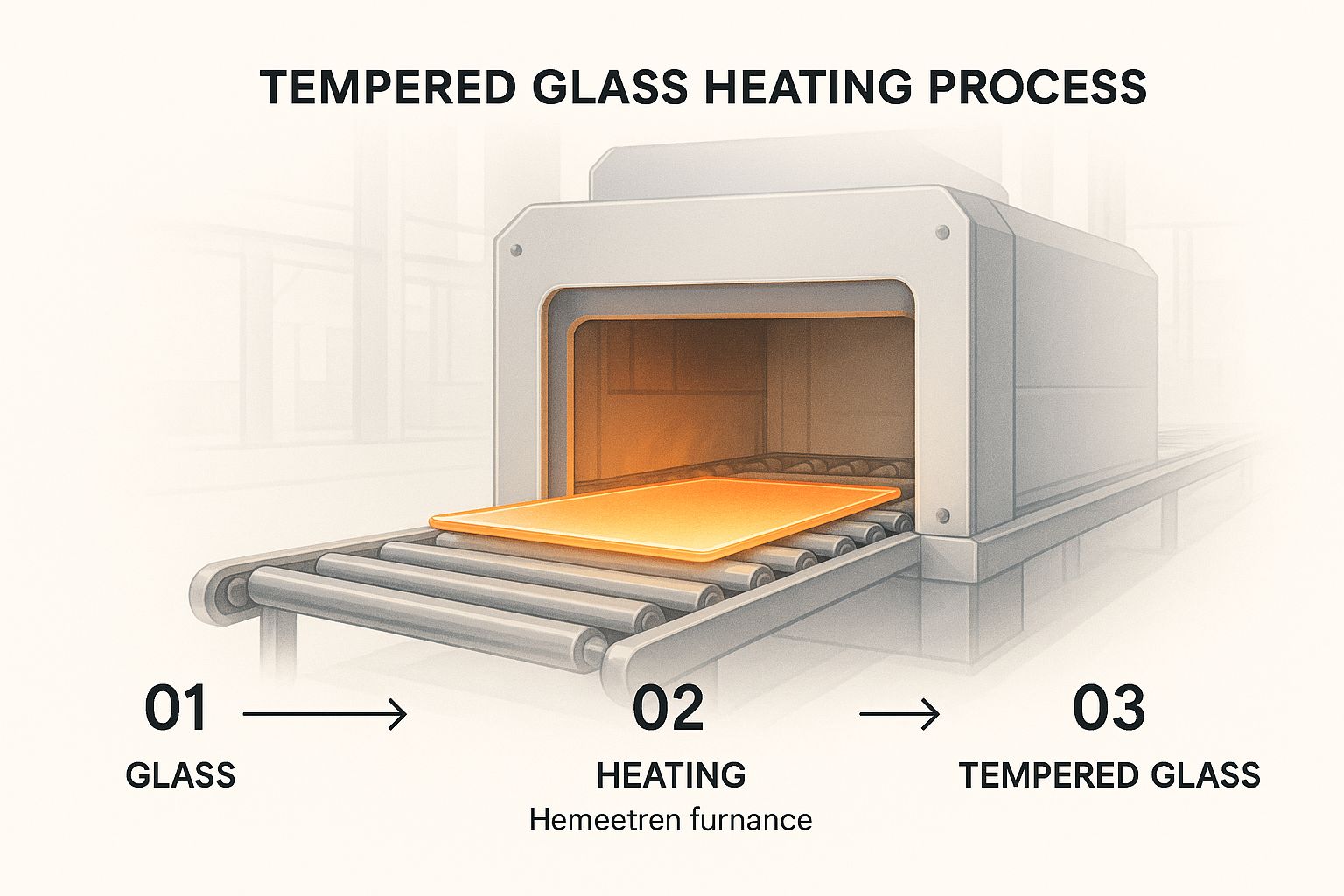
It all starts by heating the glass in a special furnace to extreme temperatures, often over 1,000°F. Once it reaches this point, the glass is hit with a process called “quenching.” High-pressure air cools the outer surfaces much faster than the inside, creating a powerful state of compression on the outside while the inside remains in tension.
This built-in stress is what makes the glass four to five times stronger than regular, untreated glass. When it does break, the stored energy is released instantly, causing the glass to crumble into small, dull-edged pebbles instead of sharp shards.
This process locks in the strength that makes tempered glass a go-to safety feature for homeowners across Monterey County. It’s this precise manufacturing that delivers superior protection for your home.
The Thermal Tempering Process Explained
Getting from a standard pane of glass to a tempered one is a technical journey. Every step is precise, ensuring each piece meets the strict safety standards needed for homes in Salinas, Carmel, and beyond.
Here’s a breakdown of how it’s done:
- Cutting and Finishing: Before any heat is applied, the glass is cut to the exact size and shape needed. All drilling or edge grinding must be done at this stage because you can’t alter it once it’s tempered.
- Inspection for Flaws: The glass is carefully checked for any tiny cracks or bubbles. Even a small flaw could cause the pane to shatter during the intense heating process.
- Heating in the Furnace: The glass moves through a tempering furnace on rollers, where it’s heated evenly to a temperature of around 1,150°F (620°C).
- Rapid Cooling (Quenching): As soon as it leaves the furnace, the glass is hit with jets of high-pressure cool air. The outer surfaces cool down and solidify almost instantly, while the inside cools much more slowly, creating the balanced internal stress that gives it strength.
A Growing Demand for Safety
This process has made tempered glass a vital part of modern construction. The global market size was valued at roughly USD 50.08 billion in 2022 and is expected to grow significantly, thanks to its use in building and other industries. Read the full research about tempered glass market trends. This growth shows just how important this safety material has become.
Common Places You Will Find Tempered Glass

Now that you know how strong tempered glass is, you’ll probably start seeing it everywhere. Its use is more common than most people think, especially in parts of your home where an accidental slip or impact could be dangerous.
In fact, local building codes right here in Monterey County require its use in specific high-risk locations. It’s not just a recommendation; it’s a rule designed to keep your family safe. Let’s walk through some of the most common places you’ll find this essential safety glass, from a bathroom remodel in Carmel to a new window installation in Salinas.
Shower and Tub Enclosures
Bathrooms are the number one spot where tempered glass is an absolute must. Think about it: wet, slippery surfaces can easily lead to falls. Using standard, breakable glass in that environment would be a huge hazard.
That’s why all modern shower doors and tub enclosures are built with tempered glass. Whether you have a sliding door or a custom frameless enclosure, that glass is made to handle an accidental bump or fall without causing serious injury.
Windows in Hazardous Locations
Not every window in your house has to be tempered. Building codes are very specific, pointing to “hazardous locations” where the risk of someone falling into the glass is higher.
These locations usually include:
- Windows Near Doors: Any large window pane that’s within 24 inches of a doorway.
- Low Windows: Large sections of glass that start less than 18 inches from the floor.
- Stairway Windows: Any glass panels installed next to stairs, landings, or ramps.
These rules are there for a good reason. They prevent a simple accident from turning into a trip to the emergency room, ensuring homes from Salinas to Monterey are built with safety first.
Sliding Glass Doors and Patio Doors
Sliding glass doors and French doors see a lot of use. They’re the gateways to our backyards and patios, constantly being opened and closed. All that traffic increases the chance of an accidental impact.
Because of this, all glass in all doors must be tempered. This isn’t just for sliding patio doors; it includes storm doors and even interior doors that have glass panels. It ensures that a misplaced step won’t lead to a dangerous mess of broken glass.
Tempered glass isn’t just for vertical surfaces, either. Its strength makes it essential for overhead installations like durable and secure skylights and rooflights.
Other Creative Uses in Your Home
Tempered glass is a safety star in doors and windows, but its uses go far beyond the basics. For homeowners in Salinas, its strength opens up a world of creative possibilities that add both style and function to your home’s interior.
- Glass Tabletops and Desks: A custom-cut tempered glass top can protect a wooden dining table or create a modern desk. It’s highly resistant to scratches and heat, making it perfect for daily use.
- Glass Shelving: For a clean, contemporary look, tempered glass shelving is a great choice. It provides strong storage without the visual weight of wood, making it perfect for displaying collectibles or bathroom items.
- Fireplace Screens: A tempered glass screen offers a safe, clear view of the flames while providing a crucial safety barrier. Its excellent heat resistance allows it to easily withstand high temperatures.
- Kitchen Backsplashes: A tempered glass backsplash can be painted any color to match your decor. It creates a seamless, high-gloss finish that is easy to clean, unlike tile with its messy grout lines. If you’re considering a bigger change, learn more about the benefits of replacing sliding glass doors with French doors to transform your living space.
How to Identify Tempered Glass in Your Home
So you know what tempered glass is and where it’s supposed to be, but how can you tell if the glass in your home is the real deal? Good news: you don’t need any special tools. For homeowners in Salinas and Monterey, a quick visual check is usually all it takes.
Most tempered glass panels have a small, permanent stamp etched into one of the corners. This mark, sometimes called a “bug,” is baked in during manufacturing, so it can’t be rubbed off. It’s a safety certification that confirms the glass has been properly treated.
Finding the Safety Stamp
To check your glass, just take a close look at each corner of the pane. You’re looking for a small, sandblasted or acid-etched label that feels slightly rough.
This stamp usually tells you two things:
- The Manufacturer’s Name: This shows who made the glass.
- The Safety Standard Code: You’ll likely see codes like ANSI Z97.1 or CPSC 16 CFR 1201. These are official certifications confirming the glass meets strict safety rules.
If you spot that stamp, you can feel confident the glass is tempered. This is especially important for large windows, which can also offer other benefits you can read about in our guide on how to soundproof windows.
What If There Is No Stamp?
Now, what if you can’t find a stamp? This is common in older homes. It doesn’t automatically mean the glass isn’t tempered, but it makes it harder to confirm. Sometimes the stamp gets hidden by the window frame.
If a piece of glass in a high-risk spot—like a door or a low window—doesn’t have a stamp, it’s safest to assume it’s not safety glass. When in doubt, it’s best to call a professional. An experienced glass technician from a company like Signature Glass and Windows can identify it for you.
Your Trusted Glass Experts in Monterey County
Knowing what tempered glass is and why it matters is one thing, but finding the right partner to install it is just as important. Here at Signature Glass and Windows, we’re not just another contractor—we’re your neighbors.
As a locally owned, family-operated business, we’ve spent decades making sure homes from Salinas to Carmel are safe, beautiful, and up to code. We combine quality craftsmanship with a true commitment to our community. Beyond safety glass, we help homeowners find ways to improve their homes with products like our energy-efficient windows.
If you have questions about the glass in your home or are planning a new project, let our family help yours. Get in touch today for a free, no-obligation consultation. We’ll listen to your needs and give you a clear, honest estimate.
Frequently Asked Questions About Tempered Glass
Homeowners in Salinas and Monterey often have a few questions about tempered glass. Getting clear, practical answers is the first step to making a confident choice for your home. Here are some of the most common questions we hear.
How much more does tempered glass cost?
Tempered glass does cost more upfront than standard glass. The price difference comes from the special heating and cooling process needed to create its strength. However, think of it as an investment in safety for your family.
Can you cut or drill tempered glass after it’s made?
No, you absolutely cannot. Any cutting or drilling must be done before the glass is tempered. If you try to alter it afterward, the entire pane will shatter into small pieces.
Is tempered glass scratch-resistant?
Tempered glass is just as likely to get scratched as regular glass. The tempering process adds strength to withstand impacts, but it doesn’t change the hardness of the surface. To keep it looking new, use non-abrasive cleaners and soft cloths.
How can I tell when it is time to replace my windows?
Key signs include visible damage like cracks, drafts you can’t fix, or condensation trapped between the panes. If your windows are just getting hard to open and close, that’s another clue. For a more detailed guide, you can learn more about when to replace your windows.
Is tempered glass used in cars?
Yes, it is. The auto industry uses tempered glass for side and rear windows to keep passengers safe in an accident. The global tempered glass market is expected to grow to nearly USD 89.67 billion by 2029 because it’s so essential in cars and construction. (source)
Ready to bring the safety and sleek look of custom glass to your home? The team at Signature Glass and Windows Inc. has been helping homeowners across Monterey County for years with expert advice and flawless installation.
Contact us today for a free, no-obligation consultation at https://signatureglassandwindows.com or give our family-operated business a call at 831-754-8855.