
When you decide to replace your windows, you have two main choices: a retrofit or a full-frame replacement. The main difference is simple. A retrofit window fits into your current window frame, while a full-frame replacement means removing everything down to the wall studs.
For homeowners in Salinas and Monterey, the best choice isn't about which one is better overall. It’s about which one is right for your home’s specific condition.
Understanding Your Window Replacement Options
If you live in an older house on the Central Coast, you may wonder if you have to rip everything out to upgrade your windows. Many homeowners think retrofit windows are a cheap shortcut that won’t last. The truth is, the choice between retrofit vs. full-frame depends on the health of your existing frames and the quality of the installation.
When done by a professional, retrofitting is a great, money-saving solution. The U.S. Department of Energy says new windows can lower energy bills by 12% to 25%. A well-installed retrofit helps you see those savings. It all begins with an expert evaluation of your window frames.
The first step is to check the condition of your window frames. If they are in good shape, a retrofit can save money and avoid damage to your interior walls while meeting all energy standards.
This approach is popular for older homes because it preserves the original character. You can explore our guide on insert replacement windows to learn more about this less invasive process.
Retrofit vs. Full-Frame Replacement At a Glance
To make the decision easier, it helps to compare the two methods. This table shows the key differences and when each option makes sense for your home.
| Attribute | Retrofit (Insert) Replacement | Full-Frame (Tear-Out) Replacement |
|---|---|---|
| Process | The new window is put into the existing frame after the old sash is removed. | The entire window, including the frame and trim, is removed down to the studs. |
| Best For | Homes with solid, rot-free window frames and trim. | Homes with rotted frames, water damage, or when changing the window size or style. |
| Installation | Faster and less disruptive, usually done from the outside. | More complex and takes longer, affecting both inside and outside walls. |
| Cost | Usually more affordable because it requires less labor and materials. | Higher upfront cost due to more labor and materials needed. |
This comparison shows that the condition of your current window frames is the biggest factor in choosing the right replacement method.
Retrofit vs. Full-Frame: A Side-by-Side Look at Window Installation
When it’s time to replace windows, you'll hear about two main options: retrofit or full-frame. For homeowners in Monterey County, picking the right method means balancing cost, time, and your home's health. Each has its own benefits, and the best choice depends on the current state of your home.
This visual guide gives a quick look at the core difference between the two installation methods.
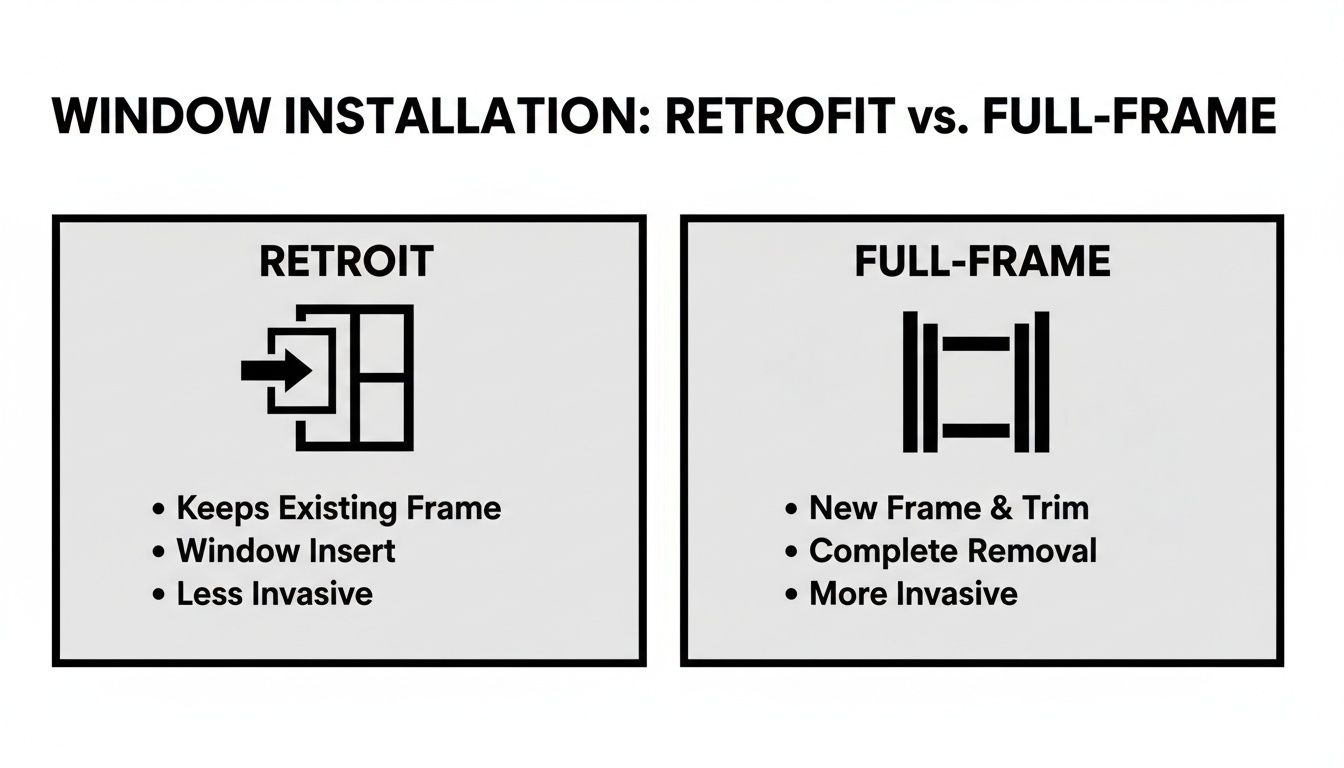
As you can see, a retrofit window slips into your home's existing frame. A full-frame replacement, however, is a complete removal of the old window, starting fresh from the wall studs.
Installation Time and Impact on Your Home
This is where you'll see the biggest difference. Retrofit installations are quick and cause less disruption. Since the original window frame stays, the work is mostly done from the outside of your home, leaving your interior walls, trim, and paint untouched.
A full-frame replacement is a bigger project. We remove the entire window unit, which means taking off exterior trim and siding, as well as the interior casings. This can add days to the job and may require follow-up work like painting or stucco repair.
Comparing Overall Costs and Upfront Investment
For homeowners in Salinas and the surrounding areas, cost is a major factor. A retrofit installation is almost always the more budget-friendly choice. By using the existing frame, you save a lot on labor and materials.
Full-frame replacement costs more—usually 15-20% more than a retrofit. The extra cost covers the labor needed to remove the old window, check the opening for damage, and rebuild the entire unit. While it's more expensive, that investment is necessary when we find structural issues that need to be fixed to protect your home.
Durability and Performance in a Coastal Climate
Living on the Central Coast means your windows face moisture, salt air, and changing temperatures. The durability of your new windows depends heavily on the quality of the installation.
A full-frame replacement has a clear advantage here. It allows our team to check the rough opening for water damage, dry rot, or pests. We can then add modern flashing and new insulation, creating a superior, weather-tight seal. This is very important for homes in Carmel or Pacific Grove that face harsh coastal weather.
That said, a professionally installed retrofit on a solid frame can also provide excellent protection. When the existing frame is in good shape, a retrofit performs well for many years.
A high-quality retrofit is a durable, long-term solution when your home's structure is sound. A full-frame replacement is the best choice when there are hidden issues that need to be fixed to protect your investment.
Energy Efficiency and Meeting California Codes
Both retrofit and full-frame windows will greatly improve your home's energy efficiency. New windows come with features like Low-E glass coatings and argon gas fills. These technologies help keep your home cooler in the summer and warmer in the winter, which will lower your energy bills.
A common concern is whether a retrofit can meet California's strict Title 24 energy standards. The answer is yes. New 2026 code requirements allow retrofits as long as the new window unit is compliant and installed correctly into a sound frame.
A full-frame installation does let us add extra insulation, which can improve thermal performance. But both methods can give you great results and may qualify for incentives like the federal tax credit of up to $600. For more details, our window installation guide explains how to get the most energy savings.
Making the Right Choice for Your Home
So, which method is right for you? It depends on your home’s situation.
A 1970s home in Salinas with strong, well-kept wooden frames is a great candidate for a retrofit. We can keep its original character while making it more efficient.
On the other hand, a Carmel home with signs of moisture around the windows would be better off with a full-frame replacement. This lets us fix any hidden damage and make sure the new windows are installed in a solid, secure opening. The only way to know for sure is to have an experienced professional take a look.
Analyzing Cost and Return on Investment
For most homeowners in Monterey and Salinas, budget is a top priority. It's no surprise that a full-frame replacement costs more. You are paying for more materials and labor to remove the old frame and rebuild the opening. Retrofit windows slide into your existing frame, making them a more budget-friendly option.
But the initial cost isn't the only thing to consider. To make a smart choice, you have to look at the long-term return on investment (ROI). This includes your home's resale value and what you'll save on energy bills over time.
Breaking Down the Upfront Costs
The biggest cost difference is labor. A full-frame replacement is like a small construction project for each window. It takes time and skill to tear out the old one, check for damage, make repairs, and install new trim.
A retrofit is a much quicker process. Since the original frame and trim stay in place, the installation is faster and requires less labor. This efficiency leads to a more affordable final price.
Many people think a lower upfront cost means lower quality, but this is a myth. If your frames are solid, a retrofit gives you the same high-performance glass and energy efficiency as a full-frame window.
Understanding Long-Term Return on Investment
When you look at the numbers, retrofits often provide a better ROI. New windows boost your home's value, and studies show that homeowners typically get back about 68-72% of their investment at resale. Because the initial cost of a retrofit is lower, it often offers a better return. You can learn more about the financial benefits in our guide on understanding your window replacement ROI.
High-performance windows can be a big investment. For homeowners here in Monterey County, a professional retrofit can deliver great energy savings and a stronger financial return. To see how much you could save, it helps to know your starting point. Learning how to calculate energy consumption in your home can give you a clear idea of your potential ROI.
Maximizing Savings with Financial Incentives
Beyond the lower initial cost, California homeowners can use financial programs to make their window project more affordable.
Here are a few incentives to consider:
- Federal Tax Credits: Installing ENERGY STAR-rated windows can make you eligible for a federal tax credit of up to $600.
- Local Rebates: Check for rebates from local utility companies in Monterey County. They sometimes offer programs for energy-efficient upgrades.
Our team at Signature Glass & Windows stays up-to-date on all the latest incentives. We help homeowners across the Central Coast choose qualifying products and assist with the paperwork to maximize your savings.
When a Retrofit Is the Smart Choice
How do you know if a retrofit is the right choice for your home? It's a common question we hear from homeowners in Salinas and Monterey. A retrofit is the smartest, most efficient option when the "bones" of your existing window openings are in great shape.
The decision comes down to a few key factors. If your window frames are solid, square, and free of rot or water damage, you are a great candidate. This choice saves you time and money and also keeps the unique character of your house.
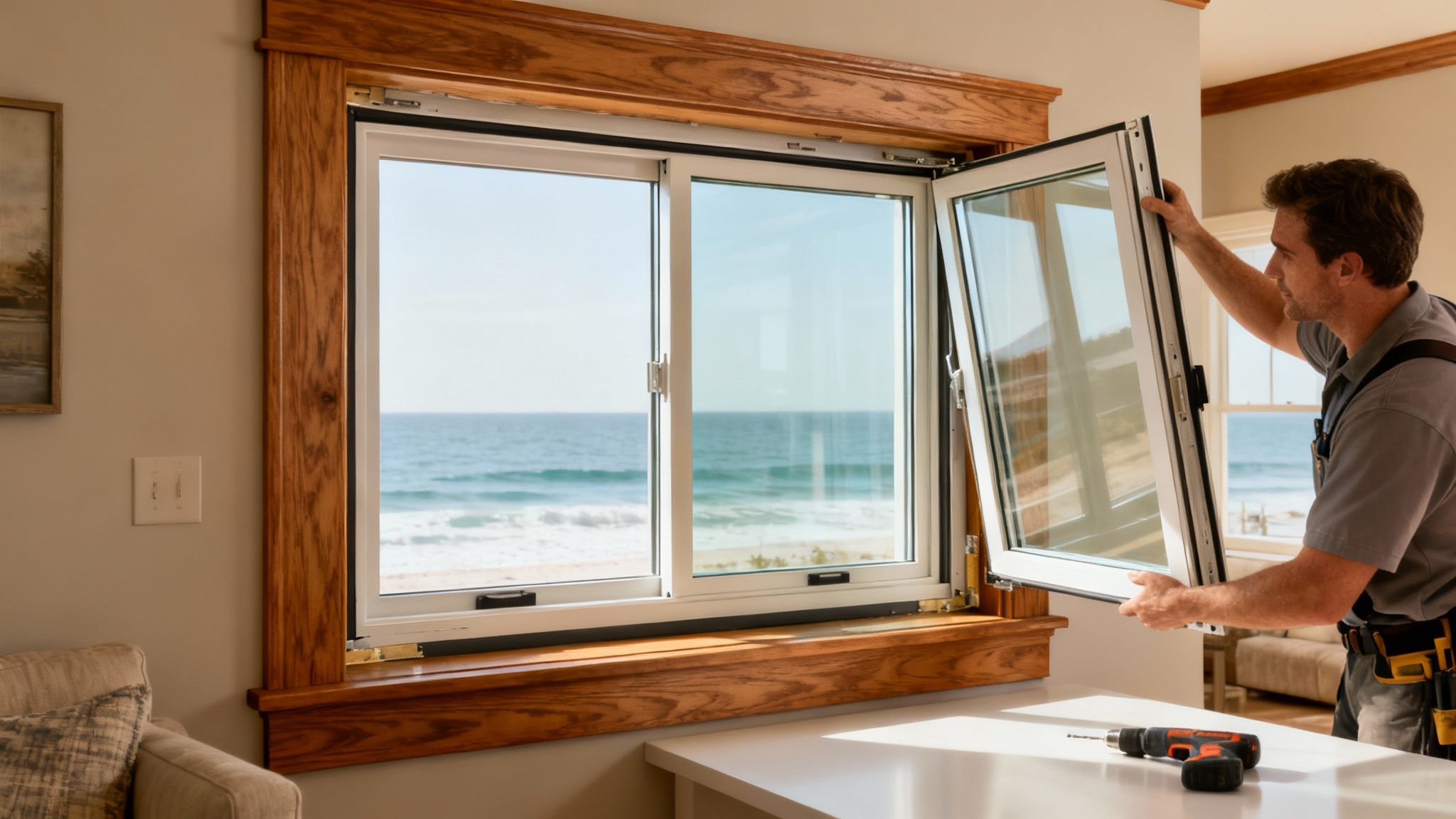
Key Situations Favoring a Retrofit
A retrofit is the perfect solution when your main goal is to improve performance while keeping what you already have.
A retrofit might be right for you if:
- Your existing window frames are structurally sound. This is the most important requirement. If there is no rot or damage, the frame is a perfect foundation for a new window.
- You want to preserve your home’s original trim. Many homes in Carmel have beautiful, custom woodwork that would be expensive to replace. A retrofit leaves it all untouched.
- You're working with a specific budget. Because the installation is less labor-intensive, retrofitting is a more affordable way to upgrade to energy-efficient windows.
- You need a faster installation with less disruption. A retrofit project is completed much faster than a full-frame replacement, with less impact on your daily life.
Debunking the Performance Myth
A common worry is whether retrofits can match the energy efficiency of a brand-new window unit. The truth is, modern retrofit windows deliver excellent performance and meet California's strict Title 24 energy standards. When installed by professionals, they create a tight seal that reduces drafts and energy loss.
The idea that retrofits are a "cheap" solution is outdated. Today's high-quality retrofit windows, installed by experienced technicians, provide outstanding energy savings and are fully compliant with all local codes.
Research shows that a proper retrofit can achieve energy performance similar to a new full-frame window. Explore more data on retrofit energy performance. This makes retrofitting a great option for preserving an older home's charm while updating its performance. Learn more about Monterey's trusted window retrofit services and what sets us apart.
When You Need a Full-Frame Replacement
Retrofits are a great choice in many cases, but some situations require a full-frame window replacement. This is the only real solution when the structure around your window is damaged. A retrofit would just be a temporary fix for a bigger problem.
For homeowners in Pacific Grove and Monterey, coastal moisture can damage window frames. It's important to spot the warning signs early. If you ignore them, you could face more expensive repairs later.
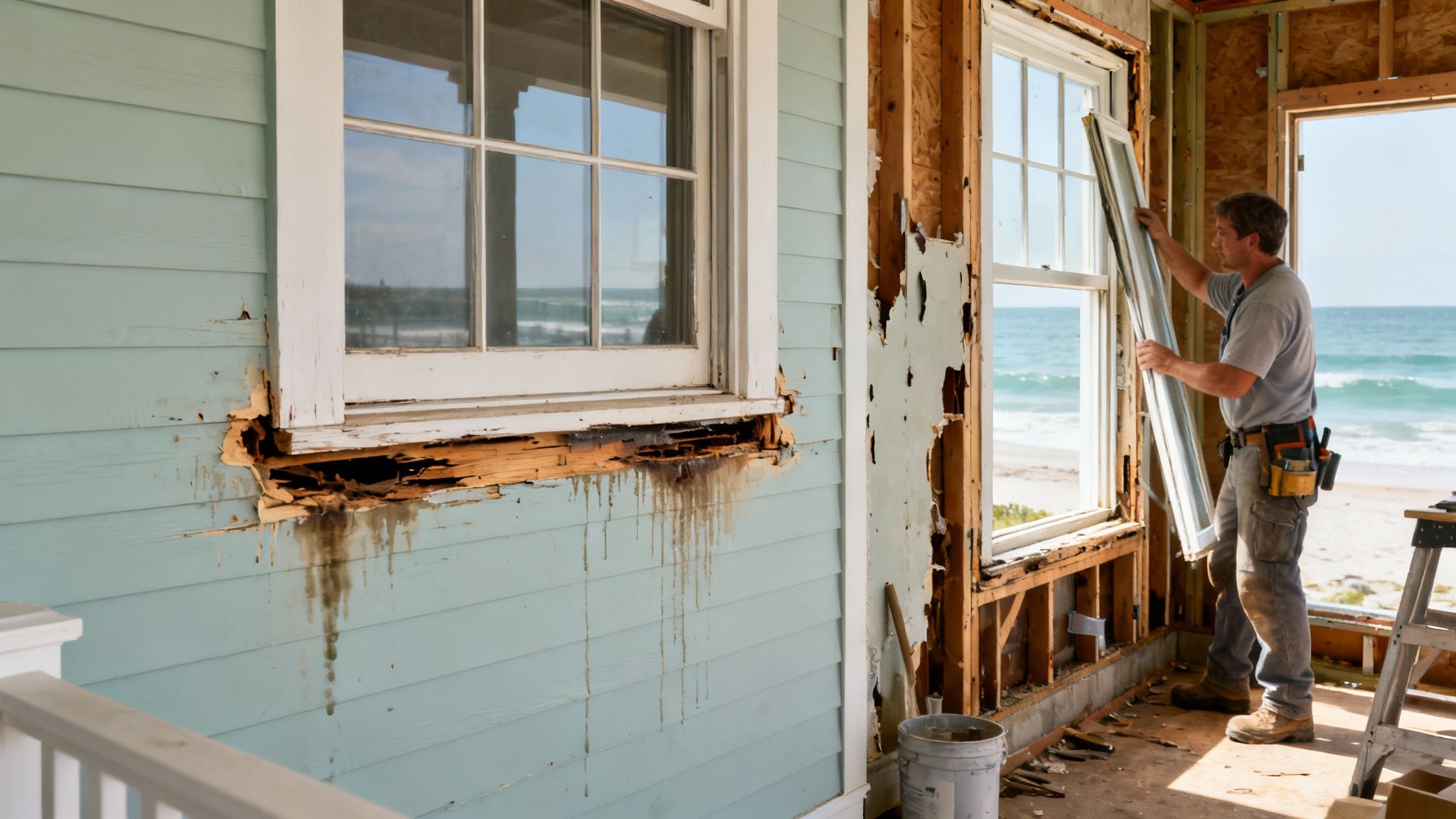
Clear Warning Signs You Need a Full Teardown
Some problems clearly point to the need for a full-frame replacement. These issues show that the surrounding wood and wall structure are compromised.
Keep an eye out for these signs:
- Visible Wood Rot or Soft Spots: Gently press a screwdriver into the wood of your window frame or sill. If it feels soft or sinks in, you have rot. Covering this up will only let the rot spread.
- Water Damage Stains: Dark stains or peeling paint on the wall around your window are signs of a leak. A full-frame replacement is the only way to find and fix the source.
- Warped or Out-of-Square Frames: If your windows are hard to open and close, the frame has likely shifted. Trying to put a square retrofit window into a crooked opening won't work well.
Beyond Damage Repair: Changing Your Home’s Look
Sometimes, the decision for a full-frame replacement is about changing your home’s appearance. Many homeowners in Salinas and Carmel choose this option when they want a major update.
A full-frame installation is your only choice if you want to:
- Change the size or shape of your window. If you want to replace a small window with a large picture window, a full-frame replacement lets us reframe the opening.
- Switch window styles. If you want to upgrade from old sliders to elegant casement windows, a full tear-out is necessary for a perfect, weather-tight fit.
A full-frame replacement is an opportunity to improve your home's structure. It allows for modern insulation and flashing, creating a weather-tight seal that is essential for our coastal climate.
This complete approach is why the higher initial cost is often a wise investment. If you're unsure about the warning signs, our guide on when to replace windows offers a more detailed look.
We're Here to Help You Choose Wisely
Deciding between a retrofit or a full-frame window replacement can feel overwhelming, but you don’t have to do it alone. At Signature Glass & Windows, our team assesses your home first and walks you through the pros and cons of both methods—no pressure. We serve homeowners from Salinas to Carmel and aim to give you honest advice that fits your home.
One of our experienced team members will carefully check your existing window frames for any signs of rot or damage. We'll then explain the options for your home so you have a clear picture of what’s involved. It's about finding the right solution for you, not just the most expensive one.
Local Experts Who Know the Rules
From historic homes in Pacific Grove to modern houses in Marina, we have seen it all. We are experts in both retrofit and full-frame installations and make sure every project meets local building codes and California’s Title 24 energy standards. This ensures your new windows perform perfectly and pass any inspection.
We also know that budget is important. A full-frame replacement can cost 15-20% more than a retrofit due to extra labor. We'll provide a clear quote that breaks everything down. You can learn more about how installation methods affect window costs to get a better sense of the numbers.
As a local, family-operated business in Monterey County, our reputation is built on trust and quality work. We're here to guide you toward the smartest investment for your home's future.
Frequently Asked Questions
What's the main difference between retrofit and full-frame windows?
The biggest difference is what gets replaced. A retrofit window is a new window unit placed inside your existing window frame. A full-frame replacement is a complete tear-out where we remove everything—the old window, frame, and trim—down to the wall studs and install a brand-new unit.
Are retrofit windows as energy-efficient as full-frame ones?
Yes, they can be. A window's energy performance depends on the glass technology (like Low-E coatings) and the quality of the seal. A high-quality retrofit window, when installed properly into a sound frame, can be just as efficient as a full-frame one and will meet California's Title 24 standards.
How do I know if my window frames are good enough for a retrofit?
You can do a quick check by gently poking the wood frame with a screwdriver. If the wood feels soft, spongy, or crumbles, you have rot. Other red flags are water stains on the walls or warped frames. If your frames are solid, a retrofit is likely a great, money-saving option.
Will a retrofit damage my walls or siding?
No, and that's a major benefit. A retrofit installation is done from the outside and is designed to leave your interior walls, paint, and trim completely untouched. Your home's exterior siding or stucco also remains intact, making the project much faster and cleaner.
Are retrofits a good option for older homes in Monterey County?
Yes, they are often a perfect choice for the beautiful older homes in areas like Carmel and Salinas. If you live in a 1970s or older home and want to preserve its charm, a retrofit allows you to get modern, energy-efficient windows without tearing out the original woodwork. Signature Glass & Windows can help you make the smartest decision without a full remodel.
Making the right choice for your window replacement protects your home’s integrity and adds real, lasting value. If you’re a homeowner in Salinas, Monterey, or anywhere on the Central Coast, the team at Signature Glass and Windows Inc. is here to give you an honest, professional assessment.
Call us today at 831-754-8855 or schedule your free, no-pressure consultation online.