
For homeowners in Salinas and Monterey County, picking the right window material is a big decision. It's a choice that balances cost, the look you want, and how well the windows will perform over the years for your family.
There’s no single “best” option for everyone, as it all depends on your priorities—whether you’re drawn to the unbeatable value of vinyl or the timeless, classic beauty of real wood. This guide will give you a clear, practical comparison to help you make a smart choice for your home.
Choosing Your Best Window Material
Upgrading your windows is one of the most impactful projects you can tackle for your home. The frame material you select affects your monthly energy bills, your home's security, its curb appeal, and the amount of maintenance you'll be doing for years to come.
Here in our local communities, from coastal Monterey to inland Salinas, the climate plays a huge role in your decision. We have to think about salt air, intense sun exposure, and those classic California temperature swings, so a good window choice has to stand up to it all.
That's why a real window material comparison goes way beyond the initial price tag. You have to weigh the long-term durability, the thermal insulation properties, and the upkeep each material will demand to enjoy a more comfortable, efficient, and valuable home.
This visual gives a great snapshot of how the most popular materials stack up in cost, insulation, and lifespan.
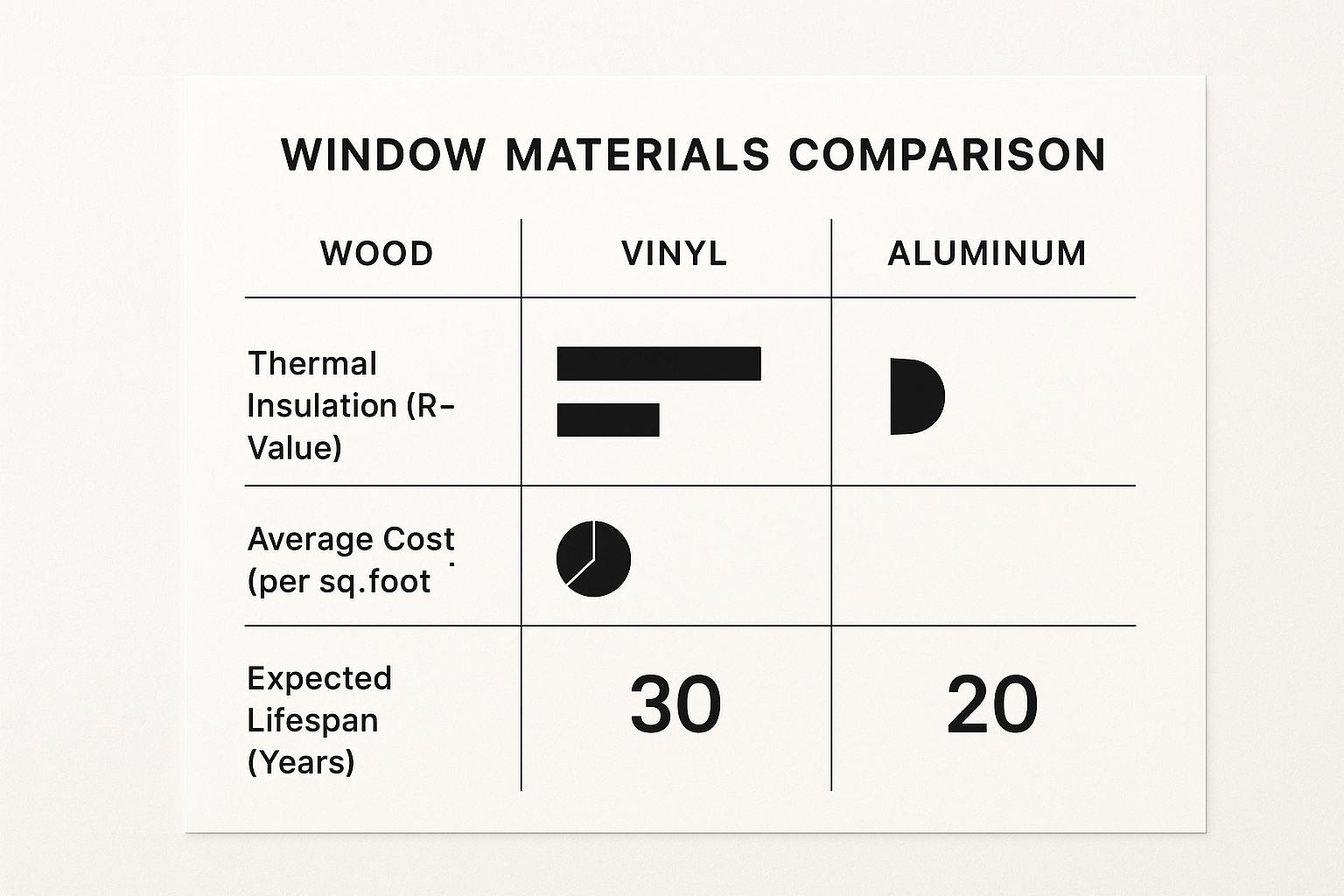
As you can see, vinyl is the clear winner for those on a tight budget. On the other hand, wood offers fantastic natural insulation but comes with a higher price tag and more maintenance.
Quick Window Material At-a-Glance Comparison
To make your decision a little easier, this table provides a high-level summary of the key characteristics of each window material. It's designed to help homeowners in Salinas and Monterey quickly identify which options align with their top priorities.
| Material | Average Cost | Energy Efficiency | Maintenance Level | Best For |
|---|---|---|---|---|
| Vinyl | Low to Mid | Good to Excellent | Very Low | Budget-conscious homeowners seeking all-around performance and minimal upkeep. |
| Wood | High | Excellent | High | Historic homes or those prioritizing classic, traditional aesthetics and natural insulation. |
| Fiberglass | Mid to High | Excellent | Very Low | Coastal homes needing maximum durability, strength, and energy efficiency with minimal maintenance. |
| Aluminum | Mid | Fair to Good | Low | Modern or contemporary homes desiring slim frames and large expanses of glass. |
Remember, the material is just one piece of the puzzle. It's also critical to consider other factors, like ensuring your home is secure by learning about different window lock types.
Ultimately, a deeper dive is necessary to make the final call. For more detailed guidance, see our complete guide on https://signatureglassandwindows.com/choosing-replacement-windows/ for your home.
The Practical Value of Vinyl Windows
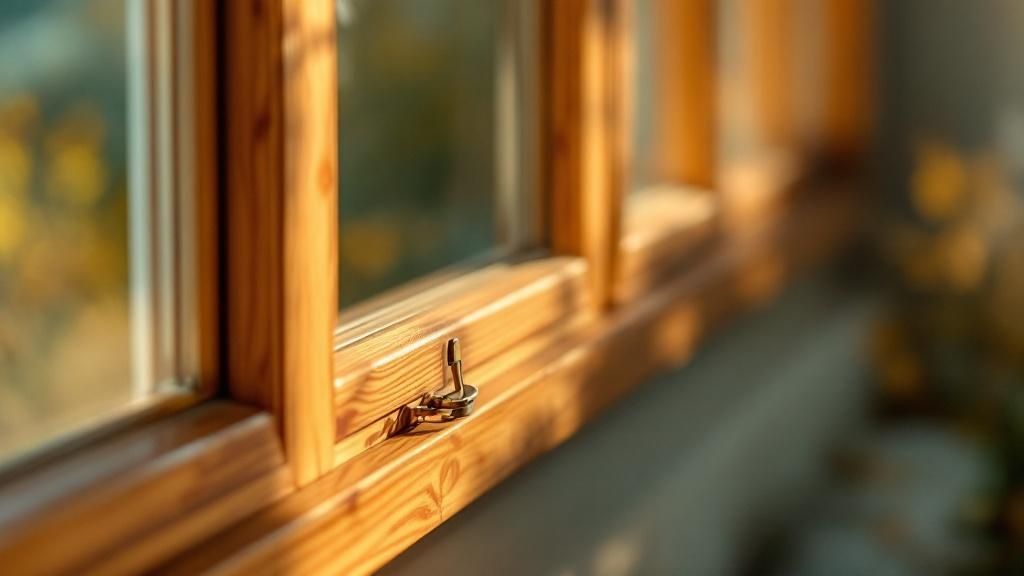
When you start comparing window materials, it doesn't take long to see why vinyl windows consistently come out on top for homeowners in Salinas and throughout Monterey County. Their popularity isn’t an accident; it's built on a solid foundation of affordability, energy efficiency, and almost zero maintenance.
This isn't the vinyl of decades past, as modern manufacturing has transformed vinyl frames into a product that is not only easy on the wallet but also tough and fantastic at insulating your home. It's a smart, practical investment for anyone looking to make a real upgrade without draining their savings.
Unbeatable Affordability and Return on Investment
Let's be honest—cost is a huge factor for most homeowners. The most immediate and obvious advantage of choosing vinyl is the savings, as vinyl windows are almost always the most affordable option. This means you can often replace every window in your home for what a few windows in another material might cost.
This cost-effectiveness is so significant that the plastic segment, which includes vinyl, leads the entire window frames market. According to Precedence Research, the market is projected to swell to around USD 61.4 billion by 2032, with vinyl's massive appeal driving much of that growth.
Key Insight: Don’t mistake the lower upfront cost for lower quality. High-performance vinyl windows can deliver an excellent return on investment by improving your home's energy efficiency and boosting its curb appeal, all while staying comfortably within your budget.
Exceptional Durability for Coastal Living
If you live in Monterey, Carmel, or anywhere along the coast, you know the real test is how materials hold up to salt, moisture, and sun. This is where high-quality vinyl truly shines.
The material itself, polyvinyl chloride (PVC), is naturally resistant to moisture, meaning the frames won’t rot, peel, or corrode, even when constantly exposed to damp, salty air. Plus, today’s vinyl windows have stabilizers blended in to prevent breakdown under harsh UV light, debunking the old myth about vinyl yellowing or getting brittle.
Low Maintenance and High-Efficiency Performance
For busy homeowners in Monterey County, this might be the best part: vinyl windows are virtually maintenance-free. Because the color is solid all the way through the material, you’ll never have to scrape, paint, or stain them.
Beyond the easy upkeep, vinyl frames offer fantastic thermal performance with multiple internal chambers that trap air and create insulation. This design dramatically slows heat transfer, keeping your home warmer in the winter and cooler in the summer. To see how these features work, you can learn more about energy-efficient windows.
The Timeless Appeal of Wood Windows
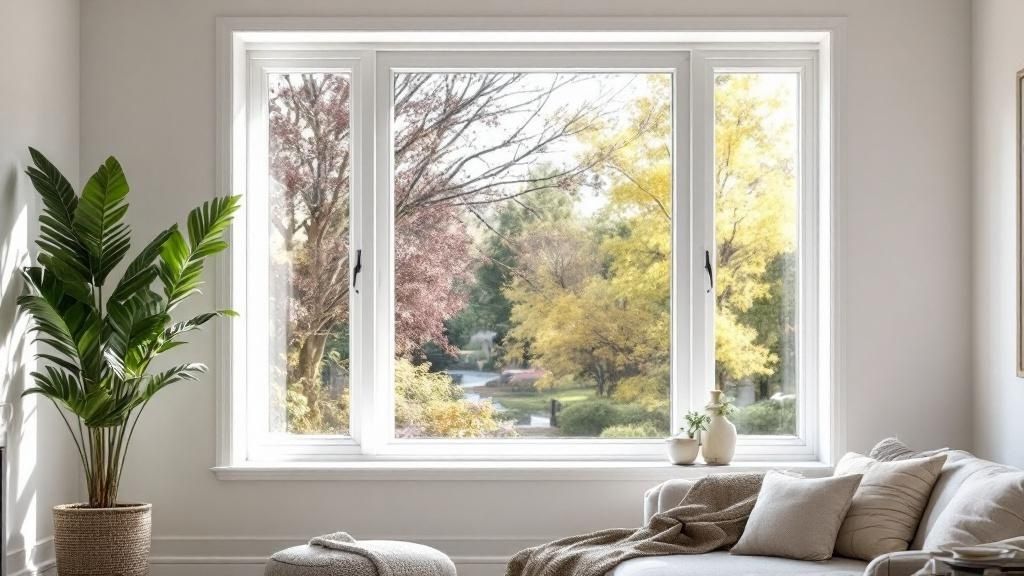
There's just something special about wood windows. For homeowners in architecturally rich communities like Carmel and Pebble Beach, wood offers a classic, traditional beauty that other materials try to copy but never quite get right. It’s a material that brings natural warmth and character to any home.
The biggest strength of wood is its aesthetic flexibility. It can be milled into just about any shape you can dream up, stained to let its rich grain shine through, or painted to match any color palette, making it a go-to choice for historical renovations.
Natural Insulation and Architectural Charm
Wood is a natural insulator because its cellular structure is naturally resistant to temperature transfer. This means wood frames help keep your home more comfortable all year long, contributing to better energy efficiency without needing any fancy engineered tricks.
This built-in insulating power, combined with its stunning looks, makes wood a premium choice. It elevates the architectural integrity of a home, adding real, tangible value and curb appeal that truly stands the test of time.
A Note for Coastal Homeowners: That unmatched beauty of wood comes with a serious trade-off, especially in the foggy, salt-air climate we have here on Monterey Bay. The commitment to maintenance isn’t just a recommendation—it’s an absolute necessity.
The Reality of Wood Window Maintenance
The biggest consideration for any homeowner in Salinas or Monterey County with wood windows is the upkeep. Wood is an organic material, and keeping it beautiful and performing well requires consistent, hands-on attention.
This is especially true in our coastal environment, as constant moisture from fog and salty air will accelerate wear and tear. Without proper care, wood is vulnerable to a few key problems:
- Rot and Decay: Moisture is wood’s number one enemy. If the protective finish—be it paint or stain—gets compromised, water can seep in and cause rot.
- Warping and Swelling: Wood naturally expands and contracts with changes in humidity and temperature. This movement can make windows stick or even break their seals.
- Pest Infestations: Termites and other wood-boring insects can damage unprotected frames, leading to costly structural repairs down the road.
To head off these issues, you must commit to a regular maintenance schedule of inspecting, sanding, and reapplying paint or sealant every few years.
Weighing Beauty Against Bother
For the right homeowner, wood windows are worth every bit of the effort. They deliver a level of warmth and authenticity that you simply cannot get with other materials.
However, it’s critical to be realistic. This window material comparison is all about finding the best fit for your lifestyle, not just your house. Homeowners who prioritize low maintenance might find that wood’s high upkeep and higher initial cost just don't add up for our unique local climate.
The Superior Strength of Fiberglass Windows
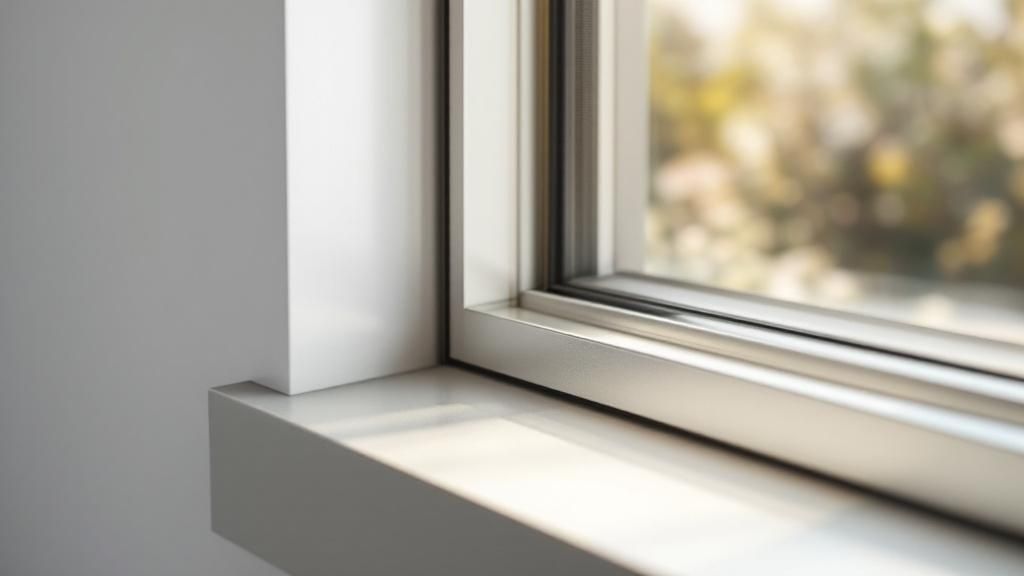
When durability and long-term performance are at the top of your list, it's hard to look past fiberglass. In any window material comparison, fiberglass windows emerge as a front-runner, engineered for incredible strength and resilience.
They represent a premier, high-performance solution built to handle the unique environmental stresses we see right here in Monterey County. For homeowners who want a “set it and forget it” window, fiberglass is often the ultimate investment.
The secret is in its composition. Fiberglass frames are made from strands of glass fibers saturated with resin and then pultruded—or pulled through a heated die—to create a material that is exceptionally tough and stable.
Unmatched Stability for Lasting Efficiency
One of the biggest advantages of fiberglass is its thermal expansion rate; the frame expands and contracts at almost the exact same rate as the glass pane it holds. This might sound like a minor detail, but it’s a game-changer for homes in Salinas and Carmel, where temperatures can swing.
This synchronized movement puts minimal stress on the window seals over time, while other materials can expand and contract differently from the glass, eventually weakening seals. A failed seal is what causes that foggy look between panes and a major loss of insulation.
Why This Matters: By drastically reducing the risk of seal failure, fiberglass windows provide superior, long-term energy efficiency. The exceptional insulation you pay for on day one is the same insulation you'll have years down the line.
Built to Withstand Coastal Conditions
The climate along Monterey Bay, with its constant salt spray and intense UV rays, is notoriously tough on building materials. This is where fiberglass truly proves its worth.
Unlike wood, fiberglass will never rot, warp, or corrode from moisture. Its durable factory finish resists chipping, peeling, and fading, which means you get the clean look of a painted window without ever having to touch a paintbrush.
Design Versatility Meets Raw Power
While fiberglass is prized for its brute strength, it doesn't sacrifice style. Because the material is so strong, manufacturers can produce frames with thinner profiles, which means more glass, more natural light, and better views of our beautiful Monterey County surroundings.
Fiberglass can even be manufactured to mimic the look of real wood, giving you that classic aesthetic without the demanding upkeep. To see how the glass itself contributes, you can explore a detailed analysis in our guide to single, double, and triple-pane windows.
Exploring Aluminum and Composite Window Options
Beyond the big three—vinyl, wood, and fiberglass—lie two other fantastic materials worth a look: aluminum and composite. For homeowners in Salinas and Monterey, these options solve specific problems, whether you're chasing a sleek, modern look or want the beauty of wood without the upkeep.
Aluminum windows bring strength and slim profiles to the table, perfect for maximizing those big, beautiful views. On the other hand, composite windows are the clever hybrids of the window world, blending the charm of wood with the resilience of modern polymers.
The Modern Appeal of Thermally-Broken Aluminum
For years, aluminum windows have been the go-to for commercial buildings and contemporary homes because of their incredible strength-to-weight ratio. This allows for super-thin, yet tough, frames that can hold massive panes of glass, creating the clean, minimalist lines essential to modern designs.
Of course, old-school aluminum frames were terrible insulators. Thankfully, modern engineering solved that with thermally-broken aluminum, which has a barrier that separates the inside and outside metal surfaces, effectively stopping energy transfer and making them an efficient choice for homes all over Monterey County.
Key Takeaway for Local Homes: Imagine a home in Carmel with a gorgeous ocean view. Thermally-broken aluminum windows can frame that vista perfectly with their slim design while still insulating against those cool coastal breezes.
The Hybrid Solution of Composite Windows
Composite windows are a smart blend of materials, created to give homeowners the best of both worlds. They're typically made from a mix of wood fibers and plastic polymers, which work together to mimic the rich appearance of wood without all the demanding maintenance.
This kind of innovation is a direct response to what homeowners want today. In fact, according to Mordor Intelligence, the global windows and doors market is expected to hit USD 270.39 billion by 2030, with plastic-based materials leading the charge. You can dive deeper into these global window and door market trends on mordorintelligence.com.
Thanks to their blended construction, composite windows are exceptionally strong, stable, and resistant to moisture and rot. While they often cost more than vinyl, many homeowners find their unique combination of strength, looks, and low maintenance is well worth the investment.
How Window Materials Impact Your Energy Bills
Believe it or not, the material you choose for your window frames has a direct and significant impact on your home's energy use and your monthly PG&E bill. A frame's ability to insulate is what determines how well your windows stop your expensive heated or cooled air from simply leaking outside.
For anyone living in Monterey County, this is a big deal. A properly insulated window frame is what keeps your home comfortable all year round, from hot summers in Salinas to cool, foggy evenings along the Carmel coast.
Understanding Key Energy Performance Metrics
When you look at a window's energy performance label, you'll see a couple of main ratings. Getting a handle on what they mean is the first step toward picking a truly efficient window.
- U-Factor: This number tells you how well a window prevents heat from escaping your home. The rule is simple: the lower the U-factor, the better the window insulates.
- Solar Heat Gain Coefficient (SHGC): This one measures how well a window blocks heat coming from the sun. Again, the lower the SHGC, the less solar heat it lets in, which is a huge advantage for a sunny spot like Salinas.
How Different Materials Measure Up
Each window material brings a different level of natural insulation to the table, which directly affects its U-factor and overall efficiency.
Vinyl and Fiberglass Windows
Both vinyl and fiberglass are fantastic insulators. Their frames are cleverly designed with internal chambers that trap air, creating a natural thermal barrier that makes them highly efficient and a top choice for easily meeting ENERGY STAR standards and California's demanding Title 24 building codes.
Wood Windows
Wood is a natural insulator, and its cellular structure does a great job of preventing thermal transfer. The catch? Any gaps, cracks, or rot from a lack of maintenance can completely wipe out these benefits, so upkeep is key.
Thermally-Broken Aluminum Windows
Standard aluminum is a terrible insulator, but modern thermally-broken aluminum frames have solved this problem. They feature a non-conductive strip that separates the interior and exterior metal, effectively putting a stop to heat flow.
Key Insight for Homeowners: Remember, the frame material is just one part of the equation. Real energy savings come from a complete system that includes high-performance glass.
This focus on the performance of the entire window is driving major growth in the industry. According to Precedence Research, the global energy-efficient windows market is projected to nearly double to USD 34.63 billion by 2034, pushed along by programs like ENERGY STAR. You can read more about these energy-efficient window market trends at precedenceresearch.com.
The synergy between the frame and the glass is what truly makes a difference, which is why considering options like double-pane glass is so important. You can find out more by reading our detailed look at the benefits of double-pane windows in Monterey.
Beyond the material itself, other features can add to a window's overall performance. For a deeper look into improving your home's thermal efficiency, it’s worth exploring how features like window coverings can contribute to overall home energy efficiency.
Frequently Asked Questions About Window Materials
Making the final call on window materials usually brings up a few last-minute, practical questions. After all, homeowners here in Monterey County have very different needs depending on their home's specific microclimate. Here are answers to some of the most common questions we hear.
What's the best window material for coastal homes near Monterey Bay?
For homes right on the coast in places like Monterey, Pacific Grove, or Carmel, fiberglass and high-quality vinyl are hands-down the top contenders. They are incredibly resistant to moisture, salt air, and corrosion. Unlike wood, they won't rot or warp, offering better durability and performance for the long haul in our foggy climate.
Are wood windows a bad idea for my home in Salinas?
Not necessarily a "bad" idea, but they do require a real commitment to maintenance. While Salinas is farther from the coast, the temperature swings and winter moisture still mean you'll need to stay on top of sealing and painting. If you love the authentic look of wood and are prepared for the upkeep, they can be beautiful, but fiberglass or composites can give you a similar look with a fraction of the work.
How much more do fiberglass windows really cost than vinyl?
On average, you can expect fiberglass windows to cost about 20-40% more than vinyl. While it's a noticeable upfront investment, many homeowners find the extra cost is justified by fiberglass's superior strength, longer lifespan, and better performance in extreme temperatures. For a precise quote tailored to your home, a free consultation is the best approach.
Do I have to replace all my windows at the same time?
Not at all. Many homeowners in our area tackle their window replacement in phases to make it more budget-friendly. A common strategy is to start with the side of your house that gets the most sun or is most exposed to weather, or simply replace the oldest, leakiest windows first. Our team can help you map out a smart plan that works for you.
What exactly is a "thermally-broken" aluminum window?
A "thermally-broken" aluminum window has a barrier—usually a strip of plastic—that separates the interior and exterior metal frames. Aluminum conducts heat, so this "break" stops that transfer, making the window significantly more energy-efficient. It’s an essential feature if you want the clean, modern style of aluminum windows for your Monterey County home without sacrificing performance.
Ready to find the perfect windows for your home? The experts at Signature Glass and Windows, Inc. have decades of experience helping homeowners in Salinas, Monterey, and the surrounding communities. As a locally owned, family-operated business, we pride ourselves on quality craftsmanship and trustworthy service.
Contact Signature Glass and Windows today for a free in-home consultation. Call us at 831-754-8855 or visit us online.