
Seeing foggy windows with dark spots along the frames? You're not alone. It’s a common sign of condensation on windows mold, which happens when warm, damp air inside your home hits the cold glass of your window. For homeowners in Salinas and Monterey, this moisture is the perfect invitation for mold to move in.
Why Your Windows Have Condensation and Mold

If you wake up to wet windows or find black spots on the sills, your home has too much humidity. Living in Monterey County, our damp coastal climate can make this feel like a constant battle. The problem starts when your window glass gets colder than the air's "dew point."
Think of it like a cold glass of water on a hot day—moisture forms on the outside. The same thing happens on your windows when it's cool outside and warm inside. The things we do every day, like cooking and showering, add even more moisture to the air.
Top Causes of Window Condensation in Monterey County Homes
| Cause | Why It Happens | Common in Coastal Homes? |
|---|---|---|
| High Indoor Humidity | Everyday activities like cooking, showering, and even breathing release moisture into the air. Without good airflow, it gets trapped inside. | Yes, our humid coastal air makes it harder for indoor moisture to escape. |
| Poor Ventilation | Airtight homes are great for saving energy, but they can trap humid air inside. This trapped air leads to condensation. | Yes, especially in newer homes without upgraded ventilation systems. |
| Single-Pane Windows | These older windows have no insulation. This makes the glass very cold and a magnet for moisture. | Very, especially in the historic homes common in Carmel and Pacific Grove. |
| Temperature Differences | A big difference between your warm indoor air and the chilly outside air makes condensation form much faster. | Absolutely, our cool evenings create the perfect conditions for this. |
As you can see, our local climate plays a big role. But the good news is that you have more control than you might think.
Common Sources of Indoor Moisture
Simple, everyday routines can pump up the humidity inside your home. All that water vapor has to go somewhere, and it usually finds the coolest surface around—your windows.
Here are the usual suspects:
- Cooking and boiling water without an exhaust fan running.
- Long, hot showers that create a lot of steam.
- Running dishwashers or washing machines.
- Even breathing adds a surprising amount of moisture over time.
This isn't just a local issue. Studies show that dampness and mold affect up to 47% of American homes. This shows how common this problem really is.
Condensation is your home’s way of telling you there’s too much moisture in the air. Fixing it quickly protects your windows and improves your indoor air quality.
For those of us in Carmel and Pacific Grove with beautiful older homes, single-pane windows are often the biggest problem. They offer almost no insulation, so their surfaces get very cold in the winter and are always "sweating." This constant moisture can ruin wooden frames and create a perfect home for mold.
Understanding why this is happening is the first step. Now, we can start looking at common window condensation solutions that will work for your home.
The Hidden Health Risks of Window Mold
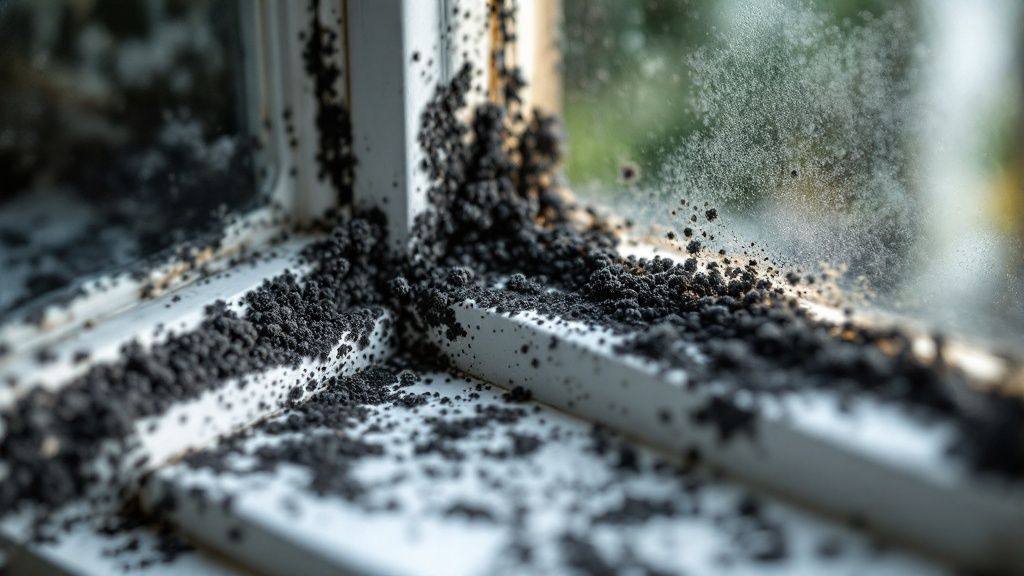
That small patch of black fuzz on your window sill might just look ugly, but it's a much bigger deal. Mold releases tiny, invisible spores into the air that your family breathes. For homeowners here in Salinas and Monterey, ignoring condensation and mold can have a real impact on your home’s air quality.
These airborne spores can be irritating. For many people, they can trigger a whole range of uncomfortable symptoms, especially for those with breathing conditions.
How Mold Spores Can Affect Your Health
When you breathe them in, mold spores can cause allergic reactions. Think of it like seasonal pollen, but it’s growing right inside your living room. The more spores in the air, the higher the risk of a reaction.
Some common health issues linked to indoor mold include:
- Constant Allergy Symptoms: This isn't just a seasonal sniffle. It can cause a stuffy nose, sneezing, and itchy, watery eyes that don't go away.
- Respiratory Problems: For anyone with asthma, mold spores are a known trigger. They can lead to more frequent asthma attacks, coughing, and wheezing.
- Skin Irritation: In some cases, just being in the same room can cause rashes or skin irritation.
- General Discomfort: Many people also report headaches, fatigue, and trouble concentrating when there's a mold problem.
This isn't just a minor issue; the health effects are serious. In fact, research shows that young children are especially vulnerable. They face a threefold increased risk of developing asthma if they're exposed to mold early in life.
Your home should be a safe place, not a source of health problems. Getting to the root cause of window mold is a key step in protecting your family’s well-being.
Why Children and the Elderly Are More Vulnerable
Some family members are more sensitive to the effects of mold. Their immune systems may have a harder time fighting off the effects of inhaled spores.
This group includes:
- Infants and Young Children: Their respiratory systems are still developing, which makes them more vulnerable to irritation.
- Seniors: Older adults often have other health conditions or weaker immune systems, making them more sensitive to poor air quality.
- Anyone with Allergies or Asthma: For these individuals, mold is a direct trigger that can make their symptoms much worse.
The cycle of condensation on your windows provides a steady water source for mold to grow. Understanding what causes windows to fog up is the first step in breaking this cycle and clearing the air in your home. By tackling the moisture problem, you eliminate the mold and its health risks.
How to Safely Clean Mold from Your Windows
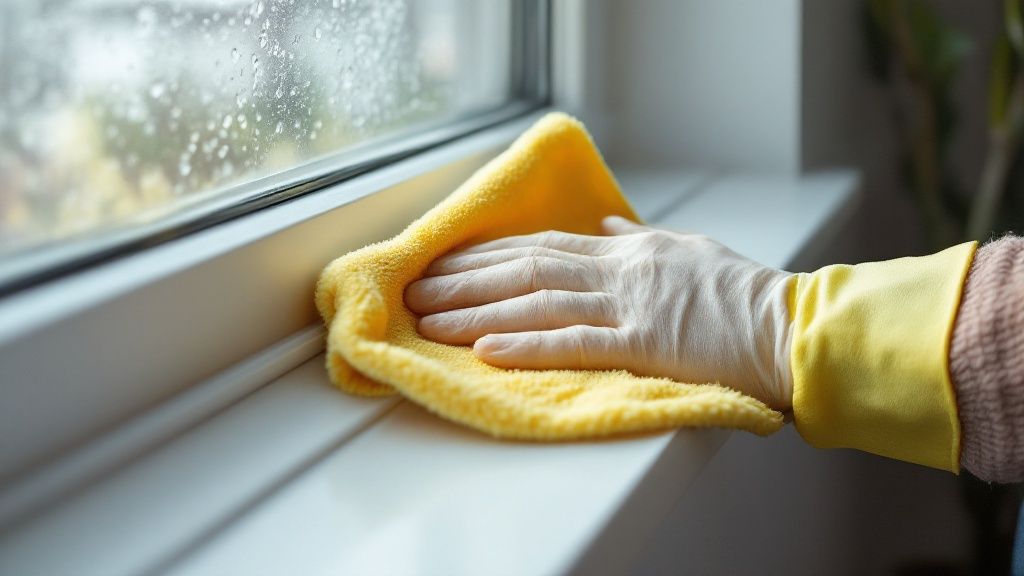
Spotting mold along your window frames can be unsettling. But don't panic—small patches are usually something you can handle yourself. With the right tools and a few simple safety steps, you can get those frames clean again.
Before you start, get your supplies ready and protect yourself. Your first priority is to avoid breathing in any mold spores, so a mask is a must-have. You'll also want to protect your hands and eyes from the mold and your cleaning solution.
Gather Your Cleaning Supplies
You don't need harsh chemicals to get the job done. A simple, natural approach is often best, especially on the wood frames we see in many Carmel and Pacific Grove homes.
Here's what you'll need:
- Safety Gear: An N95 mask, protective goggles, and rubber gloves.
- Cleaning Solution: A spray bottle filled with a 50/50 mix of white vinegar and water.
- Tools: A soft-bristled brush (or an old toothbrush) and several clean cloths.
- Disposal: A plastic bag to throw away all used cloths when you're done.
We recommend white vinegar because its acidity is great for killing mold at the root on surfaces like wood. Bleach often only cleans the surface, allowing the mold to grow back.
For small mold spots, a simple vinegar solution is your best friend. It’s safer than bleach and more effective at preventing mold from returning on materials like wood.
The Cleaning Process
Got your gear ready? Let's get started.
First, spray the vinegar solution directly on the mold until the area is completely wet. Let it sit for at least one hour. This gives the vinegar time to work its way into the surface and kill the mold spores.
After an hour, use your soft-bristled brush to gently scrub the moldy spots. This will lift the mold away without damaging your window frames. An old toothbrush works great for tight corners.
Finally, wipe everything with a clean, damp cloth to remove any leftover mold and vinegar. Then, take a dry cloth and dry the entire area completely. This last step is very important, as leaving any moisture behind will only invite the mold to return.
If you're dealing with a larger mold problem, calling a professional is a smart move. Options like professional window cleaning services can save you time and ensure the job is done safely.
Practical Ways to Reduce Indoor Humidity
Cleaning up mold is a good start, but it doesn't fix the main problem. The real solution is keeping it from coming back. This comes down to managing the humidity levels inside your Salinas or Monterey home.
You should aim to keep your indoor humidity below 50%. This level is comfortable for you but too dry for mold to grow. You can easily check this with a simple tool called a hygrometer, which you can find at a local hardware store.
Improve Your Home's Air Circulation
Mold loves still, damp air. One of the easiest ways to lower humidity is to get fresh air moving through your home. The coastal breeze we get here in Monterey County is a free, natural dehumidifier.
Here are a few simple habits to try:
- Use Exhaust Fans: Every time you cook or shower, turn on the exhaust fan. Let it run for 15–20 minutes after you finish to pull all the steam out of the room.
- Open Windows: Even on a cool day, opening windows on opposite sides of your house for 15 minutes can create a nice cross-breeze. This flushes out the damp, stale air.
- Run Ceiling Fans: Keep ceiling fans spinning on a low setting. This helps keep air moving and stops damp spots from forming near windows.
Good ventilation is a key part of this process. It's also important to make sure your fans are working well. Simple tasks like cleaning your bathroom exhaust fan make a big difference.
Think of your home as a living system. Good airflow is essential for its health. Trapped moisture is the number one cause of condensation and mold.
Invest in a Dehumidifier
For some homes that naturally hold on to moisture, a dehumidifier can be a game-changer. These machines pull moisture directly out of the air. You just need to empty the water they collect.
Running a dehumidifier, especially during wetter months, is a great way to keep humidity below that ideal 50% level.
Controlling humidity is also part of a smart energy strategy. When your HVAC system isn’t working hard to remove moisture, it runs more efficiently. You can learn more in our guide on how to save energy at home.
When Upgrading Your Windows Is the Best Solution
If you’ve tried improving ventilation and still see foggy windows every morning, the problem might be the windows themselves. For many homeowners in Salinas and Monterey, older single-pane windows are the real cause of condensation and mold. They just don't have the insulation needed for our coastal climate.
This constant moisture problem is more than just an annoyance. It can lead to expensive repairs and health concerns. Upgrading your windows isn't just an expense—it's an investment in your home's long-term health.
How Modern Windows Prevent Condensation
The difference between old single-pane windows and new double-pane windows is huge. A single pane of glass gets nearly as cold as the outside air, making it a perfect spot for moisture to gather. Modern windows are designed to stop this from happening.
They use two panes of glass with a sealed air gap in between, which acts as an insulator. This simple change keeps the inside pane of glass much warmer.
- Double-Pane Construction: Two layers of glass slow down heat transfer, so the inside surface stays closer to room temperature.
- Low-E Coatings: A tiny, clear metallic coating on the glass reflects heat back into your home, improving insulation.
- Argon Gas Fills: The space between the panes is often filled with a dense gas like argon, which insulates better than regular air.
This combination means that even on a chilly Monterey morning, the inside of your window stays too warm for water to condense. No more fog and no more drips.
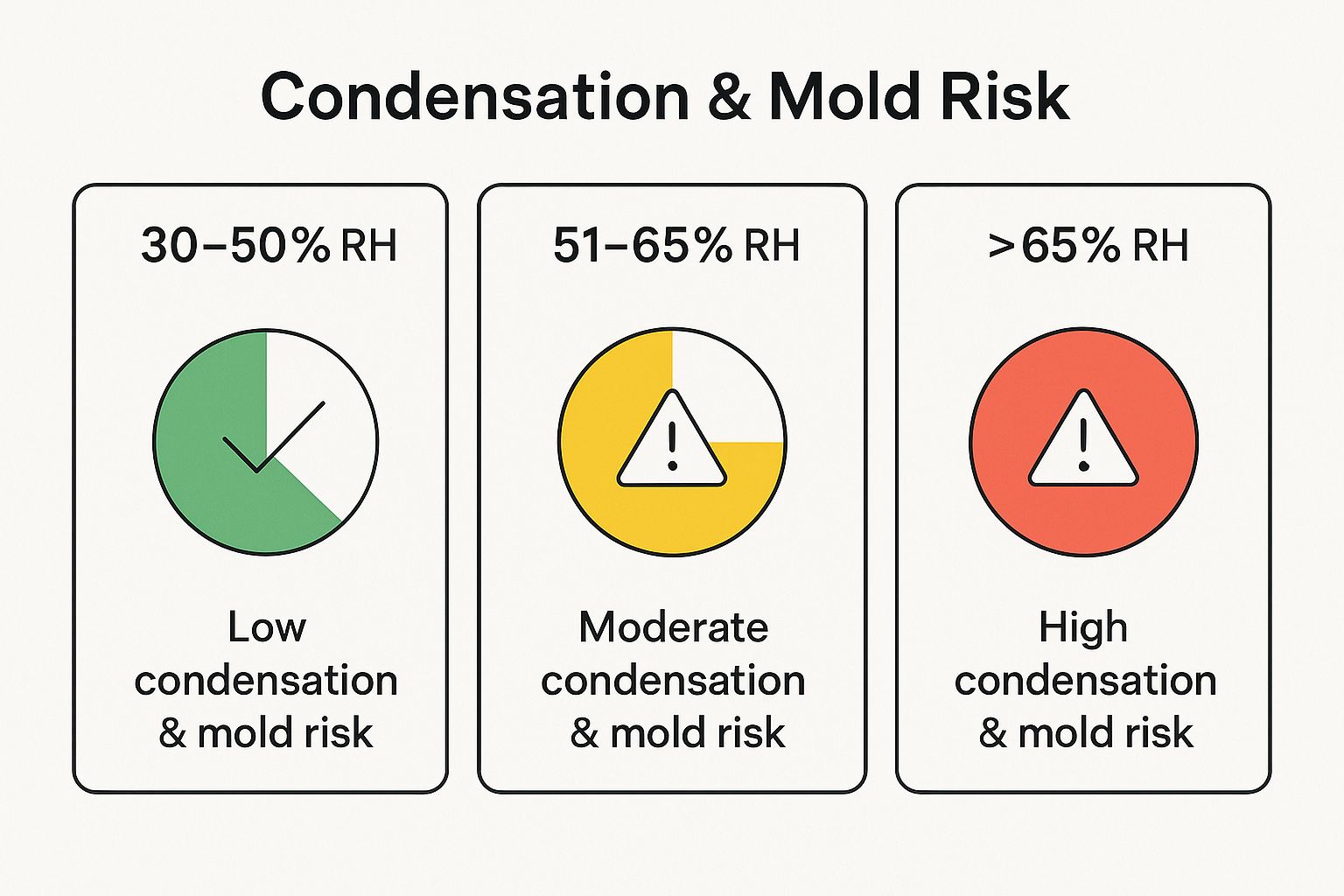
Keeping your indoor humidity below 65% is key, but a well-insulated window makes that goal much easier to reach.
Single-Pane vs. Double-Pane Windows for Condensation Prevention
It can be hard to picture how much of a difference an upgrade makes. This table shows why modern double-pane windows are the clear winner for preventing condensation and mold.
| Window Feature | Single-Pane Windows | Modern Double-Pane Windows |
|---|---|---|
| Insulation | Very poor; a single layer of glass offers little protection from the cold. | Excellent; two panes of glass with an insulating gas layer. |
| Inner Glass Temperature | Gets very cold, often close to the outdoor temperature. | Stays much closer to your home's indoor room temperature. |
| Condensation Risk | High; creates a perfect surface for moisture to form. | Very low; the warmer glass surface prevents condensation. |
| Mold Growth Potential | High; constant moisture feeds mold growth on frames and sills. | Minimal; it removes the water source that mold needs to grow. |
| Energy Efficiency | Low; a lot of heat is lost in winter and gained in summer. | High; reduces heating and cooling costs all year. |
The takeaway is clear. While single-pane windows are a constant source of moisture problems, modern double-pane windows are designed to solve them for good.
An Investment in Your Home’s Health and Value
Thinking of new windows as just another expense misses the big picture. It’s an upgrade that pays you back in many ways. By solving your condensation problem for good, you’re cutting off the water source for mold and creating a healthier home.
Upgrading your windows isn't just about stopping condensation. It's about being more comfortable, lowering your energy bills, and making your home a healthier place to live.
On top of that, new windows boost your home’s energy efficiency. The U.S. Department of Energy estimates that replacing single-pane windows can save homeowners between $126 and $465 per year. For homeowners in Carmel and Pacific Grove with older homes, those savings add up quickly. If you're wondering if now is the right time, our guide can help you decide when to replace your windows.
Your Window Mold Questions, Answered
Over the years, our family-owned business has heard almost every question about window condensation from homeowners in our community. Let's cover some of the most common ones to give you a clearer picture of how to fix this problem for good.
Frequently Asked Questions
Is a little condensation on my windows really a big deal?
Yes, it is. While a little fog might seem harmless, constant condensation is a sign of high indoor humidity. That moisture creates the perfect breeding ground for mold on window frames and sills, which can harm your home's air quality and your family's health.
Can I just clean the mold on my window sills with bleach?
We don't recommend using bleach. It might kill surface mold on glass, but it doesn't work well on porous surfaces like the wood frames in many Salinas homes. A simple mix of white vinegar and water is a much safer and more effective choice for cleaning it yourself.
Will running a dehumidifier solve my window condensation problem?
A dehumidifier can help, but it's often a temporary fix. It pulls moisture from the air, which reduces condensation. But for many homes in Monterey County with old, single-pane windows, you are only treating the symptom (damp air), not the root cause (a cold window surface).
Why are my brand-new windows still getting condensation?
It depends on where the condensation is. If it's on the outside of your new windows, that's a good sign! It means the window is insulating so well that it's keeping your home’s heat from warming the outer pane of glass. If it's on the inside, your home's humidity is still too high, and you should focus on improving ventilation.
How do I know if it’s time to replace my windows to finally stop the mold?
It's time for an upgrade if you've tried improving ventilation but are still fighting condensation. Other clear signs include window frames that are warped, soft, or stained from moisture damage. If you have single-pane windows that are always wet in the winter, modern energy-efficient windows are your best long-term solution.
Ready to end your window condensation and mold problems for good? The team at Signature Glass and Windows, Inc. has been helping homeowners in Salinas, Monterey, and Carmel for decades. As a local, family-operated business, we pride ourselves on quality craftsmanship and trustworthy service.
Contact us today for a free in-home consultation at 831-754-8855 or visit our website at https://signatureglassandwindows.com.