
Picking the right "energy-saving" window isn't a one-size-fits-all deal. This is especially true here in Monterey County. A window that's perfect for a home in the Salinas Valley sun might be a poor choice for a house in Carmel's coastal fog.
The trick is to match the window's technology to your home's specific climate. After all, not all energy-saving windows are equal.
Why Your Window Choice Matters in Monterey County
For homeowners in Salinas and Monterey, new windows are a big investment. It's easy to hear terms like "double-pane" or "energy-efficient" and think that's enough. But the real savings are in the details, and a generic window isn't designed for our region's unique weather.
A window made for a snowy climate won't help you here. Likewise, one built for a dry desert won't stand up to the salty air along the Monterey Bay coast. Understanding these small differences is key to making a smart investment instead of a costly mistake.
Tailoring Windows to Your Local Climate
An energy-efficient window is all about managing heat. In the summer, you want to block the sun's heat. In the winter, you want to keep your heated air from escaping. Our local climates make this a unique challenge.
- Salinas Valley Heat: Homes here need windows that block solar heat well. This is the key to keeping your cooling costs down during long, sunny summers.
- Monterey & Carmel Coast: Along the coast, the focus shifts. You need windows with great insulation to stay cozy during cool, foggy evenings while also resisting moisture and salt.
Other solutions can also work with your windows. For example, sun block window screens can add another layer of comfort and efficiency.
Choosing the right window is about more than a lower energy bill—it's about creating a comfortable home. A window system picked for your specific location makes a real difference in how your home feels every day.
This quick breakdown shows why a one-size-fits-all window doesn't work here.
| Window Factor | Salinas Home (Inland Heat) | Monterey Home (Coastal Fog) |
|---|---|---|
| Primary Goal | Block intense sun and heat. | Insulate against cool, damp air. |
| Key Feature | Low Solar Heat Gain Coefficient (SHGC). | Low U-Factor for better insulation. |
| Frame Material | Must resist warping from heat. | Must resist moisture and salt corrosion. |
| Potential Issue | Overheating rooms, high AC bills. | Drafty rooms, condensation, heat loss. |
The needs of homes can be very different, even if they are just a few miles apart. Learning about the benefits of energy-efficient windows designed for your situation is the first step. Thinking about these local factors ensures your new windows deliver the performance and savings you expect.
How to Read an NFRC Label Like a Pro
Every high-performance window has a small sticker that tells you its energy efficiency story. This is the NFRC label. It's your key to cutting through marketing claims and seeing the real facts.
For anyone living in Monterey County, this label is your best tool for finding windows that will perform well. It shows why a window that's perfect for a sunny Salinas home might be a poor choice for a foggy Carmel cottage. Learning to read these numbers puts you in control.
U-Factor: The Insulation Powerhouse
The first number to look for is the U-Factor. This tells you how well a window keeps heated air inside your home. The rule is simple: the lower the number, the better the window insulates.
A low U-Factor is essential for comfort during cool nights along the coast in Monterey. A window with a high U-Factor will feel chilly and make your heater work harder. California's Title 24 building code sets a maximum U-Factor of 0.30 for most windows.
Solar Heat Gain Coefficient: Blocking Unwanted Sun
Next up is the Solar Heat Gain Coefficient (SHGC). This measures how much of the sun's heat a window lets into your home. A lower SHGC means less solar heat gets through, which helps keep your house cool without running the A/C.
This rating is very important if you live inland in places like Salinas. To combat this, Title 24 generally requires an SHGC of 0.25 or lower in our climate zone. This makes a huge difference in managing afternoon heat.
This infographic shows how different the needs are between our inland and coastal communities.
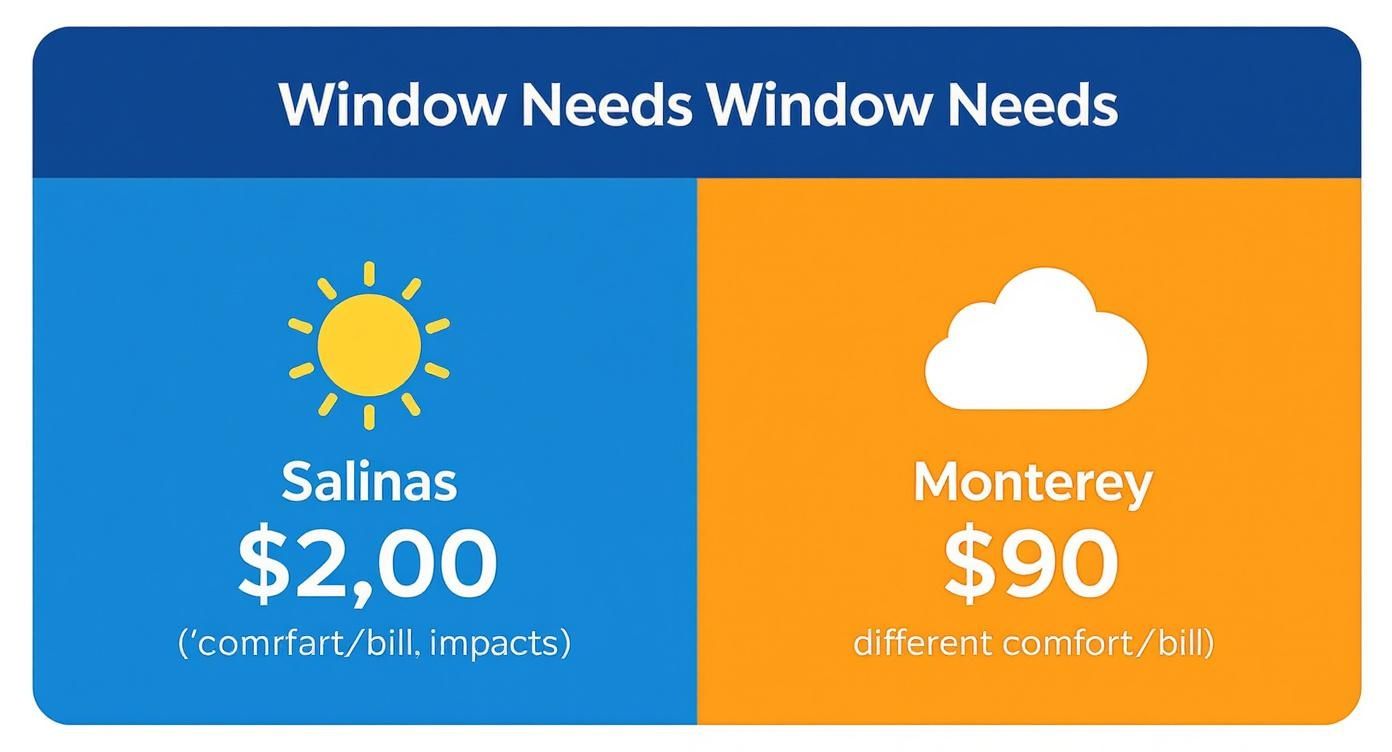
As you can see, a low SHGC is the top priority for Salinas. Meanwhile, a low U-Factor is what really matters for comfort on the Monterey Peninsula.
The NFRC label is like a nutrition label for your windows. It gives you clear, unbiased facts on performance, letting you choose what’s best for your home and your wallet.
Matching Ratings to Your Microclimate
The right window ratings can make a big difference in your energy bills. They can lower heating and cooling costs by 15-30% compared to old single-pane windows. But getting it right means matching the numbers to your location.
This table breaks down the ideal ratings for our two main climates in Monterey County.
| Climate Zone | Ideal U-Factor | Ideal SHGC | Why It Matters |
|---|---|---|---|
| Inland (Salinas, Gonzales) | ≤ 0.30 | ≤ 0.23 | Priority is blocking intense sun and heat to reduce A/C costs. |
| Coastal (Monterey, Carmel) | ≤ 0.27 | ~0.25 | Priority is insulating against cool, foggy weather to reduce heating costs. |
Choosing windows based on these two ratings is the most important first step. For a deeper look, you can check our guide to understanding Energy Star window ratings. Making an informed choice using these NFRC numbers ensures your new windows will deliver.
Choosing the Right Window Frame for Our Climate
The glass in a window gets most of the attention, but the frame is its backbone. For anyone in Monterey County, the frame material you choose is just as important as the glass. It affects durability, insulation, and long-term performance.
Because not all energy-saving windows are equal, you must understand how different frames react to local conditions. Let's compare vinyl, fiberglass, and aluminum. This will help you decide on the best option, whether you're in the Salinas Valley heat or Monterey's salt air.
Vinyl Frames: A Versatile and Cost-Effective Choice
Vinyl windows are popular for a good reason. They offer solid energy efficiency at a reasonable price, providing great value for most homeowners here. Modern vinyl frames have internal chambers that trap air, creating a natural insulating barrier.
These frames are also very resistant to moisture, which is a big plus for homes in coastal spots like Carmel. Unlike wood, vinyl won’t rot or peel when exposed to damp, salty air. This means they'll look and work great with little upkeep.
Fiberglass Frames: Superior Strength and Durability
Fiberglass frames are a step up in performance and toughness. Made from glass fibers and resin, these frames are very strong and rigid. One of their biggest advantages is their low thermal expansion rate, meaning they barely expand or contract with temperature changes.
That stability is key for homeowners in places like Salinas, where temperatures can swing a lot. A fiberglass frame won't warp in the summer sun, which keeps the seals around the glass tight for years. This guarantees consistent, long-term energy performance.
Because fiberglass expands and contracts at nearly the same rate as the glass it holds, the entire window unit remains stable. This reduces stress on the seals, which is a leading cause of lost energy efficiency in other materials.
Aluminum Frames: Modern Style with Thermal Breaks
Aluminum frames are known for their slim profiles and modern look. The problem is that traditional aluminum is a poor insulator. That's why older aluminum windows often cause major energy loss.
The solution is a thermal break. Modern aluminum frames have a strip of less conductive material between the interior and exterior frame. This break stops the flow of heat and improves the window's U-Factor.
Picking the right material means balancing your budget, style, and location's needs. To help, we've put together a detailed window material comparison that explores each option.
Frame Material Performance in Monterey County
This table gives you a snapshot of how different window frame materials hold up to our local conditions.
| Frame Material | Best For | Durability in Coastal Areas | Energy Efficiency | Maintenance Level |
|---|---|---|---|---|
| Vinyl | Overall value and moisture resistance. | Excellent – Resists salt and moisture. | Very Good | Low |
| Fiberglass | Maximum durability and temperature stability. | Excellent – Resists warping, salt, and moisture. | Excellent | Low |
| Aluminum (Thermally Broken) | Modern style and slim sightlines. | Good – Powder coating helps resist corrosion. | Good | Low |
For many homeowners, high-quality vinyl hits the sweet spot of performance and price. But for those who want the longest-lasting solution for our climate, fiberglass is an unbeatable investment.
Understanding Low-E Coatings and Gas Fills
The real magic behind today's energy-efficient windows is the invisible technology between the panes of glass. Key features that boost performance are low-emissivity (Low-E) coatings and inert gas fills. Getting the right combination is the secret to year-round comfort in your Monterey County home.
Low-E coatings are very thin, clear layers of metal applied to the glass. During our warm summers, they reflect the sun's infrared heat away from your house. In winter, they reflect your furnace's heat back inside so it doesn't escape.
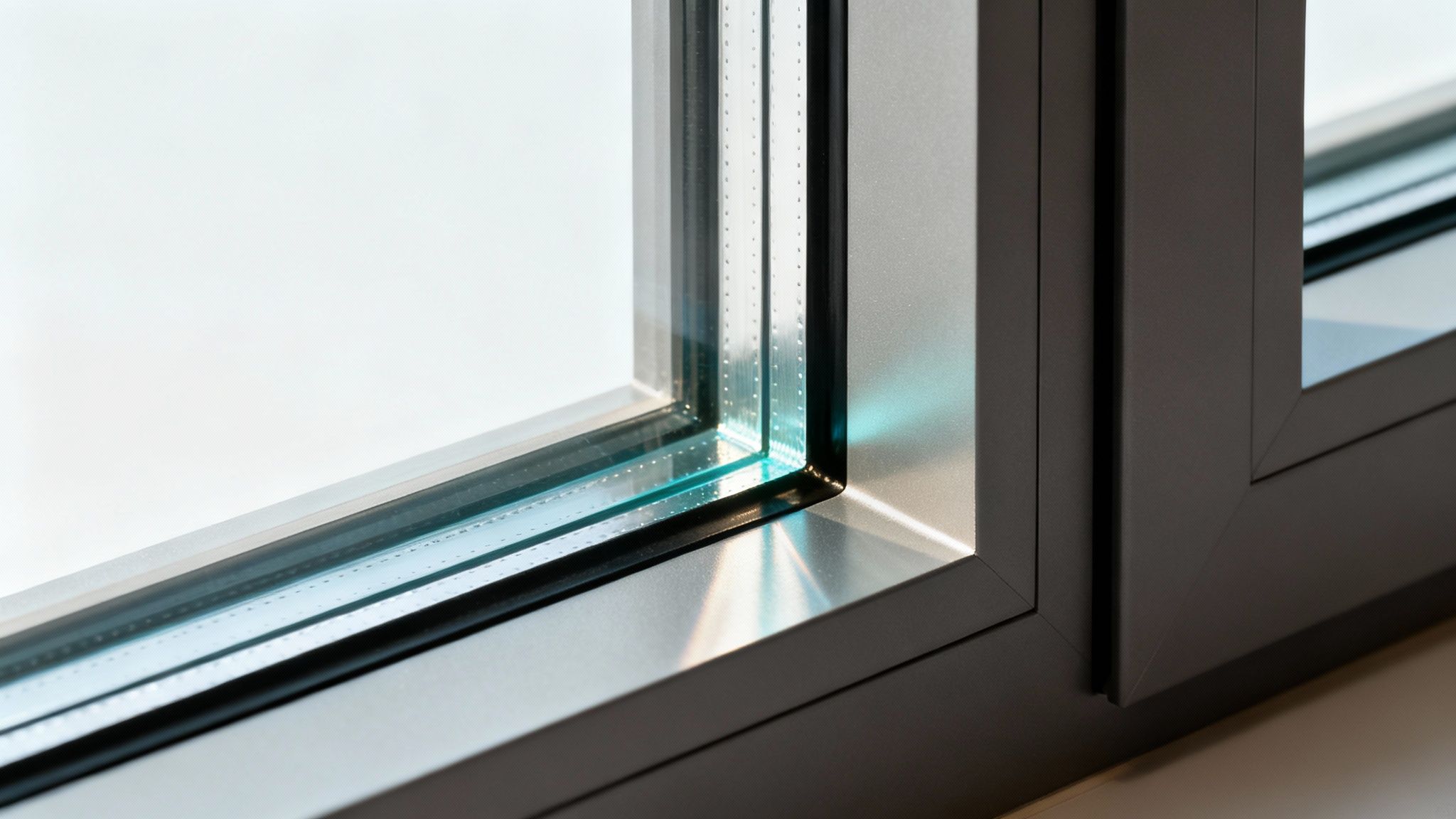
How Low-E Coatings Work for You
For anyone living between Salinas and Monterey, it's vital to know that not all energy-saving windows are equal when it comes to heat. Different coatings are made for different climates. Picking the right one affects both your comfort and your energy bills.
- Solar Control Low-E: This type is designed to block a lot of the sun's heat. It's the best choice for homes in sunny areas like Salinas, as it can cool down rooms and cut A/C use.
- Passive Low-E: This coating lets in more of the sun's heat while stopping your home's warmth from escaping. It's a smart choice for certain windows on a coastal Monterey home to capture warmth on cooler days.
According to the U.S. Department of Energy, windows with low-emissivity coatings can reduce heat loss by 30-50%. To learn more, check out our guide on what Low-E windows are and how they work.
The Role of Argon Gas Fill
The final piece of the puzzle is the gas sealed between the glass panes. Modern windows are filled with a dense gas like argon. This simple upgrade makes a big difference.
Argon is much denser than regular air and a poor conductor of heat. This density slows down heat transfer through the window, which improves its U-Factor and overall insulation.
This extra insulation stops the cool Monterey fog from seeping into your home. Since argon is non-toxic and clear, you'll never notice it's there. But you will feel the improved comfort and see the savings on your energy bills.
Why Professional Installation Is Not Negotiable
You can buy the most advanced, energy-efficient window, but if it’s installed poorly, you've wasted your money. Proper installation is the final step that determines if you see those energy savings. A bad installation can lead to new problems.
The U.S. Department of Energy estimates that poor installation can increase heat loss by up to 30%. Air leaks, water damage, and broken seals are almost always the result of an installer cutting corners. This is why not all energy-saving windows are equal in the real world—the installer's skill makes all the difference.
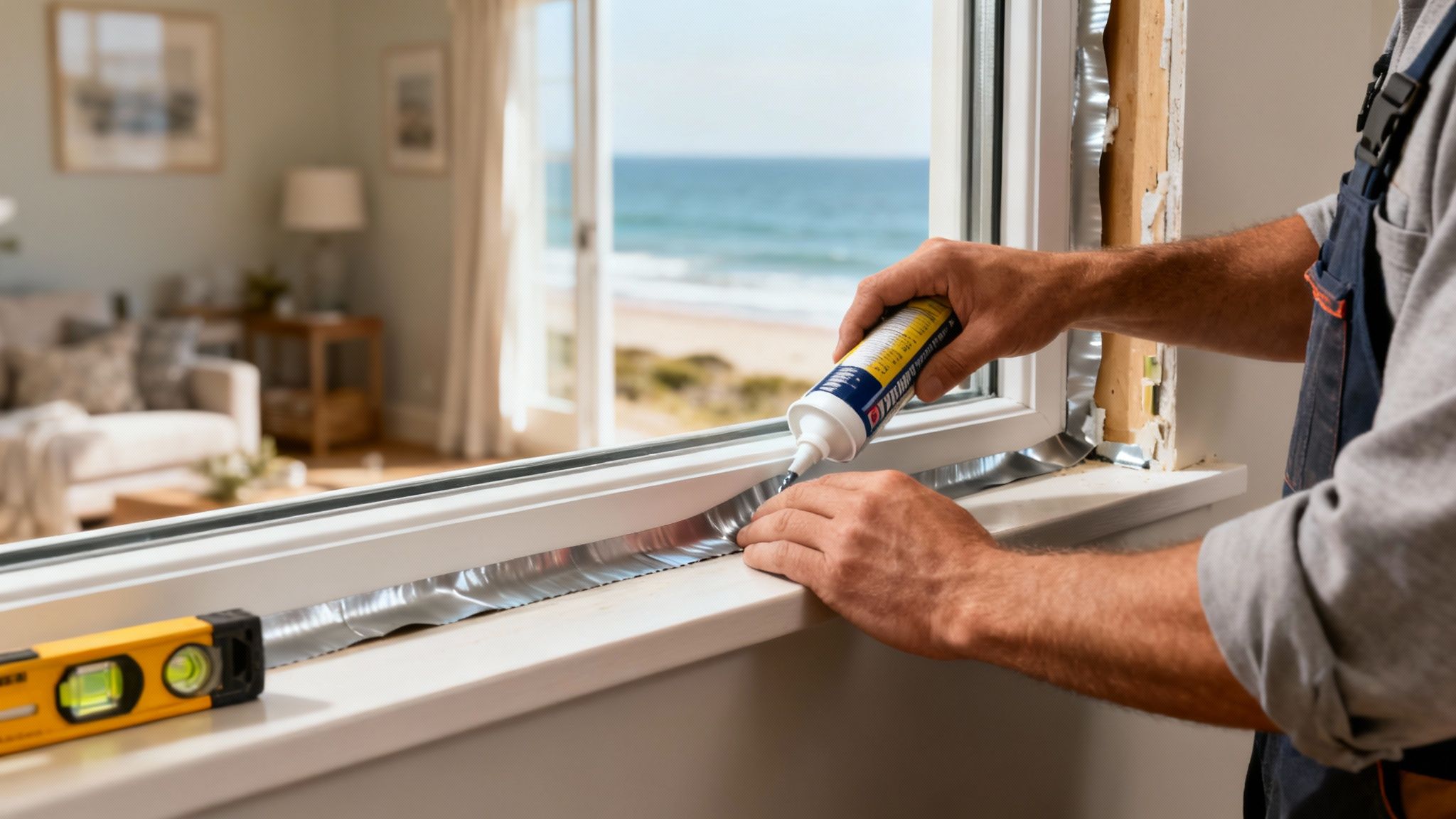
The Anatomy of a Perfect Installation
A professional installation is a careful process that protects your home and ensures your new windows perform as promised. A certified installer knows how to create a weatherproof barrier that handles our local climate challenges. It’s a craft.
Here’s what that looks like:
- Proper Flashing: A waterproof membrane is layered to direct water away from the window opening. This is your main defense against rot and mold.
- Precision Sealing: The installer uses high-quality caulk to create an airtight seal around the entire window. This stops energy-sucking drafts.
- Correct Insulation: The small gap between the window and wall is filled with insulation. This stops heat transfer and keeps your conditioned air inside.
When these steps are done right, the window's U-Factor and SHGC ratings actually mean something. A sloppy job guarantees drafts and high energy bills.
Your window's performance is a partnership between the manufacturer and the installer. Investing in a professional team like Signature Glass and Windows protects your investment and guarantees the results.
Local Expertise Matters More Than You Think
Hiring an installer with deep local experience is very valuable. A team that works only in Salinas and Monterey knows how to deal with things a generalist might miss. This includes the corrosive salt air on the coast or foundation shifts in older homes.
This on-the-ground knowledge prevents long-term headaches. Taking time to check your installer is as important as choosing the window itself. You can find more advice in our guide on how to choose the right window installer in Monterey County. It is full of practical advice to help you decide with confidence. For any home project, it's wise to review tips for choosing a reliable home improvement contractor.
Maximizing Your Investment with Rebates and Tax Credits
Putting new windows in your home is a big investment, but you don't have to pay the full cost alone. Homeowners in Salinas and Monterey County can use financial incentives for choosing energy-efficient products. These programs reward you for making a smart upgrade.
Understanding these programs is the secret to getting the best return on your investment. There are incentives at both the federal and state levels. Knowing which windows qualify before you buy is very important.
Unlocking Federal and State Incentives
The federal energy tax credit is a great incentive. Homeowners can receive a tax credit for 30% of the project cost, up to $600, for qualifying window upgrades made through 2032. To be eligible, windows must meet specific ENERGY STAR requirements.
California homeowners can often find local rebates, too. Programs like Energy Upgrade California sometimes offer perks you can combine with federal credits. These local programs change often, so check what's available before you start your project.
How to Ensure Your Windows Qualify
To get these savings, your new windows must meet strict performance targets. This is where the NFRC label is your best friend again. You can see how the energy-efficient windows market is growing from reports by firms like Grand View Research.
Here’s what to look for:
- ENERGY STAR Certification: The easiest way to know a window is eligible is to find the official ENERGY STAR logo.
- Specific U-Factor and SHGC Ratings: Rebate programs will list the required U-Factor and SHGC values for your windows.
- Proof of Purchase: Always keep your receipts and the NFRC labels that come on your windows. You’ll need this paperwork when you file your taxes or apply for a rebate.
Navigating these programs can feel overwhelming, but the savings are real. A good local window pro can guide you to products that fit your home and qualify for every available credit and rebate.
When you choose the right windows, you save money in three ways: with rebates, on your taxes, and on your monthly energy bills. This triple-win shows why a planned window upgrade is one of the smartest moves a homeowner can make.
Common Questions We Hear From Local Homeowners
Picking the right windows is a big decision, and it’s normal to have questions. To help homeowners in Salinas and Monterey feel confident, we’ve answered the questions we hear most often. This should clear up why not all energy-saving windows are equal and what that means for your home.
Frequently Asked Questions
What's the biggest mistake homeowners make when choosing new windows?
The biggest mistake is focusing only on price or a single feature, like having double panes. The specific performance ratings—the U-Factor and SHGC—are what really matter for our Monterey County climate. Always check the NFRC label and talk with a local expert to ensure the window you choose can handle everything from Salinas heat to Monterey fog.
Are triple-pane windows worth the extra cost around here?
For most homes in Salinas and Monterey, a high-performance double-pane window is the sweet spot. It gives you the best value. Triple-pane windows are built for extreme, freezing climates, so the extra cost doesn't pay off in our mild weather. A well-chosen double-pane unit will keep you comfortable and lower your energy bills.
How long should new energy-efficient windows last?
When installed correctly by a professional, high-quality vinyl or fiberglass windows can last from 20 to 40 years. Much depends on the frame material, window quality, and local conditions like sun or salt air. Simple maintenance, like keeping the frames and tracks clean, helps them last longer.
Choosing quality materials and ensuring professional installation are the two most important factors in maximizing the lifespan and performance of your new windows. It's an investment in your home's long-term value and comfort.
Do energy-efficient windows also help with noise reduction?
Yes, they make a huge difference. The same features that make them energy-efficient—multiple panes of glass, gas fills, and solid frames—are great at blocking outside noise. It’s a major bonus for anyone living near a busy street in Salinas or a packed Monterey neighborhood. You'll notice the peace and quiet right away.
Should I just replace the glass or the whole window?
While replacing only the glass might seem cheaper, it usually doesn't solve the real problem. If your window frames are old, they are likely warped, drafty, and inefficient. A full-frame replacement means the entire unit is new, sealed tight, and properly insulated. This gives you the best energy savings and a solution that will last.
Ready to upgrade your windows the smart way? Contact Signature Glass and Windows, Inc. for a local energy audit and window consultation—customized for your home’s needs, energy goals, and the unique Salinas-Monterey climate. Visit us online at https://signatureglassandwindows.com or call us at 831-754-8855 to schedule your free estimate.