
Homeowners in Salinas, Monterey, Carmel, and nearby Central Coast areas often wonder if retrofit windows are a shortcut or a smart investment. They ask if retrofitting fixes energy issues or if full-frame replacement is better.
If your existing window frames are solid and square, a retrofit can save time and money while still hitting energy targets. But if frames show rot, warping, or are out of shape, full-frame replacement is the safer long-term bet.
Key Trade-Offs For Retrofit Versus Replacement
Deciding between retrofit and full replacement hinges on a few real-world factors:
- Frame Condition: Retrofit kits slide into well-preserved, square frames.
- Budget Impact: Retrofitting typically costs 20%–40% less upfront than a full-frame swap.
- Installation Footprint: You can often finish a retrofit in a day or two with minimal dust.
- Energy Targets: Both strategies can meet Title 24 efficiency standards in California.
- Energy Savings: Replacing old single-pane windows can cut energy bills by 12%–25% (Energy Star window ratings).
- Preservation Goals: Retrofits keep your existing trim and siding intact.
- Long-Term Care: Full replacement brings new materials and warranties; retrofits avoid extensive exterior work.
- Visual Consistency: Replace frames for uniform curb appeal; retrofit to maintain historic profiles.
- Incentive Eligibility: ENERGY STAR retrofit kits often qualify for federal tax credits.
- Common Misstep: Many assume full-frame is always better, but retrofits can match or exceed performance when frames are sound.
Quick Comparison Of Retrofit Vs Replacement
Below is a side-by-side look at cost, ROI, installation time, home disruption, energy performance, and preservation impact for retrofit and full-frame options.
| Criteria | Retrofit | Full Replacement |
|---|---|---|
| Investment | Lower upfront cost | Higher upfront cost |
| Return On Investment | Moderate payback (5–8 years) | Strong payback (7–10 years) |
| Installation Time | 1–2 days, interior work | 3–5 days, includes exterior work |
| Home Disruption | Minimal paint or trim repair | Requires drywall, siding, trim |
| Energy Performance | 12%–25% bill savings | 20%–30% bill savings |
| Preservation Impact | Keeps historic frames and trim | New appearance, uniform finish |
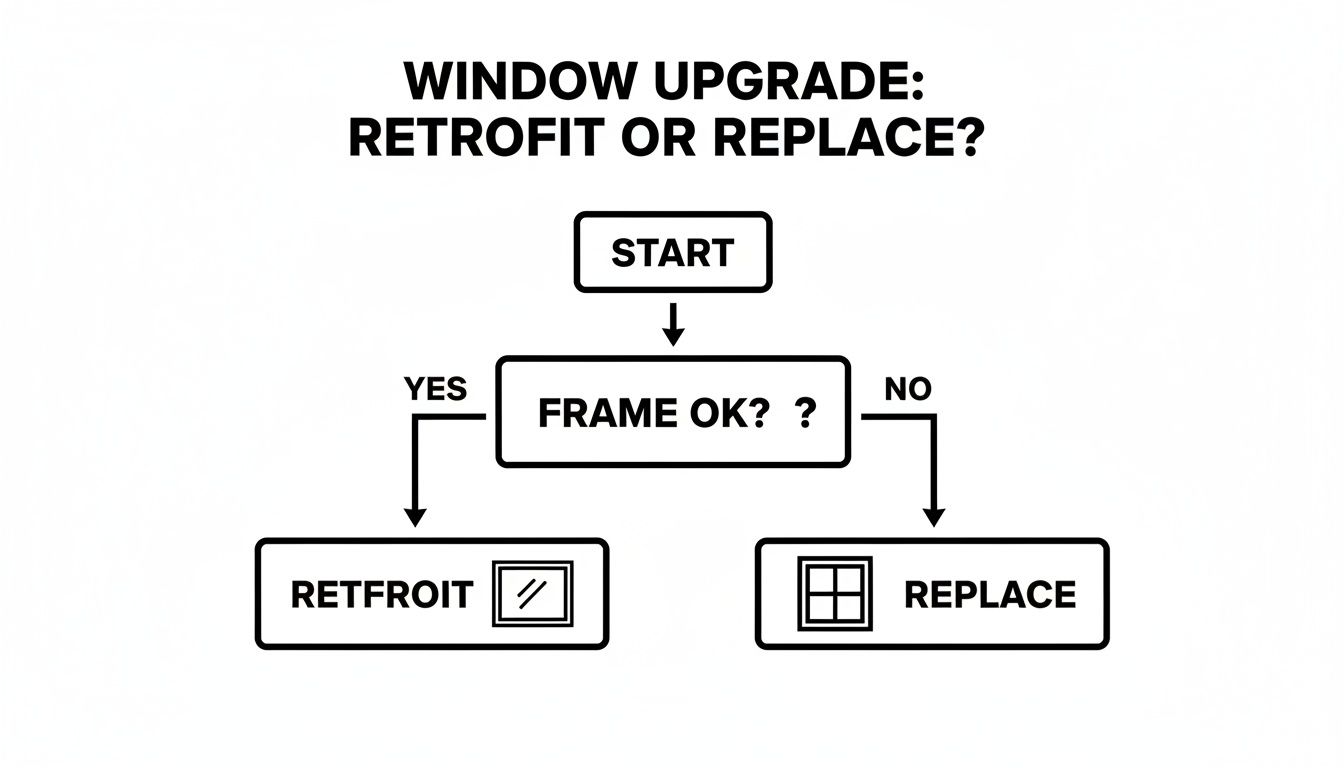
If frames pass a thorough inspection, retrofit delivers fast results and preserves existing trim. If you spot rot or warping, full-frame replacement is the only way to guarantee lasting performance.
For a deeper look at common warning signs that you need to swap out your frames entirely, check our guide on signs you need new windows.
Local homeowners across Salinas and Monterey County report that retrofit installations dramatically cut winter drafts and summer heat gain without tearing into walls. Full-frame replacement can boost resale value and refresh your home’s curb appeal. Our team ensures clean installs, proper sealing, and no guesswork — always up to Title 24 code with no-pressure sales. For personalized advice, reach out to Signature Glass and Windows for a free in-home assessment.
Understanding Retrofit And Full Replacement
Retrofit and full-frame replacement both aim to cut down on heat transfer, but they take very different paths to get there.
| Criteria | Retrofit | Full Replacement |
|---|---|---|
| Installation Time | 1–2 days | 3–5 days |
| Interior/Exterior Work | No drywall or stucco repairs | Requires finish restoration |
| Hidden Damage Addressed | No | Yes |
Retrofit Overview
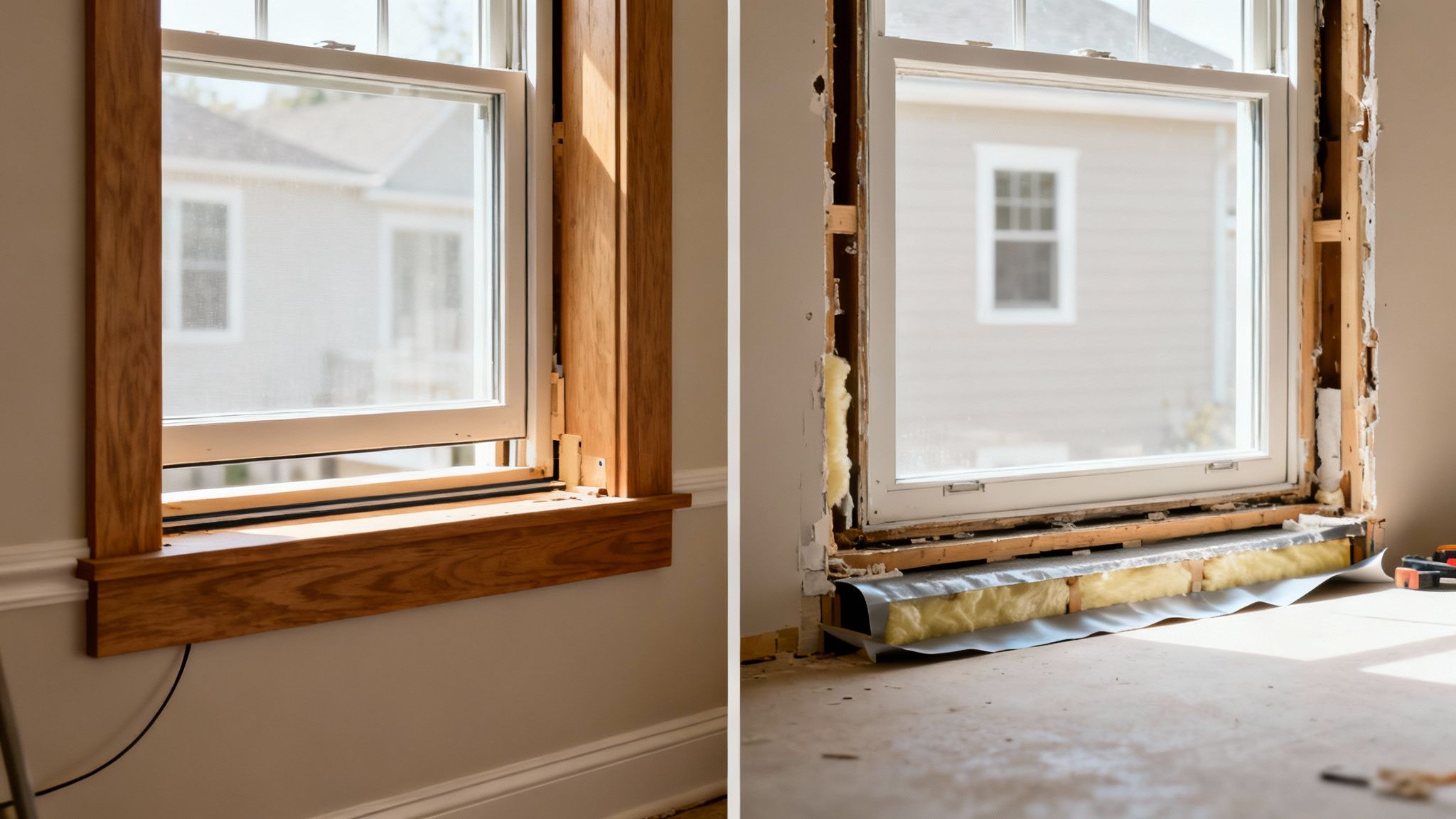
A retrofit job means slipping new sash kits, storm panels, or pocket inserts into your existing window frame. Installers usually skip cutting into drywall or stucco, so there’s no repainting afterward.
Key trades on a retrofit include:
- Glaziers prepping and sealing new glass units
- Carpenters trimming interior stops
- Insulators applying foam or weatherstripping
Retrofit work typically wraps up in one to two days with minimal dust and zero impact on landscaping.
That approach shines when your frames are square and rot-free. You retain original casing, avoid extra finish work, and still see a noticeable drop in heating and cooling bills.
Full Replacement Process
A full-frame swap pulls out the entire old assembly—jambs, sills, and all—and builds a brand-new opening from the ground up.
- Remove existing sash and frame
- Install a new sill and flashing
- Wrap the rough opening with a weather barrier
- Fit, anchor, and seal the replacement unit
- Restore interior trim, stucco, or siding
Full replacement unlocks fresh warranties and exposes any hidden rot or structural damage.
According to a report by the National Trust for Historic Preservation, interior storms and cellular shades can match new-window energy savings—often at 25%–50% of the cost of a full swap. National Trust research
What To Expect On Installation Day
For a retrofit, crews roll out drop cloths, cover furniture, and work almost entirely from indoors. They remove old sashes, slide in the new units, and seal the edges.
Full replacement is more visible. You’ll hear power tools cutting away old frames, and carpenters will patch drywall or stucco once the new window is set. Sealants need time to cure, so factor in extra drying hours before painting.
As you compare both paths, check our detailed guide on insert and replacement windows to pinpoint the best fit for your home.
Example Scenarios
- In Carmel, a century-old cottage retained its original wood casing. After a retrofit, the owners reported 15% savings on energy bills—no trim work required.
- A Salinas residence with warped, moisture-damaged frames went full replacement. They avoided future leaks and secured a reliable seal against coastal humidity.
These real-world examples show how retrofits preserve character when frames are solid, while replacements tackle misaligned or rotting openings head-on. Both strategies deliver Title 24 compliance and a more comfortable living space.
Ready to make the call? Reach out to a local Monterey County installer for a site assessment today.
Comparing Energy Performance For Window Options
Windows carry three main scores: U-factor, Solar Heat Gain Coefficient (SHGC), and air infiltration. Together, they define how much heat slips through, how much sun warms your rooms, and how tightly your home stays sealed.
Key Efficiency Metrics
U-factor reflects heat transfer and shows how well heat is blocked. Lower values translate to better insulation.
SHGC shows how much solar energy passes through the glass. Air infiltration tells you the rate of outside air leaking in.
• U-factor for most retrofit sash kits runs between 0.27 and 0.30
• SHGC in retrofit solutions typically sits around 0.25–0.40
• Air infiltration can drop below 0.30 cfm/ft² on both retrofit and replacement installs
ACEEE Findings On Storm Windows
The American Council for an Energy-Efficient Economy (ACEEE) ran tests on interior low-e storm windows and uncovered surprising results.
“Interior low-e storm windows cut heating load by 21% and reduce infiltration by 7%, matching triple-pane performance at roughly one-quarter the cost.”
These figures come from the ACEEE study, which you can explore in detail at ACEEE Storm Window Research.
Energy Savings By Climate For Window Options
Different regions will see varying paybacks on energy upgrades. Below is an estimate of annual savings for retrofit versus full replacement windows in cold, mixed, and hot zones.
These percentages reflect typical Monterey County scenarios, adjusted for local weather patterns and building styles.
| Climate Zone | Retrofit Savings | Replacement Savings |
|---|---|---|
| Cold | 18% | 25% |
| Mixed | 12% | 20% |
| Hot | 10% | 22% |
In mixed coastal areas like Monterey, retrofit kits often shave about 12% off annual bills, while full replacements can reach 20%–25% under harsher conditions.
Low-e Coatings And Gas Fills
Adding a low-e layer blocks infrared heat without dimming daylight. Filling the gap between panes with argon or krypton ramps up thermal performance.
• Retrofit low-e sash kits run up to 40% less than full window swaps
• High-end triple-pane replacements achieve U-factors down to 0.18
• Many retrofit options meet federal tax credit requirements and carry an ENERGY STAR label
For a deeper dive into certification levels and performance tiers, check out our guide on Energy Star window ratings.
When should you opt for a sash retrofit versus a full-frame replacement? In many Monterey County homes, a well-executed retrofit lines up with top-tier triple-pane results. But if your local climate swings to extremes—where U-factors below 0.18 are crucial—or your frames show rot and warping, a full swap is the smarter path.
Weigh your project timeline, budget, and existing frame health to choose the right route. Talk with a local installer to confirm Title 24 compliance, account for coastal weather patterns, and map out next steps that fit your goals.
Analyzing Cost Impact And Return On Investment
Every dollar counts when you’re weighing retrofit sash kits against a full-frame window swap. In Monterey County, labor, materials, and local incentives all play a part in the final tally. Understanding these pieces helps you budget and predict your payback timeline.
Retrofit sash kits, complete with weatherstripping, usually range from $300 to $800 per window installed, while a full-frame replacement—new jambs, flashing, and trim—tends to sit between $500 and $1,200 per opening. Use these estimates to plan your budget.
Average Cost Range Per Window
| Option | Cost Per Window | Whole Home (10 Units) |
|---|---|---|
| Retrofit | $300–$800 | $3,000–$8,000 |
| Full Replacement | $500–$1,200 | $5,000–$12,000 |
“Retrofit options often pay for themselves faster and preserve your home’s character without sacrificing efficiency.”
For many homeowners the lower upfront spend of a retrofit is appealing—especially when walls and trim stay intact. On the flip side, full-frame jobs include new flashings and fresh finishes, which can add to curb appeal and durability.
Payback Timeline And Incentives
Energy savings in coastal enclaves like Salinas or Carmel can run 12%–25%, shaving bills throughout the year. Stack those reductions against these incentives and you’ll see your window investment recover more quickly:
- Federal Tax Credit: Up to 10% of eligible window costs
- Local Rebates: Check Monterey Bay utility programs for cash-back offers
- ENERGY STAR® Products: Qualify for state and federal bonus incentives
Typically, a retrofit pays back in 5–8 years, while full-frame projects settle in around 7–10 years once energy savings and tax credits are factored in. For a deeper dive, explore our analysis of window replacement ROI in our guide.
Resale Value And Long-Term Benefits
When it’s time to sell, energy-efficient windows can boost your resale recovery rate to 67%–76% in this market. You’ll also see:
- A 3%–5% lift in perceived curb appeal
- Added buyer interest from coastal households chasing lower energy bills
- Proven case studies from Carmel and Pacific Grove showing full cost recoupment in under eight years
Keep your frame condition, budget, and expected savings top of mind. These factors—paired with local climate and Title 24 compliance—will guide whether a simple sash retrofit or a complete frame replacement makes the most sense for your Monterey County home.
When To Choose Full Frame Replacement
Sometimes, a beautifully intact-looking window still hides serious trouble underneath. If you’re fighting stubborn drafts or persistent leaks, a simple retrofit kit won’t cut it. Instead, swapping out the entire frame can stop those issues for good.
Yes, the upfront investment is higher. But a full-frame replacement eliminates hidden rot, restores your manufacturer warranty on both frame and jamb, and guarantees you meet California’s Title 24 structural standards. For historic or custom homes, this approach also preserves the original trim profile—something retrofit kits simply can’t handle.
Key Indicators You Need Full-Frame Replacement:
- Visible Wood Rot at corners or sill
- Warped Frames that prevent smooth operation
- Insect Damage leaving holes or soft spots
- Failed Seals shown by condensation or fogged glass
- Moisture Intrusion resulting in mold growth or stucco stains
Common Frame Damage
Rot and warping compromise both the strength and seal of your window. Insects can burrow beneath the paint undetected, and failing seals lead directly to wasted energy and higher bills. Once you spot any of these issues, call in a pro for a thorough evaluation.
“When decay goes past the trim, a retrofit can cost more over time,” says Steve Stewart, President of Signature Glass and Windows.
| Frame Issue | Recommended Action |
|---|---|
| Wood Rot | Remove the entire frame; install new |
| Insect Damage | Full replacement to eliminate decay |
| Failed Seals | Replace sash only if frame is sound |
| Moisture Intrusion | Full swap with new flashing |
Next Steps For Monterey County Homes
Begin with a simple screwdriver test: press into frame corners to check for soft spots. Measure corner squareness and inspect seals for tightness.
Learn what faulty workmanship looks like in our detailed guide on poor window installation. This helps you avoid common mistakes.
If your frames no longer meet code, only a full-frame replacement can promise lasting performance. A full-frame swap resets the nailing flange and flashing so you stay compliant with Title 24 and keep your warranty intact.
Signature Glass and Windows offers free in-home assessments in Salinas and Monterey County—no obligation required. Reach out today and get your windows back on track.
Best Retrofit Scenarios And Next Steps
When your window frames are still solid and the trim holds its charm, going the retrofit route makes a lot of sense. You preserve the original character, cut down on exterior work, and still reap energy gains.
Typical retrofit candidates include:
- Homes with historic or custom profile windows where original millwork matters.
- Multifamily properties that need a quick turnaround without disturbing the façade.
- Renovations on a budget aiming to save 20%–40% compared to full-frame swaps.
- Frames that show no signs of rot, warping, or moisture damage.
Ideal Retrofit Use Cases
Real-world results speak volumes. In Salinas, the owners of a 1920s bungalow inserted sash kits into pristine oak frames and saw 15% off their annual heating bills. Over on Carmel’s beachfront, a small cottage kept its vintage casing and finally banished drafty coastal gusts.
“A retrofit can deliver Title 24 compliance with minimal disruption and cost,” says Steve Stewart, President of Signature Glass and Windows.
Practical Next Steps
- Schedule a no-cost, in-home assessment with our Salinas crew to inspect frame integrity.
- Use a square and level to check for twists, gaps, or out-of-plumb conditions.
- Compare sash samples, glazing types, and weatherstrip profiles in person.
- Verify Title 24 compliance and explore federal tax credits for ENERGY STAR® retrofits.
| Check Item | Pass Criteria |
|---|---|
| Frame Soundness | No rot, warping, or soft spots |
| Trim Integrity | Original trim intact |
| Energy Savings Goal | At least 12% utility cut |
| Budget Constraint | 20%–40% below full-frame cost |
| Compliance Needs | Meets California Title 24 rules |
Local Success Stories
- A Spanish-style cottage in Carmel Valley cut winter bills by 18%.
- A duplex in Marina held onto its historic trim and trimmed summer cooling by 14%.
“Our energy bills dropped noticeably after just one month,” recalls a Salinas homeowner.
Finalize your upgrade plan with Signature Glass and Windows. You’ll preserve your home’s character, boost efficiency, and avoid the mess of a full-frame tear-out.
Reach out today to book your assessment:
- Phone: 831-754-8855
- Web: signatureglassandwindows.com
Get a free estimate and frame inspection within 24 hours in Salinas and Monterey. Take the first step toward a more comfortable, energy-smart home.
FAQ
Whether you’re weighing a sash retrofit or tearing out the entire frame, these answers will guide Salinas and Monterey County homeowners through permits, costs, energy performance, and lifespan.
Do I Need A Permit For A Retrofit Or Full Replacement?
In most cases, a sash-only retrofit in Monterey County slides right under Title 24 requirements—no permit needed. When you swap out the entire frame, however, local building officials will want to inspect the new openings, flashing, and trim details.
Key Points
- Permit Trigger: Changing the window’s structural opening always requires approval.
- Retrofit Ease: As long as you’re fitting into the existing jamb, the process is permit-free.
- Full Replacement: You’ll file plans, pass inspection, and cover permit fees.
How Much Will Retrofits Cost Compared To Full Replacement?
You’ll spend roughly $300–$800 per window with a sash retrofit, versus about $500–$1,200 for a full-frame swap. That nets 20%–40% in initial savings because labor is faster and you skip repainting or re-stucco.
| Project Type | Installed Cost | Typical Upfront Savings |
|---|---|---|
| Retrofit Sash Kit | $300–$800 | 20%–40% less |
| Full-Frame Replacement | $500–$1,200 | — |
What Energy Savings Can I Expect?
- Sash retrofits with proper sealing and ENERGY STAR glass cut heating and cooling bills by 12%–25%.
- Full-frame replacements push that to 20%–30%, but at a higher installation price.
How Long Will Retrofit Windows Last Versus New Frames?
- A high-quality retrofit kit delivers 20–30 years of service when existing frames are sound.
- New frames typically last 30–40 years, backed by comprehensive warranties against warping and rot.
“Inspect frames first. If the wood is square and free of rot, a retrofit gives you big savings with minimal disruption.”
— Steve Stewart, President, Signature Glass and Windows
How Do I Decide Between Retrofit And Full Replacement?
Start by walking around your home with these checks:
- Frame Square: Use a level or a simple framing square—anything out of plumb signals replacement.
- Rot or Warping: Tap and probe the sill and side jambs; soft spots mean it’s time for new framing.
- Seal Integrity: Peeling caulk or drafty edges point toward full replacement to lock out moisture.
If frames pass inspection, a retrofit keeps costs down and meets Title 24—and you might even qualify for energy rebates. Otherwise, a full-frame job guarantees a fresh envelope and decades of worry-free performance.
Contact Signature Glass and Windows today for a free in-home consultation. We’ll help you pick the right path for better comfort and energy savings in Salinas and Monterey County.