
So, you’ve gathered a few quotes for new windows and you're staring at numbers that are all over the map. One company's price seems reasonable, while another is thousands of dollars higher for what looks like the same project. Homeowners are often shocked by this, and it leaves you wondering, what am I actually paying for?
Let's break down why those numbers can be so different and how to compare them like a pro.
Why Window Quotes Vary So Much
The biggest reason for a massive price gap usually comes down to one thing: the installation method. Are you getting a simple retrofit installation or a more involved full-frame replacement? If one quote is for a retrofit and another is for a full-frame, you’re not comparing apples to apples.
A retrofit, where the new window slides into your existing frame, is less labor-intensive. A full-frame job means tearing everything out down to the studs, which is a much bigger project. This single difference can change the price by thousands.
Beyond the Installation Method
Of course, the installation is just one piece of the puzzle. The cost of residential window replacements can vary wildly depending on materials, brand markups, and even sales tactics. A quote for standard vinyl windows will look very different from one for high-end fiberglass options.
The glass package is another major factor. A quote that includes high-performance, dual-pane glass with advanced Low-E coatings—the kind needed to meet California’s strict Title 24 energy code—will cost more than basic, less efficient glass. The type of company matters, too; big franchises often add layers of marketing and overhead that local shops don’t.
It's a common misstep to assume the highest quote means better quality or that the cheapest is a bargain. The truth is in the details. Unless you understand what’s included (e.g., frame replacement, trim work, permits), you’re just guessing.
As a local, family-owned business, Signature Glass and Windows provides transparent, line-by-line estimates. We help homeowners in Salinas, Monterey, and surrounding areas understand exactly what every dollar covers. To get a solid starting point for your budget, you can use a window installation cost calculator for a reliable ballpark figure.
Remember, this is a long-term investment. The global market for energy-efficient windows is projected to hit $25.14 billion by 2032 for a good reason. Quality windows can slash a home's energy use by up to 15%, adding up to real savings on your utility bills.
Quick Guide to Comparing Window Quotes
When you have estimates on your kitchen table, it can feel overwhelming. This table cuts through the noise and shows you exactly where to focus.
| Quote Component | What to Look For | Why It Matters for Your Budget |
|---|---|---|
| Installation Method | Is it "Retrofit/Insert" or "Full-Frame/New Construction"? | Full-frame is significantly more expensive due to higher labor and material costs. |
| Window Materials | Are the frames vinyl, fiberglass, aluminum, or wood? | Vinyl is most cost-effective; fiberglass and wood are premium materials with higher price tags. |
| Glass Package | Look for specifics: "Dual-Pane," "Low-E Coating," "Argon Gas Fill." | Better energy efficiency (lower U-Factor & SHGC) costs more upfront but saves you money on energy bills. |
| Labor & Additional Fees | Are costs for trim, insulation, sealing, and cleanup included? | Hidden fees for things like debris disposal or extensive trim work can inflate your final bill. |
| Permits & Warranties | Does the quote mention pulling permits? What are the warranty terms for the product AND the labor? | A low price might skip permits (a big risk) or offer a weak labor warranty, leaving you unprotected. |
By focusing on these key components, you can move past the sticker shock and make an informed decision based on value, not just the bottom-line price.
Decoding Your Window Estimate Line by Line
A good quote is more than just a final price. To know if you're getting a fair deal, you need an estimate that breaks down every single cost. This transparency is your best defense against hidden fees, especially for homeowners in Salinas and Monterey.
When comparing quotes, an itemized estimate is non-negotiable. Watch out for vague descriptions like "window replacement"—that’s a red flag. A professional quote will clearly separate costs for the windows, labor, permits, and even hauling away your old ones.
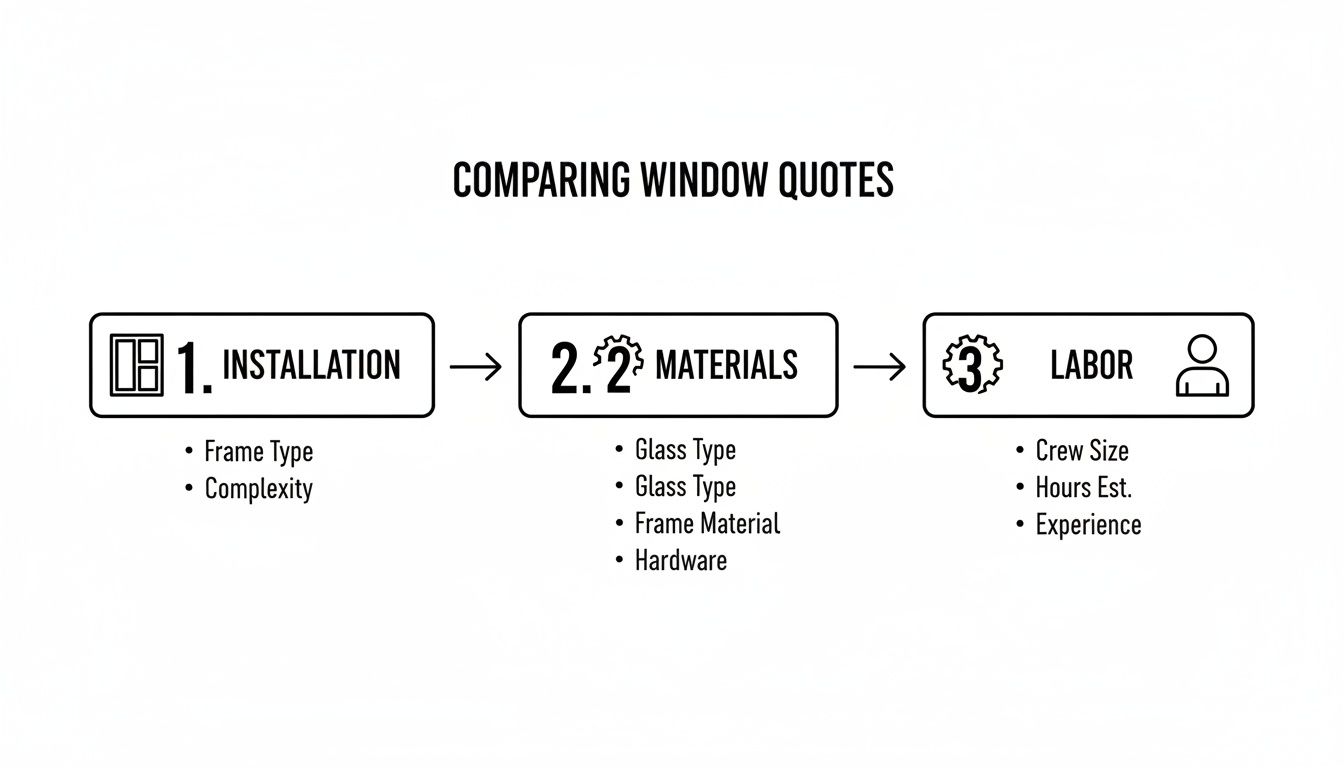
Breaking it down like this helps you see where cost differences are. Is one company using a higher-quality window? Is their labor rate higher? Or is their scope of work more complete?
What to Look for on a Detailed Quote
A quality estimate from a reputable installer will always be detailed. It’s a sign they have nothing to hide and are confident in the value they're offering. You should have a crystal-clear understanding of what you're paying for.
Here’s a quick checklist of what a comprehensive quote should always include:
- Cost Per Window: The price for each window, listing the brand, style, and frame material.
- Glass Package Details: Specifies the type of glass, like dual-pane with Low-E coatings and argon gas fill, so you can confirm energy efficiency.
- Labor Costs: This should be its own line item. In California, labor averages around $161 per window, so be suspicious if it's lumped in with materials.
- Additional Materials: Look for costs for sealant, insulation, flashing, and trim. Leaving these out makes a bid look lower upfront.
- Permit Fees: If your city, whether it’s Carmel or Marina, requires a permit, it should be listed.
- Debris Removal and Disposal: This clarifies the cost for hauling away old windows and cleaning up.
A common mistake is assuming a lump-sum quote includes everything. Ask this simple question: "Is this the total, out-the-door price, or are there other potential charges?" It can save you from hundreds in unexpected costs.
Questions to Ask About the Scope of Work
Getting a detailed estimate is the first step, but the numbers only tell you so much. You also have to confirm the full scope of work to make sure every company is bidding on the exact same project.
Use these questions to dig deeper:
- What does the interior and exterior trim work involve? Are they replacing the trim or just capping it? This makes a big difference in the final look and cost.
- How will you seal and insulate the new windows? Proper sealing is everything for energy efficiency.
- What does post-job cleanup look like? A professional crew leaves your home as clean as they found it.
- Is this quote for a retrofit or full-frame installation? Ask if the quote includes retrofit or full-frame installation, what glass type is used (e.g., low-E, double-pane), and if it meets California’s Title 24 energy code.
Getting these details straight is key to making a smart decision. To learn more, check our guide on the key factors affecting your window installation budget. At Signature Glass and Windows, we believe an educated homeowner is our best customer, which is why we provide clear, honest quotes you can actually understand.
Retrofit vs. Full-Frame Installation Explained
If you've been shocked by a huge price difference in window quotes, the installation method is almost always the reason. Understanding the two main methods—retrofit and full-frame—is crucial before you can compare quotes fairly. This detail changes the cost, time, and amount of work involved.
The installation method is often the biggest line item on your quote. A retrofit installation, also called a "pocket" or "insert" replacement, is the simpler, faster, and more affordable option. With this technique, the new window unit slides right into the existing window frame.
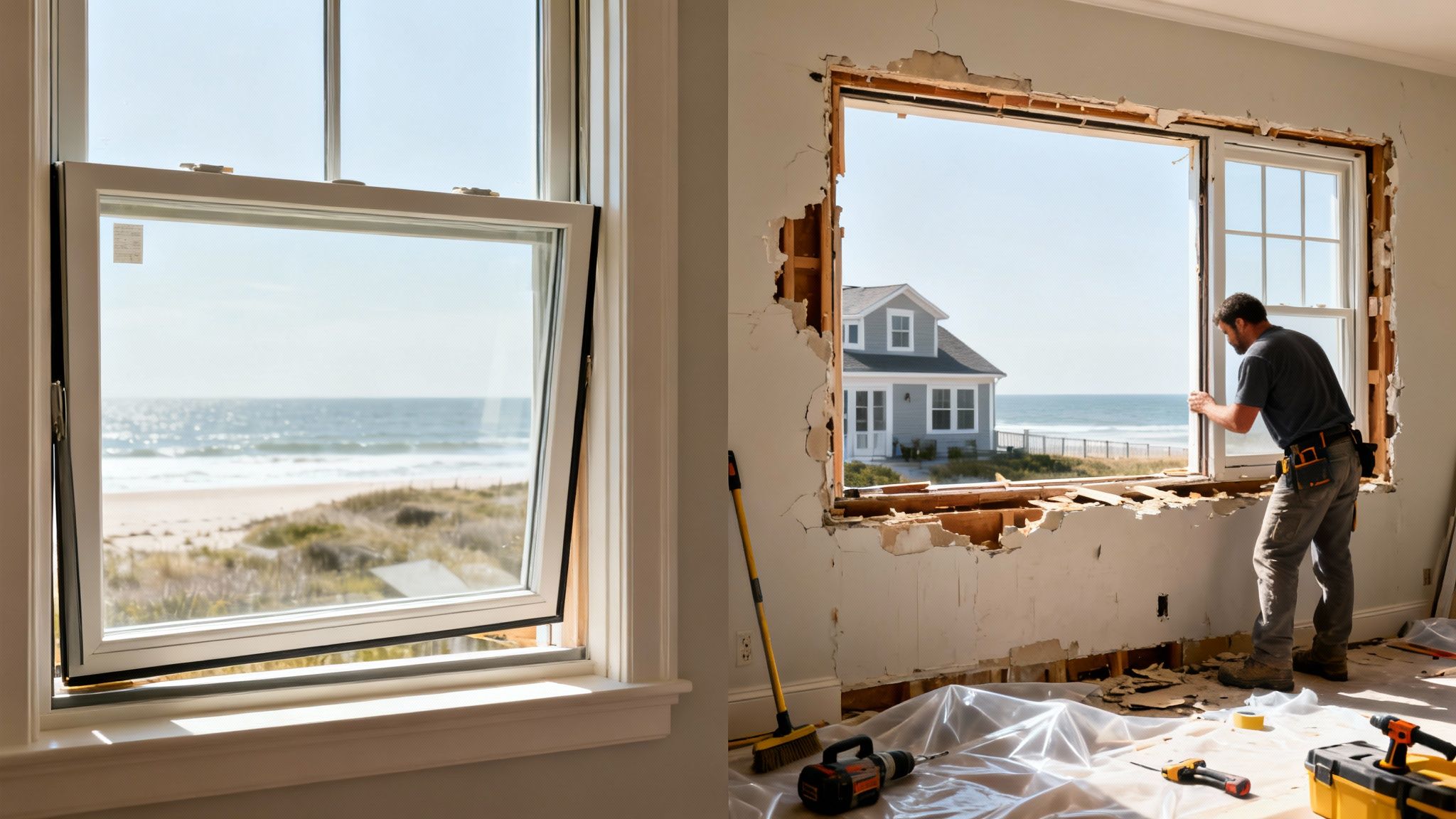
This process is less disruptive to your home's siding and interior walls, which keeps labor costs down. For many Salinas homeowners, retrofit windows can offer serious value when frames are in good shape. They mean less labor, less disruption, and still high performance.
The Retrofit Approach: A Closer Look
Retrofit windows are a popular and budget-friendly way to boost your home’s energy efficiency and curb appeal. They don't require turning your house into a full-blown construction zone. They're built to neatly cover the old window frame, giving you a clean, finished look.
Here’s why people love the retrofit method:
- Lower Cost: Less labor and fewer materials mean a much friendlier price tag.
- Faster Installation: The process is quick, sometimes taking less than an hour per window.
- Less Mess: Your home's siding, stucco, and interior trim stay in place.
A retrofit is the perfect solution if your current frames are solid. But it isn't a one-size-fits-all fix. If there are hidden problems, a full-frame replacement is the better choice.
Understanding Full-Frame Replacement
On the other end of the spectrum is the full-frame replacement. This is a much bigger job where installers remove everything—the old window, frame, and trim—down to the rough opening. It's like putting in a window in a new construction home.
You need this approach when the existing frame is rotted, warped, or failing. It’s the only way for the installer to find and fix hidden problems like water damage. This guarantees a perfect, weathertight seal for the new window.
A full-frame replacement costs more, but it's the right way to fix underlying issues. Trying to save money with a retrofit when there's hidden rot is a classic case of being "penny wise and pound foolish." It just leads to bigger, more expensive repairs later.
More homeowners are upgrading their windows for better energy performance. Replacement windows are projected to make up 64.1% of the residential energy-efficient windows market revenue in 2025. You can read the full research on the residential energy-efficient windows market for more details.
For a closer look at how this works, we have great info on our insert replacement windows page. At Signature Glass and Windows, we offer no-pressure consultations for homeowners across Monterey County. We’ll tell you honestly which method makes the most sense for your home and your budget.
Diving into Window Materials and Glass Packages
Okay, you've figured out the installation type. Now it's time to compare the windows themselves. The frame material and the glass package drive both the price and how well your new windows perform.
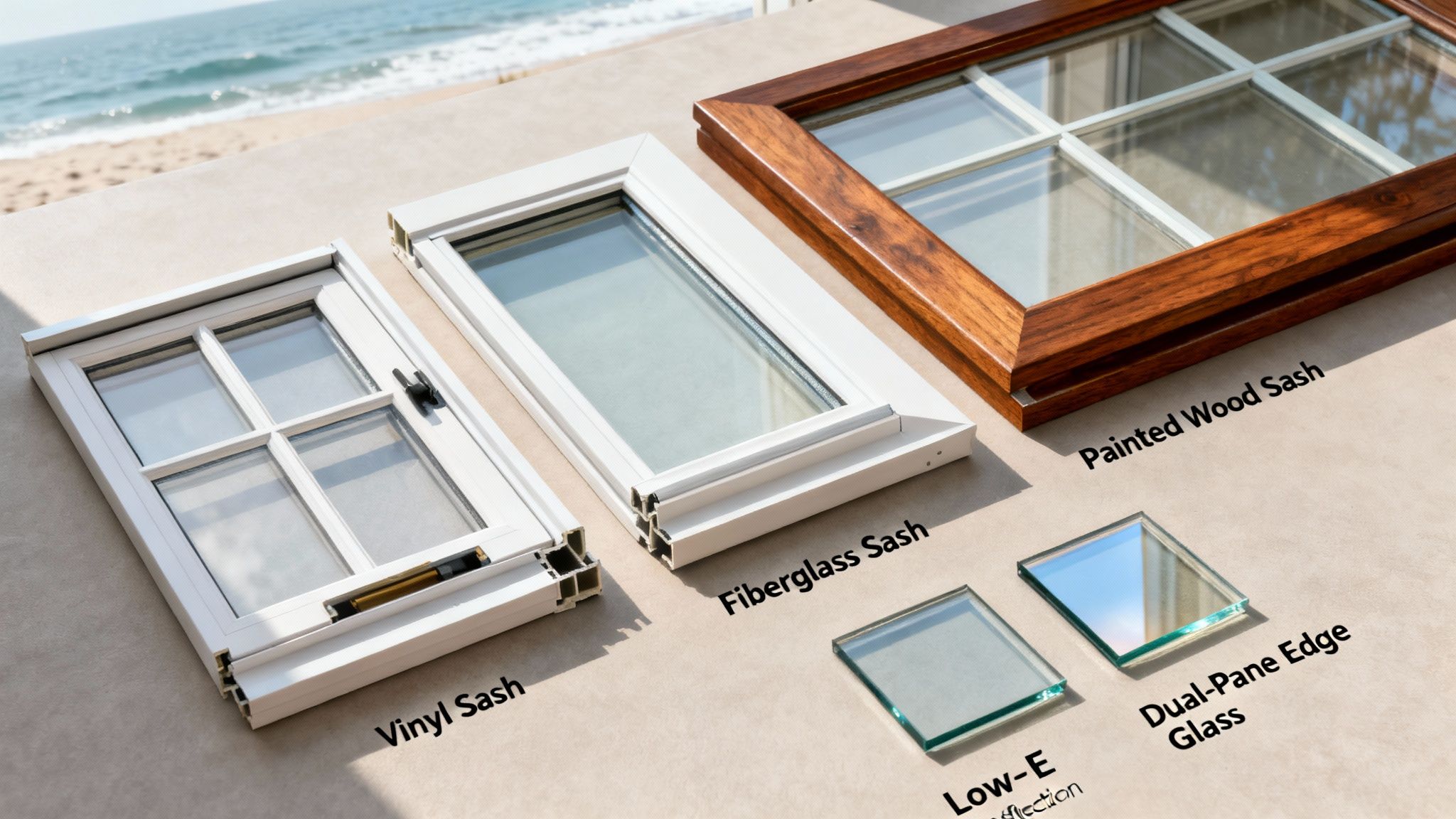
Living in Monterey County means we have to be smart about our choices. Our coastal climate, with its salty air and temperature shifts, is tough on a house. The most common frame materials you’ll see on quotes are vinyl and fiberglass, and each has its own advantages.
Making Sense of Your Frame Options
The window frame is the skeleton of the whole unit. Your choice here impacts everything from curb appeal to your energy bills. Vinyl is usually the most wallet-friendly option and is easy to maintain.
Fiberglass brings superior strength and durability. It’s far less likely to warp or bow with our coastal temperature swings, which is a big long-term benefit. This table breaks down the key differences to help you choose the best fit.
Window Frame Material Comparison for Coastal Homes
| Material | Average Cost | Pros | Cons |
|---|---|---|---|
| Vinyl | $$ | Low maintenance, excellent insulator, cost-effective. | Can expand/contract with temperature changes; fewer color options. |
| Fiberglass | $$$ | Extremely strong and durable, minimal expansion/contraction, paintable. | Higher initial cost than vinyl. |
| Wood | $$$$ | Beautiful, classic look; natural insulator. | High maintenance required in coastal air; susceptible to rot and warping. |
| Aluminum | $$ | Strong, slim profile, durable. | Poor insulator; doesn't meet California energy codes without thermal breaks. |
Choosing the right material is a balance between your budget, style, and performance needs. For a more detailed breakdown, you can explore our complete window material comparison guide to see how they stack up.
Decoding Energy Ratings and Glass Packages
The glass is where the real energy-saving magic happens. A quote with a high-performance glass package will cost more, but it pays you back in lower utility bills. Here in California, any new window installation must meet the state’s Title 24 energy code.
Your quote should clearly list the window’s energy performance ratings. Don't let the technical jargon scare you—it's pretty straightforward.
I always tell my clients: the most expensive window is the one you have to replace twice. Investing in a quality glass package from the start means your windows will perform for decades, saving you money and headaches.
Here are the key numbers to look for on every quote:
- U-Factor: This tells you how well a window keeps heat inside. The lower the number, the better the insulator. A low U-factor is a must for our foggy Monterey mornings.
- Solar Heat Gain Coefficient (SHGC): This measures how well a window blocks heat from the sun. Again, a lower number is better, as it helps keep your house cool on sunny Salinas afternoons.
- Low-E Coatings: This is an invisible, heat-reflecting shield on the glass. It keeps heat inside during winter and outside in summer.
- Dual-Pane Glass with Argon Gas: Two panes of glass create an insulating air gap, which is then filled with argon—a harmless gas that acts as an extra layer of insulation.
When you compare quotes for retrofit residential windows, make sure you’re comparing apples to apples with these energy ratings. A cheap quote might be for a window that barely meets code, while a higher bid could be for a far superior glass package that will deliver real savings.
Evaluating the Installer and Warranty
Even the most expensive window is worthless if it’s installed poorly. A botched installation can cause leaks, drafts, and even structural damage. This is why you must shift your focus from just the window to the people putting it in.
The price on a quote won't tell you about the installer’s skill or their local reputation. For those of us in places like Carmel or Pacific Grove, choosing a local, established company offers accountability. A local installer’s reputation is built one job at a time, right here in our community.
Vetting Your Window Installation Company
Before signing a contract, do a little digging. A few minutes of research now can save you a world of hurt later. This is about being a savvy homeowner and protecting your investment.
First, check their credentials. Here in California, any contractor doing work valued over $500 must be licensed by the state. It's the law.
- Contractor's License: You should verify their license number on the California Contractors State License Board (CSLB) website. This quick check confirms they're registered and in good standing.
- Insurance: Always ask to see proof of general liability insurance and workers' compensation. This protects you if an accident happens on your property.
- Local Experience: Ask for references from recent jobs in your neighborhood. An installer who has worked in Salinas or Monterey knows our coastal climate and local building codes.
Don’t fall into the trap of assuming all installers are the same. The skill level and attention to detail vary wildly. Remember, the most expensive window is the one you have to pay to fix because of a lousy installation.
How to Read a Window Warranty
The warranty is your safety net, but they're not all created equal. Many homeowners get tripped up here, not realizing that warranties are usually split into several parts. That "lifetime warranty" sounds great, but read the fine print to know what it really covers.
A solid warranty will cover three key areas:
- The Glass: This usually covers the seal on dual-pane units. If that seal fails and you see fog between the panes, this part of the warranty kicks in.
- The Frame and Hardware: This covers the physical window parts—the frame, locks, and cranks—against factory defects.
- The Installation Labor: This might be the most critical piece. Look for a company that offers a multi-year, or even a lifetime, warranty on their workmanship.
When looking at an installer, remember that their quality installation services are what ensure your windows perform for decades. A premium product with a poor install is a recipe for failure.
Picking the right team is a huge part of the process, which is why we created a full guide on how to choose the right window installer in Monterey County. At Signature Glass and Windows, we’re a local, family-run business, and we stand behind every window we install.
Frequently Asked Questions about Window Quotes
Getting quotes for new windows can be confusing, especially when prices vary so much. Homeowners I talk to in Salinas and Monterey tend to ask the same questions. Let's clear up some common points so you can feel confident.
How many window replacement quotes should I get?
The magic number is three. This gives you a solid baseline to see the average cost for a project like yours and immediately spot any outliers. If one bid comes in way too high or suspiciously low, you’ll know it’s time to ask why.
Is the cheapest window quote a red flag?
Sometimes. A low bid isn't automatically bad—it could be a smaller local company with less overhead. But you need to investigate. A rock-bottom price can also mean cheap materials, a rushed installation, or a contractor cutting corners.
Why is a line-by-line estimate so important?
A detailed, itemized estimate is your single best defense against surprise charges. It should clearly break down the price of each window, labor costs, materials (trim, flashing, etc.), permit fees, and disposal fees. A vague, lump-sum quote is a huge red flag.
Do I need a permit for retrofit windows in Monterey County?
Yes, almost always. Whether you're in Salinas, Carmel, or another local community, a permit is typically required for window replacements. This ensures your new windows comply with building codes and California’s strict Title 24 energy efficiency standards.
How do I verify a window contractor is licensed and insured?
This is non-negotiable. First, ask for their contractor license number and verify it on the California Contractors State License Board (CSLB) website. Second, ask for proof of their general liability and workers' compensation insurance to protect yourself from liability.
At Signature Glass and Windows Inc., we believe an informed homeowner is our best customer. Serving Salinas, Monterey, and surrounding areas, our family-operated business provides clear, honest quotes you can actually understand. We help you choose what makes sense for your home and budget—not just what costs the most.
Visit https://signatureglassandwindows.com or call us at 831-754-8855 to schedule your free in-home consultation.