
Living in Monterey County, whether in foggy Carmel or sunny Salinas, means you love our unique coastal climate. But the salty air and constant dampness can be tough on your home, especially the windows.
Choosing the right windows here is about more than just looks—it's about long-term durability. You need windows built to handle salt spray, high humidity, and our classic temperature swings. This means choosing materials that can stand up to our beautiful, but demanding, environment.
Why Standard Windows Fail on the Monterey Coast
That beautiful marine layer we see every morning carries salt and moisture that constantly attacks your home. Windows that aren't made for this environment will eventually fail. We've seen it happen to many homeowners in Monterey and Salinas.
The salty air is the biggest problem. It corrodes metal frames and hardware like locks and cranks. This can leave your windows rusted, pitted, and hard to use, which affects your home's security and energy efficiency.
The Impact of Humidity and Temperature Swings
Monterey's climate is known for being mild, with average highs usually between 60°F and 71°F. But the constant damp air is what causes real damage. This moisture puts a lot of stress on window seals.
The impact of coastal fog and fluctuating humidity can be surprisingly tough on windows. Homeowners in places like Pacific Grove and Marina often face the same issues with the wrong windows:
- Seal Failure: Moisture and temperature changes cause seals to crack and fail. You might see fog or condensation between the glass panes, which means the insulating gas has escaped.
- Warping and Swelling: Wood frames are especially at risk. They absorb moisture from the air, causing them to swell and warp, making them hard to open and close.
- Rising Energy Bills: When a window's seals fail, it can't insulate your home anymore. This forces your heating and cooling systems to work harder. Learn more in our guide on why now is the time to upgrade your windows in Monterey.
Let's look at how our climate affects standard window parts.
How Coastal Climate Challenges Standard Windows
| Coastal Climate Factor | Impact on Standard Windows | The Ideal Coastal Solution |
|---|---|---|
| Salt Spray & Salty Air | Corrodes metal and steel hardware, causing rust, pitting, and operational failure. | Fiberglass frames that resist salt, paired with stainless steel or specially coated hardware. |
| High Humidity & Fog | Leads to condensation, which can cause wood frames to rot and promotes mold growth. | Dual-pane, low-E glass to keep the interior glass warmer and prevent condensation. |
| UV Ray Exposure | Fades and damages wood or vinyl frames over time, causing them to become brittle. | Materials with UV-stable finishes, like those found on high-quality fiberglass or vinyl frames. |
| Temperature Fluctuations | Causes materials to expand and contract, putting stress on seals and leading to drafts. | Stable materials like fiberglass, which expands and contracts very little, protecting the seals. |
It's clear that a one-size-fits-all window doesn't work for homes on the Monterey Peninsula.
Investing in coastal-rated windows isn’t a luxury; it’s a necessary step to protect your home's value and comfort. A smart choice today prevents costly repairs down the road.
Choosing windows designed for our climate means they will last longer. The right products will keep your home beautiful, efficient, and protected for years to come.
Choosing the Best Window Materials for Coastal Durability
When you replace windows in a home from Monterey to Salinas, the frame material is your most important choice. Our coastal climate with its salt, fog, and moisture will damage the wrong materials.
Making the right choice from the start is a smart long-term investment. Whether your home is a Carmel cottage or a ranch-style house in Salinas, you need windows that can handle our local weather.
Fiberglass: The Coastal Champion
Fiberglass is practically made for a marine environment. Made from glass fibers, this material is very strong and stable. This means it won't swell, rot, or warp from our high humidity.
Best of all, fiberglass is immune to salt, so it will never rust or corrode. It also barely expands or contracts with temperature changes, so the seals stay airtight. This stops drafts and keeps water out, protecting your home.
High-Quality Vinyl: A Smart and Reliable Option
Modern vinyl windows are a great, low-maintenance choice that is often more affordable. Today’s high-quality vinyl frames are designed with UV protection so they won't turn yellow.
Because vinyl is non-porous, it naturally resists moisture. While fiberglass is stronger, a well-made vinyl window from a top brand offers excellent protection from the coastal weather. It's a practical pick for homeowners who want great performance without constant upkeep.
For a deeper dive into the pros and cons of each, check out our complete window material comparison.
Wood and Aluminum: Special Considerations for the Coast
Wood windows are beautiful, but they require a lot of maintenance in our damp climate. They must be perfectly sealed and painted often to keep them from rotting and warping. If you love the look, clad-wood windows (with a vinyl or aluminum exterior) are a much safer option.
Aluminum windows are strong, but they have a major weakness here: salt. Unless they have a special coastal protective coating, they will corrode. That's why we usually guide homeowners in Monterey County toward fiberglass or premium vinyl.
This chart shows how common window problems often start with the wrong material.
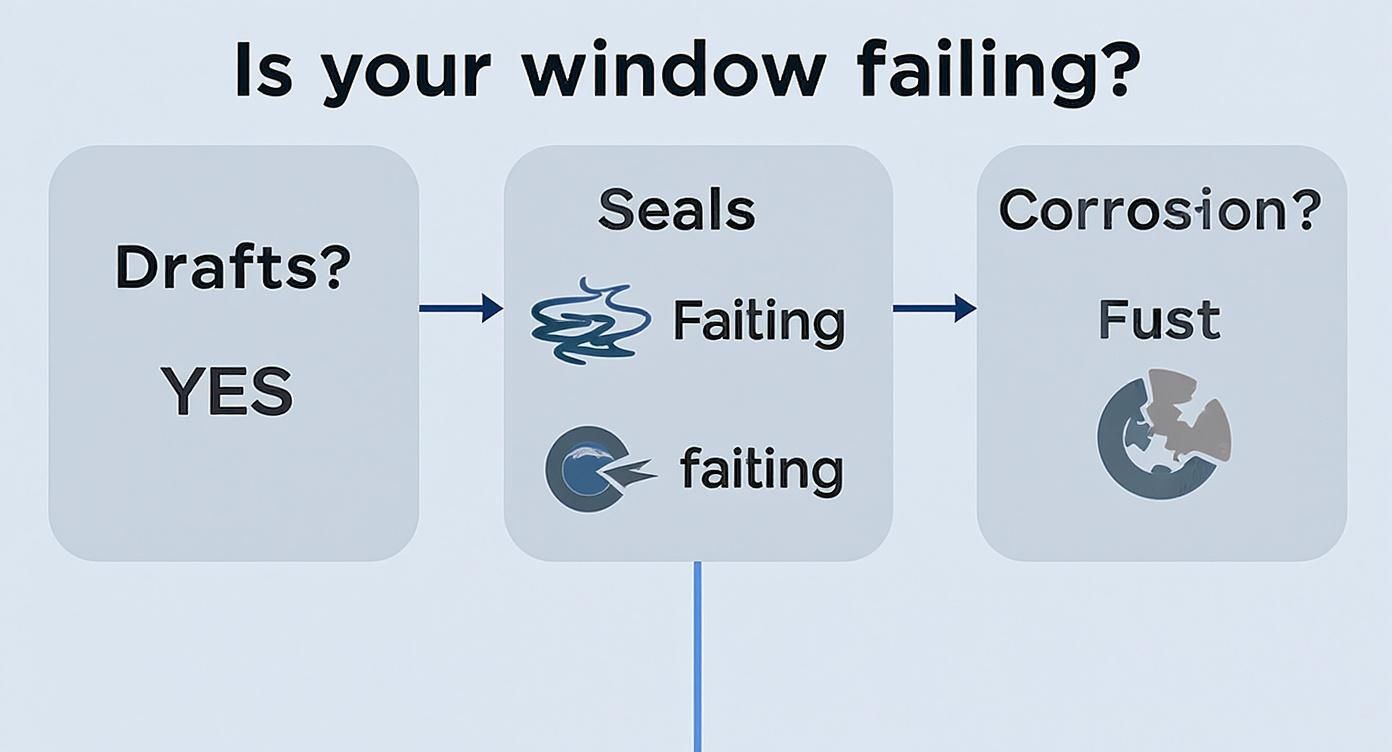
As you can see, a draft is often the first sign of a failing seal. Choosing the right material from the start is the best way to avoid these common coastal window problems.
Decoding Glass Technology for Energy Savings and Comfort
A durable frame is key, but the glass is what makes your home comfortable and energy-efficient. Modern window glass technology can make a huge difference for your home.
For homeowners in Monterey County, the right glass is our defense against foggy mornings and sunny afternoons.
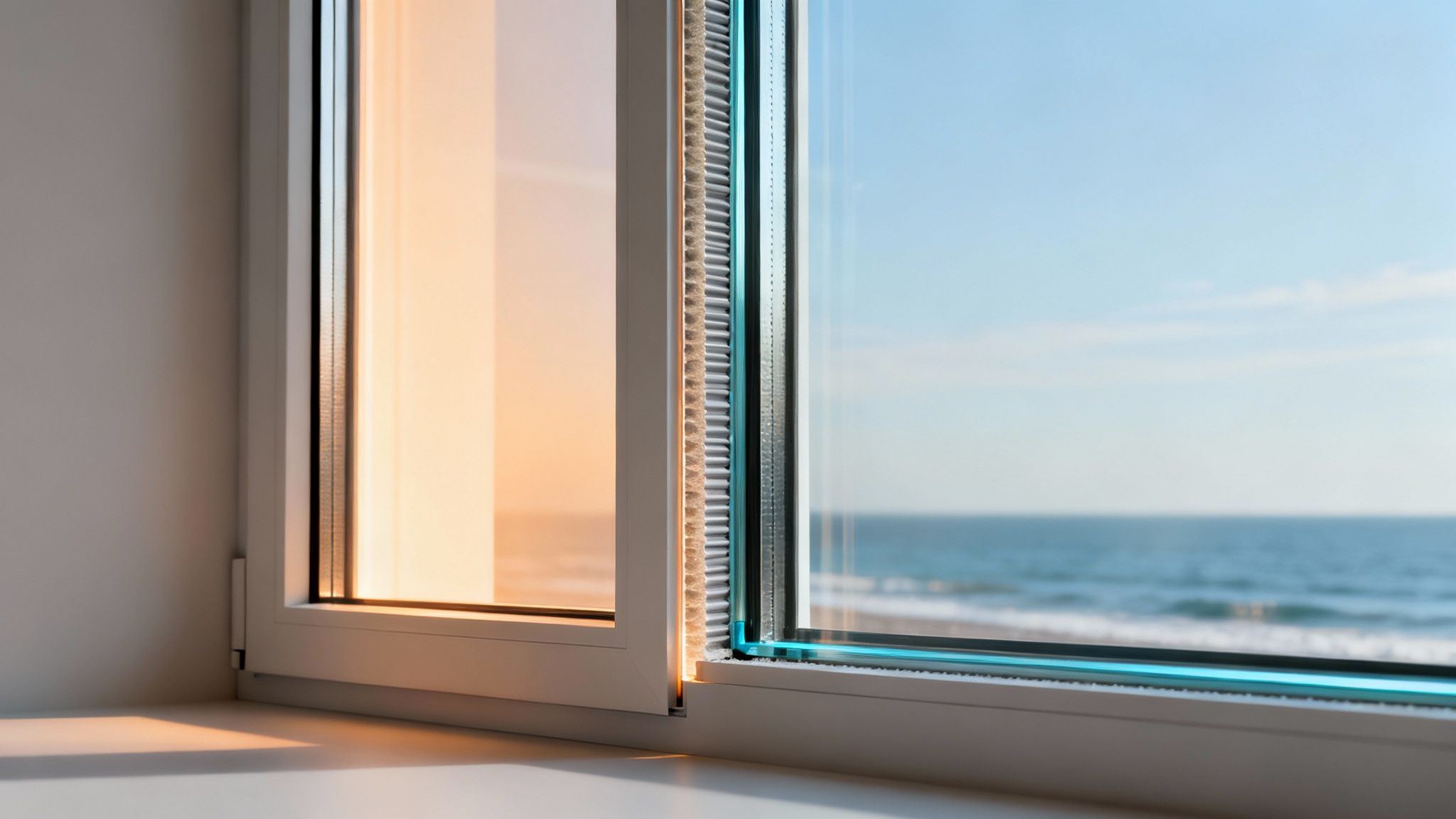
The first big improvement was the dual-pane window. This simple idea uses two panes of glass with a sealed space between them. That air pocket acts as an insulator, keeping your home's temperature stable.
The Power Duo: Low-E Coatings and Gas Fills
To get the most insulation, manufacturers add two more things: a Low-E coating and a gas fill. These features are standard on any good window and are essential for our coastal environment.
Here’s what they do:
-
Low-E Coatings: A Low-Emissivity (Low-E) coating is a transparent, heat-reflecting shield. This invisible layer reflects heat back to its source. This keeps your home warmer in the winter and cooler in the summer. It also blocks up to 95% of UV rays, protecting your furniture from fading during our 260+ sunny days each year.
-
Argon Gas: The space between the glass is often filled with argon gas. It's harmless, non-toxic, and denser than air. This density creates a better thermal barrier, improving the window's energy performance. We have a guide that explains why low-emissivity windows are a smart energy upgrade.
Reading the NFRC Label Like a Pro
So, how do you compare windows? Every good window has a National Fenestration Rating Council (NFRC) label. This sticker provides unbiased energy performance ratings so you can compare products fairly.
The NFRC label is like the nutrition label for your windows. It gives you the hard data you need to make a smart choice on energy efficiency.
For Monterey County homes, look at these two numbers first:
- U-Factor: This measures how well a window stops heat from escaping. The lower the U-Factor, the better it insulates.
- Solar Heat Gain Coefficient (SHGC): This shows how well a window blocks heat from the sun. A lower SHGC is important here to keep your home from getting too hot on sunny days.
Making the right choice also helps the environment. It can be useful to talk with sustainable design architects to make sure your windows fit your energy-saving goals.
Choosing Hardware and Finishes That Can Handle the Salt Air
A great window is only as good as its smallest parts. In our coastal environment, the hardware—like locks and cranks—is often the first thing to fail. The salty air we live with in Monterey County is very corrosive.
From Pacific Grove to Carmel Valley, our marine layer is always working. Standard hardware wasn't made to stand up to it. When salt and moisture cause metal to corrode, it affects how the window works and your home's security.
This Isn't an Upgrade, It's a Necessity
In a coastal climate, corrosion is going to happen. Standard steel or zinc hardware might look fine at first, but after a few years of our salty air, you'll see rust and decay. For homeowners across the peninsula, this can lead to constant repairs.
That's why you need to choose materials designed for this challenge. When looking at windows, check the hardware specs. You want two things:
- Stainless Steel: This should be your top choice. High-grade stainless steel is the best for coastal durability. It naturally resists rust, making it perfect for everything from screws to locks.
- Specialized Coastal Coatings: Top window brands have developed strong powder-coated finishes. These coatings act like armor for the hardware, sealing the metal off from salt and moisture.
A Quick Tip from the Field: Don't just assume the hardware is coastal-rated. Ask to see a sample. A well-made coastal crank handle feels sturdier and has a tougher finish than a standard one.
Read the Fine Print on the Warranty
A manufacturer's warranty shows how much they believe in their product. It tells you if it will perform well in a place like Monterey County.
Be careful of warranties that have exclusions for homes near the coast. That’s a big red flag. A true coastal-grade product will have a warranty that specifically covers the hardware and finish against corrosion.
Getting It Right: Codes, Permits, and Professional Installation
You can pick the best window in the world, but if it's not installed correctly, it won't perform well. A proper installation creates a perfect seal against wind and water. This prevents drafts, leaks, and long-term damage.
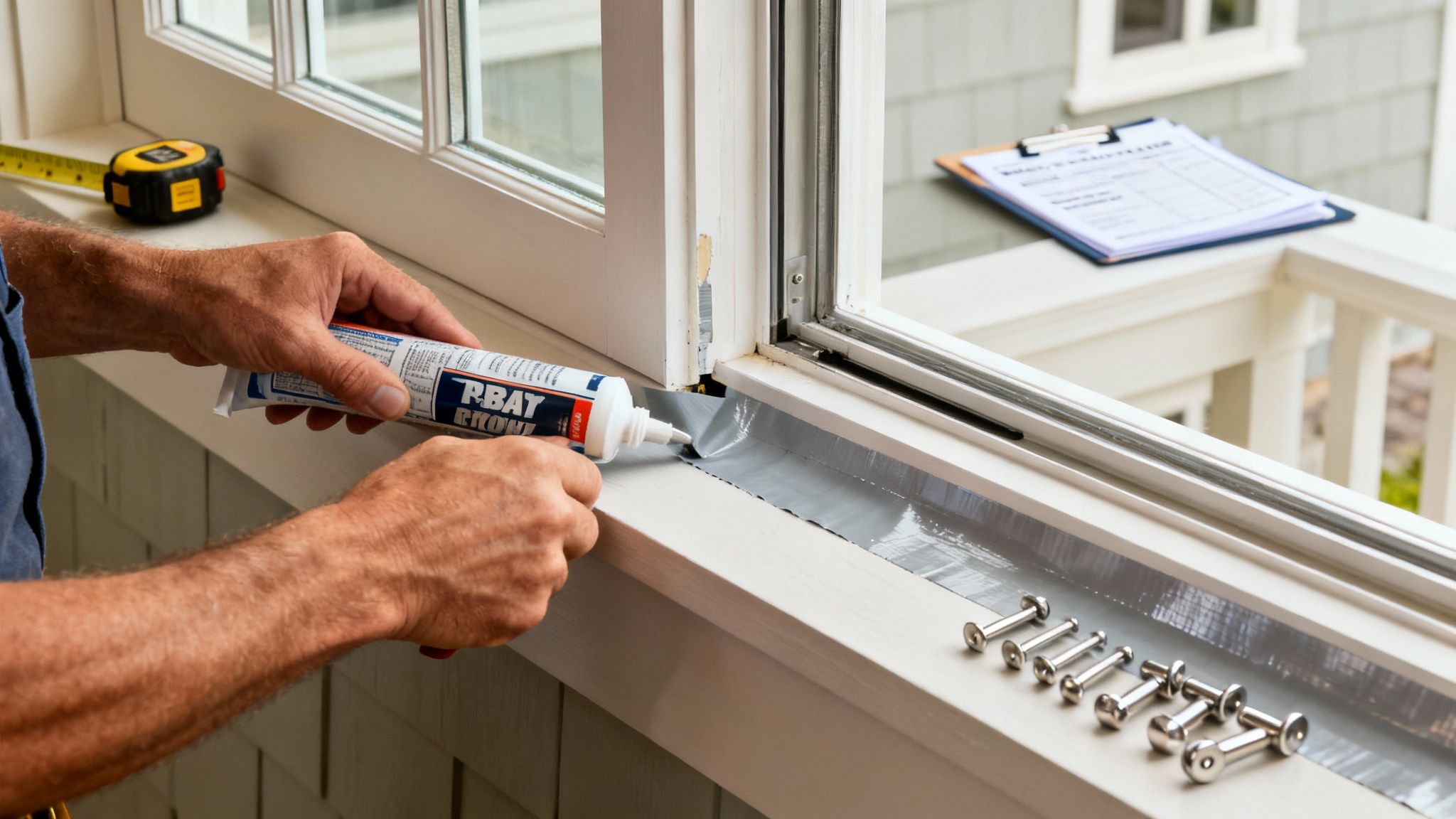
This is why professional installation is a must for a coastal home. An expensive window installed poorly is just an expensive mistake. The result is often air leaks that raise your energy bills or water damage that leads to rot.
Making Sense of Monterey County Building Requirements
Local building codes are there to keep your home safe. In Monterey County, especially in coastal zones, the rules are even stricter. They often require windows that can handle high winds.
The southern coast of Monterey Bay has some of the highest erosion rates in California. That is why local codes demand windows that can handle strong wind and rain. You can read more about our unique climate challenges and their impact on coastal homes.
Working with a local installer means you don't have to be a code expert. They handle the permit process and make sure every window meets our regional standards.
A professional installation is more than just putting a window in a hole. It involves carefully sealing the opening and making sure the unit is perfectly level and square.
Why a Trusted Local Installer Is Your Most Important Asset
Choosing your installer is as important as choosing the window. You need a team that understands our coastal challenges, from Salinas to Carmel. A licensed, insured, and experienced local pro brings valuable knowledge to your project.
Here’s what to look for in a professional installer:
- Look for Certifications: The best installers are often certified by the window brands they sell. This proves they know how to install those products correctly.
- Ask About Warranties: A good company will stand behind their work. They should offer a strong warranty that covers both the product and the installation labor.
- Prioritize Local Experience: An installer who has worked in Monterey County for years knows the local challenges. That kind of expertise is priceless.
For more tips, check out our guide on how to choose the right window installer in Monterey County.
Frequently Asked Questions About Coastal Windows
Homeowners in Monterey County often have questions about choosing the right windows for our unique climate. Here are answers to some of the most common ones we hear from residents in Salinas, Carmel, and beyond.
What are the best window frame materials for a coastal home in Monterey?
Fiberglass is the top choice because it is incredibly durable and resistant to salt, moisture, and temperature changes. High-quality vinyl is another excellent, low-maintenance option that performs very well in our marine environment and is often more budget-friendly.
How do I prevent condensation on my windows?
Condensation forms when warm, moist indoor air hits a cold glass surface. The best solution is dual-pane windows with Low-E coatings and argon gas fill. This technology keeps the interior pane of glass warmer, which greatly reduces or eliminates condensation.
Will new windows really lower my energy bills in our mild climate?
Yes, they absolutely will. Even in Monterey's mild climate, old, leaky windows cause significant energy loss. According to the U.S. Department of Energy, upgrading to energy-efficient windows can save homeowners a noticeable amount on heating and cooling costs by keeping the indoor temperature stable.
What should I look for in a window warranty for a coastal property?
Look for a warranty that specifically covers corrosion on hardware and finishes without coastal exclusions. Many standard warranties have fine print that voids coverage if the home is within a mile or two of the ocean. A true coastal warranty shows the manufacturer stands behind their product's durability in salty air.
Do I need special impact-resistant glass for my home?
For most homes in Monterey County, standard tempered glass is sufficient. However, if your home is in a highly exposed area, like right on the bluffs in Carmel or Big Sur, impact-resistant glass provides an extra layer of safety against high winds and storm debris.
Wondering if your windows are built to last in our coastal climate? Contact Signature Glass and Windows, Inc. today for a free inspection or consultation. As a locally owned, family-operated business, we provide advice tailored to your home, your needs, and your neighborhood.
Visit us at https://signatureglassandwindows.com or give us a call to learn more.