
Getting the right fit for your new windows starts with one simple step: measuring correctly. It might seem tricky, but any homeowner in Monterey County can get the exact numbers needed for a perfect installation. This is the foundation of a successful window project.
When you're replacing a window, you'll need to measure the width in three spots (top, middle, and bottom). You will also measure the height in three spots (left, middle, and right). Then, you just use the smallest measurement from each set—this simple trick ensures your new window will slide into place without any issues.
Your Guide to Flawless Window Measurement
Let’s walk through this process like a local expert from Salinas would, making sure your project gets off to a great start. In my years of experience, I’ve seen firsthand why getting it right matters so much.
- A Perfect Fit: An accurate measurement guarantees the new window will slide into place perfectly. This means no awkward gaps or forcing it into the frame.
- Better Energy Efficiency: A snug fit is key for performance. It prevents drafts and air leaks, which makes your home more comfortable. The U.S. Department of Energy says that heat gain and loss through windows cause 25%–30% of a home's heating and cooling energy use.
- Avoiding Costly Mistakes: Ordering the wrong size window is a headache nobody wants. It can lead to expensive delays and reordering fees.
Taking the time to measure correctly is the most important step you can take to ensure your window replacement project is a success from start to finish.
We'll cover the tools you'll need and the right way to measure width, height, and depth. Think of this as getting a bit of our family-operated expertise, right here to help you move forward. Let’s get you started on the right foot.
The Simple Toolkit for Accurate Measurements
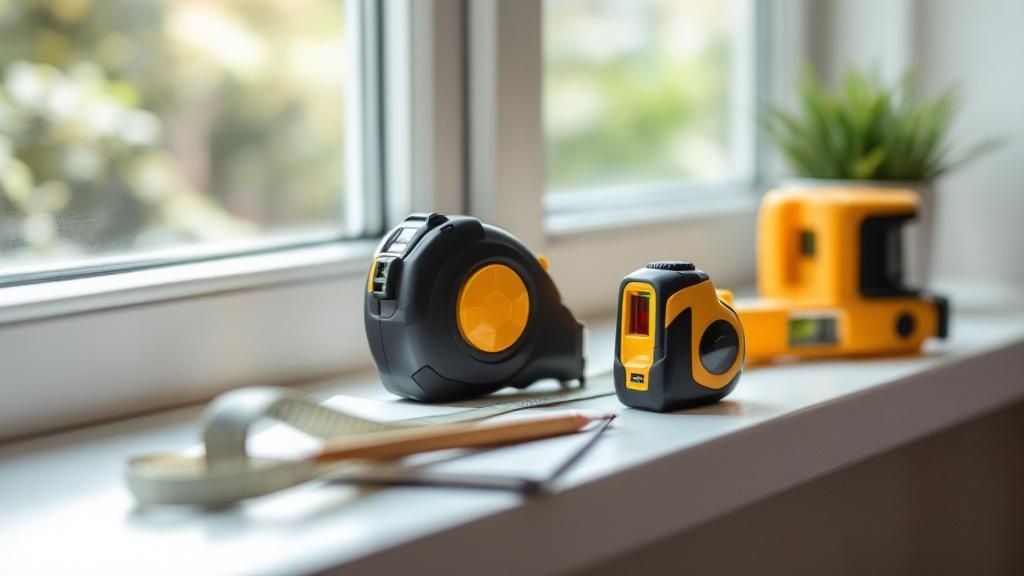
You don’t need a lot of special tools to measure for new windows. In fact, you probably have everything you need around the house. Gathering a few simple items before you start will make the whole process go smoothly.
The most important tool for this job is a good steel tape measure. Forget the cloth or vinyl ones, because they can stretch and throw off your measurements. When it comes to getting a perfect fit, every fraction of an inch counts.
Keep Your Notes Organized
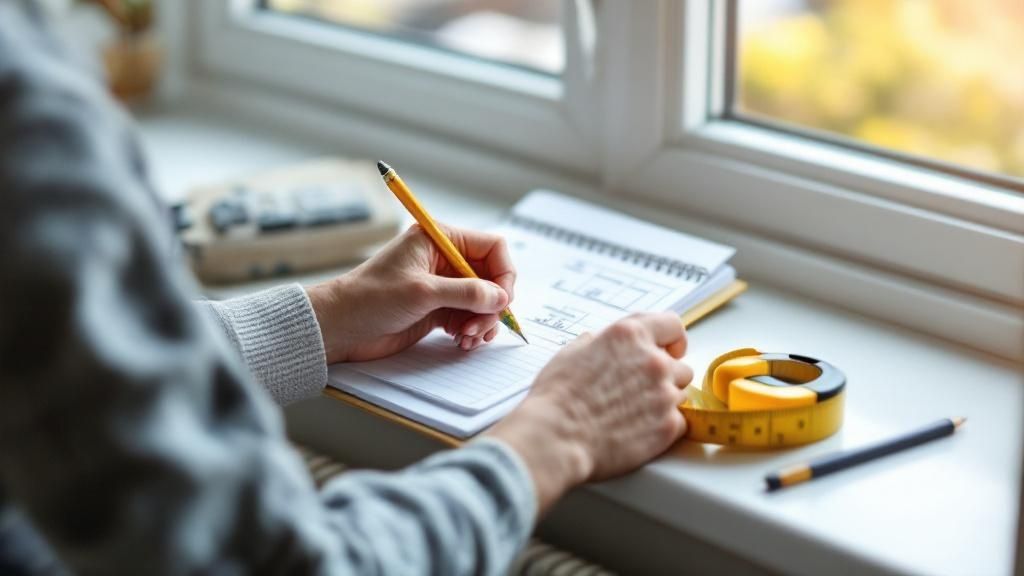
You'll also need a pencil and a notepad. Here's a pro tip from our years helping homeowners from Salinas to Carmel: draw a quick sketch of each window you're measuring.
Make sure to label them clearly, like "Living Room Left" or "Upstairs Bathroom." This small step is a lifesaver when you’re measuring several windows. It prevents mix-ups and makes sure every measurement is tied to the right opening.
By keeping clear, labeled notes for each window, you create a reliable blueprint for your project. This simple habit turns a confusing task into a straightforward checklist.
With your measurements in hand, the next step is figuring out what kind of windows you want. Our guide on how to choose replacement windows is a great place to start looking at your options.
The Correct Way to Measure Width, Height, and Depth
Getting your window measurements right is where being precise really matters. We use a professional three-point method that ensures a perfect fit every time. It's a simple technique any homeowner in Monterey can master.
When you're ready to measure, start with the width. Grab your steel tape measure and run it across the window frame opening. You will do this in three separate spots: once at the top, once in the middle, and once at the bottom.
Taking Height and Depth Measurements
After you get the width, you'll repeat the same process for the height. Measure the vertical distance from the top of the window (the head) down to the sill. Just like before, take three measurements: one on the far left, one in the center, and one on the far right.
It's normal, especially in older homes around Salinas and Carmel, for these numbers to be slightly different. Walls can settle over time, so don't be surprised if your measurements vary by a little bit.
The secret is simple: Always use the smallest of the three measurements for both your final width and final height. This ensures your new window will fit into the tightest point of the opening.
This handy infographic breaks down the three-point measuring process into a simple visual guide.
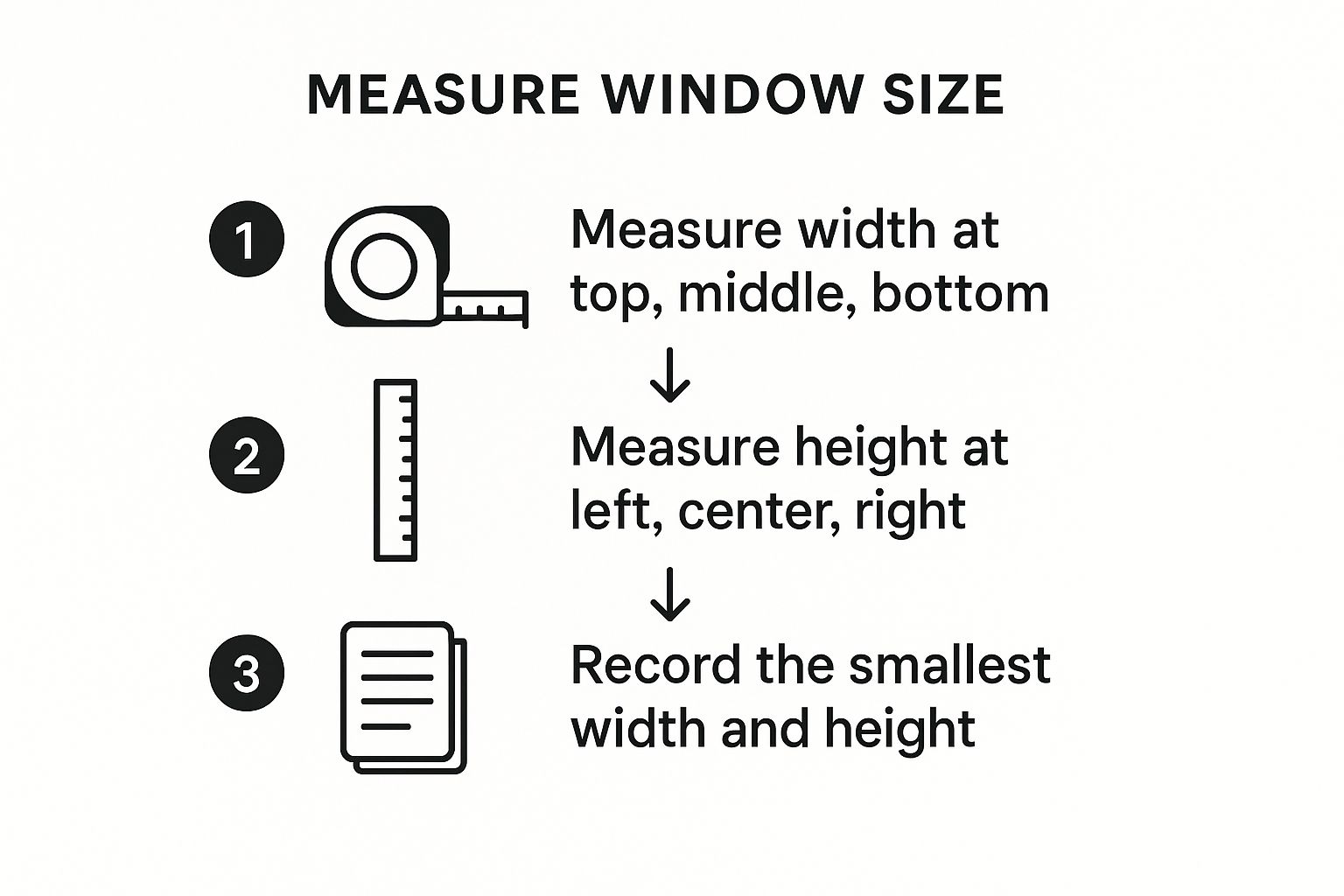
As the visual shows, consistency is key—measure in three places for both width and height, then record the smallest number for each to ensure a perfect fit.
The last step is measuring the jamb depth. This is the distance from the inside edge of your interior trim to the outside edge of your exterior trim. A correct depth measurement ensures your new window sits flush within the wall for a clean, professional finish. For more details, check our guide on measuring windows for replacement.
Window manufacturers often use a four-digit code for sizes. For example, a '2426' window is for an opening that is 2 feet 4 inches wide by 2 feet 6 inches tall. The actual window is made about ½ inch smaller to leave room for a proper installation.
Why Precise Measurements Have Always Mattered
Ever wondered why being off by a tiny bit can throw off a whole window project? The need for precision isn't new. For centuries, construction was messy without consistent standards, which made it hard to fit parts together.
Things started to change in the 19th century. A big moment was the Treaty of the Meter in 1875, signed by 17 nations, which started a global system for measurement. This was locked in for the U.S. when the National Bureau of Standards (now NIST) was founded in 1901, creating standards that changed American industry.
From Global Standards to Your Salinas Home
That history of precision directly impacts your window project today. When you measure a window opening in your Monterey County home, you’re using a system that’s been improved for over a century. This system lets manufacturers build a window that slots into your opening perfectly.
Simply put, a commitment to standards ensures a quality result.
A well-measured window not only fits perfectly but also performs better. It prevents drafts and energy loss, making your home more comfortable and efficient.
An accurate fit helps maximize your home's performance. For homeowners in Carmel and surrounding areas, this means lower energy bills and a cozier home. You can find more tips in our guide on how to save energy at home.
To see how important getting dimensions right is, you can look at various general size guides. Taking the time for precise measurements connects your project to a long history of quality craftsmanship.
Common Measuring Mistakes and How to Avoid Them
After decades in the window business, our team has seen every measuring mistake you can imagine. These common missteps can easily cause problems for homeowners here in Salinas and Monterey.
The good news is that getting precise numbers is simple. Just avoid a few common errors to ensure a perfect fit and a stress-free installation.
One of the biggest mistakes is measuring the wrong part of the window. Some homeowners measure the visible glass or the old window sash. Instead, you need to measure the actual frame opening where the new window will sit.
Ensuring a Square Fit and Perfect Numbers
Here’s a pro tip: check if your window opening is "square." This is very important in older homes, which can settle and cause frames to shift. This easy check can save you a big headache later.
To check for square, just take two diagonal measurements. Measure from the top-left corner to the bottom-right, then from the top-right corner to the bottom-left. If those two numbers aren't the same, the opening is out of square.
Finally, don't round your numbers. You must measure to the nearest 1/16th of an inch. This level of precision ensures the manufacturer can build a window that fits just right.
Think of these as friendly tips from a local expert, designed to help you get it right the first time. Precision prevents problems and ensures your new windows perform at their best.
These simple checks are a big part of a proper installation. You can also read our guide on effective window weatherization to learn how to keep drafts out for good.
Knowing When to Call a Window Professional
Measuring a standard window is a great project for a handy homeowner. But some situations are best left to the pros. This is especially true here in Monterey County, where many homes have unique features that need a special touch.
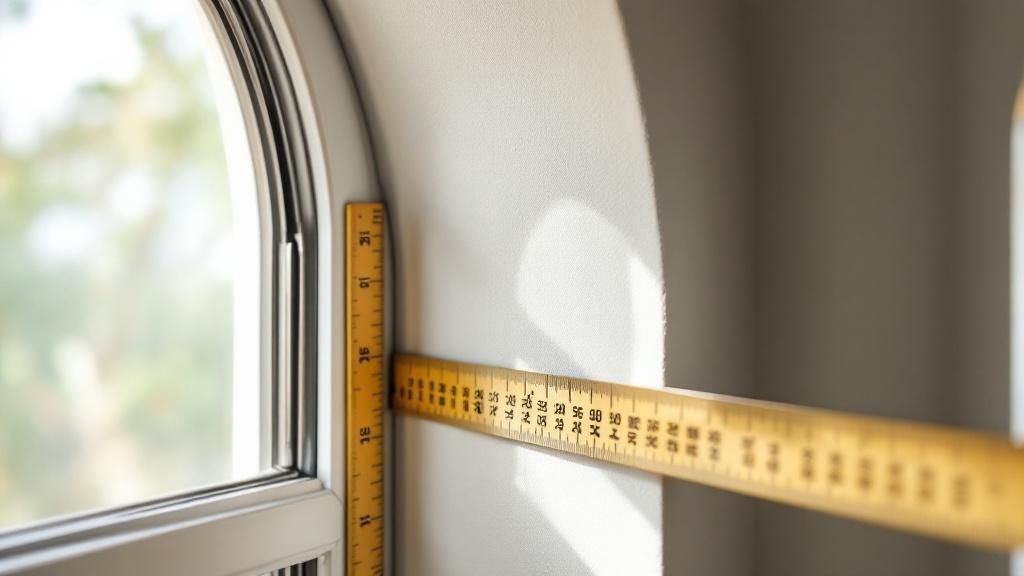
If your home has custom-shaped windows—like arches, circles, or bay windows—measuring becomes much more complex. These aren't simple height-by-width jobs. The same goes for many historic homes in Salinas and Carmel, where old frames can be uneven.
Complex Projects Need an Expert Eye
Are you planning to cut a new window opening where one doesn't exist? That's another time when calling a professional is essential. This kind of work involves your home’s structure and must be done safely.
Our local expertise at Signature Glass and Windows really shines in these tricky situations. We handle complex measurements and installations that prevent costly mistakes and save you from major headaches.
These projects go beyond a simple tape measure. You can get a better sense of what a professional job involves by checking out our essential window installation tips. By trusting a professional, homeowners can rest easy knowing even the most challenging window projects are in capable hands.
Got Questions About Measuring Windows? We Have Answers.
When it comes to measuring for new windows, a little knowledge goes a long way. We get a lot of the same questions from homeowners here in the Salinas and Monterey area. Here are some quick answers to help you get started with confidence.
Common Questions from Local Homeowners
Should I measure from inside or outside?
For replacement windows, you should measure from inside the house. You want to get the dimensions of the existing window frame. For width, measure from the inside of one side jamb to the other. For height, go from the top of the frame (the head jamb) down to the sill.
What if my measurements aren’t all the same?
Don’t worry, that’s normal. It’s common in older homes around Monterey County where foundations have settled. The rule is simple: always use the smallest of the three measurements you take for both the width and the height. This ensures your new window will fit.
Do I need to leave space for shims or insulation in my measurements?
No, you don't need to worry about that. Your job is to get the most accurate measurement of the opening. The window manufacturer will automatically make a small deduction—usually between 1/4 to 1/2 inch—from your numbers. This creates the needed room for installers to level and insulate the new window.
How can I tell if my window opening is 'out of square'?
Here’s an easy pro tip. Use your tape measure to take two diagonal measurements. First, measure from the top-left corner of the opening to the bottom-right corner. Then, measure from the top-right corner to the bottom-left. If those two numbers don't match, the opening isn't perfectly square.
Is measuring for a brand-new house different?
Yes, it's very different. For new construction, you measure the 'rough opening,' which is the raw, stud-to-stud space in the wall. This guide is for 'replacement windows,' which are made to fit into an existing window frame.
Feeling ready to move forward but want a professional to double-check your work? The team at Signature Glass and Windows Inc. is here to help homeowners across Salinas and Monterey achieve a flawless installation every time. Visit us at https://signatureglassandwindows.com or give us a call at 831-754-8855 for a free, no-obligation consultation today.