
Living on the Central Coast is incredible, but it means your home is in a constant fight with the elements. To keep your windows looking great and working well, you need a smart plan. This includes regular cleaning to remove salt, choosing tough materials like fiberglass, and adding UV-blocking films to stop sun damage. It really comes down to steady upkeep and picking the right products for our unique climate.
Why Central Coast Homes Need Special Window Protection
Having an ocean view in Monterey or soaking up the Salinas sun is why we live here. But that lifestyle comes with a hidden cost for our homes. The salty sea breeze and constant sunshine are surprisingly hard on windows. General advice you find online often doesn't work for us; our local environment requires a better strategy.
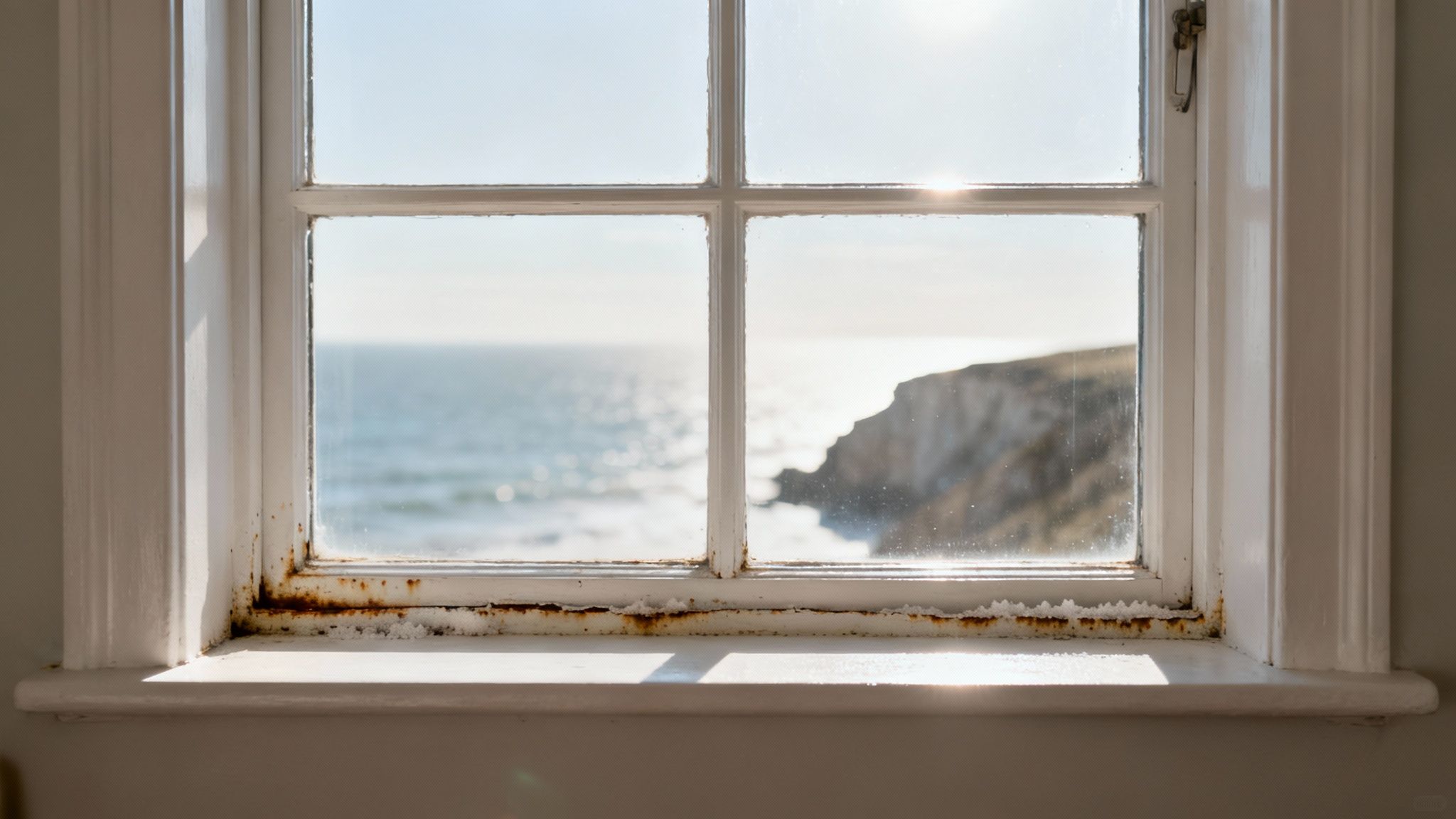
The mix of salt and sun creates a perfect storm for window problems. These two things work together, shortening the life of frames, seals, and even the glass itself. Without the right protection, you could face expensive repairs much sooner than you think.
The Double Threat of Salt and Sun
That salty sea mist we love to smell settles on every surface of our homes. On windows, it's more than just a film blocking your view. It slowly eats away at metal hardware, creates pits in aluminum frames, and can even etch the glass over time, leaving a permanent haze.
While the salt is causing corrosion, the intense California sun is baking your window frames. This constant UV exposure fades and dries out wood, makes vinyl brittle and easy to crack, and destroys the flexible seals that keep out moisture and drafts. This damage weakens your windows' defenses, making them vulnerable to moisture from our coastal fog and winter rains.
For any homeowner in Monterey County, understanding this double threat is the first step. It’s not just about wiping the glass. It’s about having a smart maintenance routine and choosing materials built to survive our specific coastal environment.
The Real Cost of Coastal Exposure
Homes here on the Central Coast face a tough battle against the elements. If your windows aren't protected correctly, that constant salt air can significantly shorten their lifespan. In fact, maintenance costs for coastal homes can be up to 30% higher than for homes located inland.
After just one windy day, that salt spray can fog up your glass and start to cause permanent etching in as little as 24 hours. Regular upkeep isn't just a suggestion; it's a must-do to prevent lasting damage. Many homeowners don't notice the problem until a window is stuck shut or their energy bill spikes. By then, the damage has already started. This is why being proactive is so important, especially when considering Monterey's top window design trends that actually work in coastal homes.
Choosing Window Materials That Defy Coastal Weather
When you live on the Central Coast, your windows are on the front lines, battling salt and sun every day. The materials you choose are not just about looks; they are your home's main defense. Getting this right from the start can save you years of headaches and costly repairs, especially for residents in Monterey and Carmel.
As a family-owned business with over 20 years of local experience, we've seen what happens when the wrong materials are used. A window might look great at first, but if it's not built for our climate, it can become a corroded, warped mess in just a few years. Our goal is to help you find the best balance of durability, style, and budget for your home.
Frame Materials That Thrive on the Central Coast
The frame is the backbone of your window, and it takes the most abuse from our coastal weather. It needs to resist salt, moisture, and temperature changes. Let’s look at how the most common options hold up here.
Fiberglass is the top choice for most coastal homes. It is incredibly stable, so it doesn't expand and shrink much with temperature changes. This helps maintain a perfect seal against moisture. Most importantly, it is not affected by salt or water—it will not rot, rust, or corrode.
Expert Tip: We often recommend fiberglass to homeowners in Salinas who want a durable, low-maintenance solution. It holds paint well and doesn't need the constant attention that wood frames require in our damp, salty air.
Vinyl is another popular option, mainly because it is more affordable. However, not all vinyl is the same. Cheaper vinyl can become brittle and crack after a few years in the sun. If you choose vinyl, make sure it is a high-quality product with built-in UV protection and strong internal supports.
Wood offers a beautiful, classic look but requires a lot of maintenance in our area. It must be perfectly sealed and painted, and you have to keep up with that maintenance to prevent rot. Aluminum is another choice, but unless it's treated with a special coastal finish, it is very likely to get pitted and corroded by the salt spray.
Coastal Window Material Comparison for Central Coast Homes
| Material | Salt Air Resistance | UV Resistance | Maintenance Level | Best For |
|---|---|---|---|---|
| Fiberglass | Excellent | Excellent | Low | Durability and minimal upkeep in harsh coastal conditions. |
| High-Quality Vinyl | Excellent | Good | Low | A cost-effective, low-maintenance solution. |
| Wood | Poor to Fair | Fair | High | Homeowners prioritizing traditional aesthetics who are committed to regular maintenance. |
| Aluminum (Coastal-Rated) | Good | Excellent | Low to Medium | Modern homes, but a protective finish is essential to prevent corrosion. |
The right material for you depends on your priorities, but for the best performance against our coastal weather, fiberglass and high-quality vinyl are hard to beat.
Decoding Your Glass Options
The type of glass you choose is just as important as the frame. Modern glass is a high-tech barrier that protects your home's interior and keeps you comfortable.
A Low-E (low-emissivity) coating is a must-have for any coastal home. Think of it as a transparent, microscopic sunblock for your windows. It reflects heat, keeping your home cooler in the summer and warmer in the winter, which can lower your energy bills. It also blocks a large amount of damaging UV rays that can fade your floors, furniture, and art.
Windows exposed to both intense sun and salt air can lose up to 40% of their structural strength in just 10 years, according to industry studies. This means you might have to replace seals and other parts twice as often as you would inland. You can learn more about coastal damage assessments from recent storms to see the real impact on our region.
If your home gets hit by strong winter storms, impact-resistant glass is a great upgrade. It's a type of laminated glass that holds together even if it breaks, offering serious protection from wind and debris. It also helps block out noise. To learn more about what works for local homeowners, you can explore our guide on choosing the right windows for Monterey County.
Your Essential Coastal Window Maintenance Routine
Living here on the Central Coast is amazing, but that beautiful ocean view comes with a catch. Regular window maintenance is your best defense against the salt and sun. A simple seasonal routine is much better than waiting for a problem to appear.
For homeowners from Carmel to Salinas, this isn't just about cleaning. It’s about protecting your home and keeping your views clear. A little care now can extend the life of your windows and prevent small issues from becoming big ones.
Cleaning Away Corrosive Salt The Right Way
That hazy film on your windows isn’t just dirt; it's a thin layer of salt. If you leave it there, it can permanently etch the surface of the glass. The key is to clean it off gently, without scratching the glass or damaging special coatings.
A simple approach works best. Mix a few drops of mild dish soap into a bucket of warm water. Use a soft microfiber cloth to wash the glass, frames, and sills. This will lift the salt without being too rough. When you're done, rinse everything with clean water from a hose on a low setting.
Pro Tip: Try to avoid washing your windows when the sun is shining directly on them. The heat makes the soap dry too fast, leaving ugly streaks. An overcast day is the perfect time for window cleaning.
If you want to get that professional, crystal-clear look, check out our guide with more tips on streak-free window cleaning.
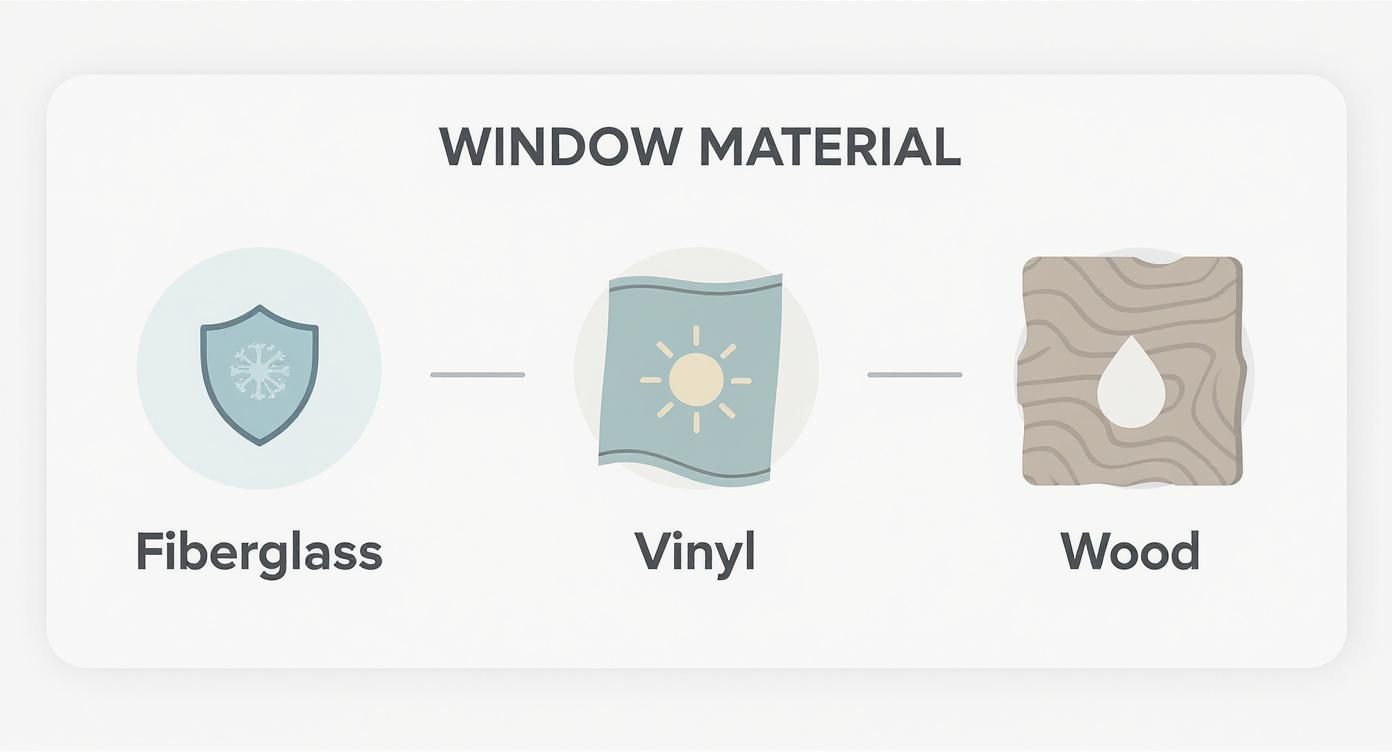
Choosing the right materials like fiberglass or quality vinyl from the start makes your maintenance routine much easier.
Inspecting Seals And Lubricating Hardware
The moving parts of your windows—like locks, cranks, and hinges—are where salt air causes the most damage. Salt corrodes metal, causing parts to get stuck. At the same time, the sun makes rubber and silicone seals dry out, crack, and become brittle.
A quick check each season can prevent major problems:
- Look at the Seals: Check the weatherstripping around the glass and frame. Are there any cracks? Is it pulling away? Damaged seals let in moisture and drafts.
- Operate the Hardware: Open and close every window. If it feels sticky or makes a grinding noise, salt and dirt have likely built up in the tracks.
- Test the Locks: Make sure every lock works smoothly. If a lock is hard to turn, it might be starting to corrode.
After your inspection, use a stiff brush and a vacuum to clean out the window tracks. Then, a quick spray of silicone-based lubricant on the hinges, rollers, and locks will keep everything working smoothly. Avoid oil-based products like WD-40, as they can attract more dust and dirt. Proper care for frames is also key; learning how to paint window frames can add another layer of protection.
Seasonal Window Maintenance Schedule For Coastal Homes
Following a simple schedule takes the guesswork out of window care. It ensures nothing is missed and keeps your windows ready to face the coastal weather.
| Season | Key Maintenance Task | Why It's Important |
|---|---|---|
| Spring | Deep clean glass, frames, and tracks. Lubricate all hardware. | Removes winter's grime and salt, ensuring smooth operation for the months of frequent use ahead. |
| Summer | Inspect seals and caulking for sun damage (cracking, shrinking). | The intense summer sun is tough on seals. Catching damage early prevents leaks during winter rains. |
| Fall | Check for drafts and re-inspect seals. Clean out tracks one last time. | Prepares your windows for winter storms, ensuring they are airtight to keep your home warm and dry. |
| Winter | Do a quick wash on a mild day to remove salt buildup from storms. | Prevents corrosive salt from sitting on your windows for months, which can cause permanent damage. |
This simple routine is one of the best ways to protect your investment and make sure your windows last for many years.
Adding a Shield with Protective Films and Coatings
Even with the best windows, adding an extra layer of defense is a smart move for any Central Coast homeowner. Protective films and coatings act like a shield for your windows. They give them the extra strength needed to stand up to our salt air and sunshine.
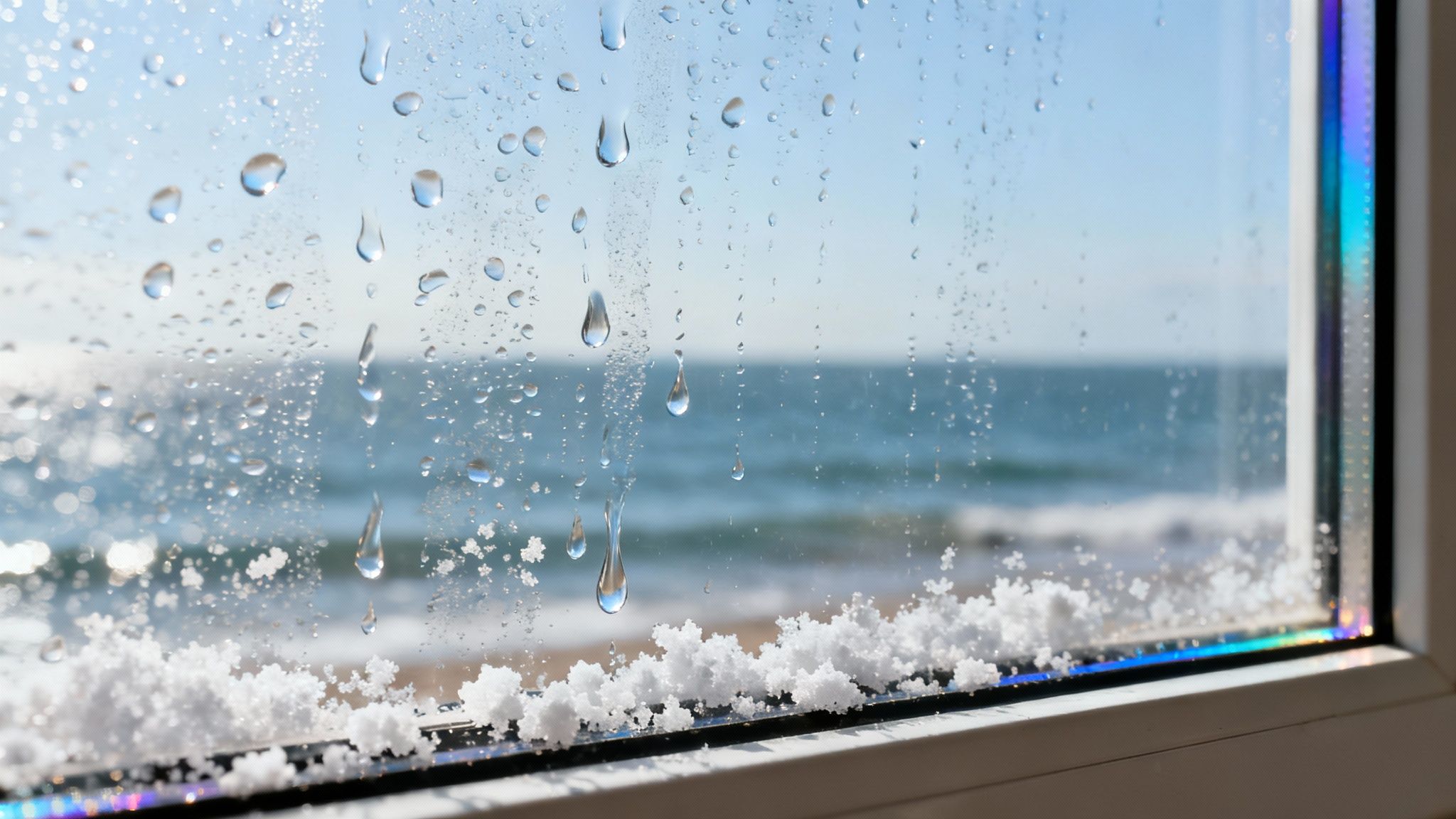
These modern upgrades are a great investment. They can improve energy efficiency, make maintenance easier, and help your windows last longer. All of this can be done while keeping your beautiful view of Monterey Bay.
Blocking the Sun with UV-Blocking Films
The California sun is beautiful, but its UV rays can damage your home's interior. It can cause your hardwood floors, furniture, and artwork to fade. A high-quality UV-blocking window film acts like sunscreen for your house, stopping up to 99% of these damaging rays.
This isn’t just about protecting your belongings. These films also reflect a lot of solar heat, which helps keep your home cooler in the summer. This means your air conditioner doesn't have to work as hard, which can lower your energy bills.
Expert Insight: Applying a UV film is one of the most cost-effective upgrades you can make. It's a simple change that protects your interior, lowers energy costs, and can even help protect your window seals from the sun.
Many homeowners in Salinas and Carmel worry that these films will make their rooms dark. But today's technology is so advanced that the film is almost invisible. You get all the protection without losing the beautiful coastal light. If you are considering new windows, you can also learn more about Low-E glass options, which have this technology built right in.
Repelling Salt and Rain with Hydrophobic Coatings
If you live right on the coast, you know the battle against salt spray never ends. A hydrophobic coating can be a game-changer. This special treatment creates a super-slick surface on your glass that water and salt can't stick to.
Instead of drying in hazy spots, rainwater and sea mist just bead up and roll off. This takes dirt and salt along with it. This is a huge benefit for Central Coast homeowners because:
- You'll clean less: You will spend far less time scrubbing your windows to keep them clear.
- It prevents corrosion: By keeping salt from sitting on the glass, you stop it from causing permanent damage over time.
This coating makes life easier and keeps your windows looking their best with less work. You can also explore other expert solutions for reducing glare from windows to handle another common issue in our sunny area.
Why Expert Installation is Critical on the Coast
You can buy the best coastal-rated windows, but that’s only half the job. A great window is useless if it's not installed perfectly. For homes here on the Central Coast, a flawless installation is the most important step to protect your home from salt and sun.
A window is only as strong as the seal between its frame and your house. In places like Monterey and Carmel, even the tiniest gap can let in moisture from sea mist and rain. This can lead to hidden rot, mold, and higher energy bills.
Sealing Out the Coastal Elements
Installers who work in Monterey County every day understand our unique climate. They don't just put a window in a hole; they build a weatherproof barrier designed to handle our coastal challenges. This requires special skills and materials that a general contractor might not use.
It starts with prepping the window opening and using advanced window flashing. This material creates a waterproof shield that directs water away from your walls. Local pros know which flashing and sealant products can stand up to constant salt spray and our weather, ensuring a tight fit that lasts.
For coastal homes, the installation isn't just about fitting a window—it's about building a fortress against moisture. The skill to properly seal a window is what separates a 20-year solution from a 2-year problem.
A proper coastal installation also considers how materials expand and contract with temperature changes. An experienced installer knows to leave the right amount of space for this movement while keeping a perfect, airtight seal. This small detail prevents drafts and cracks later on.
The Signature Glass and Windows Difference
With over 20 years of experience serving homeowners right here on the Central Coast, we've seen what happens when an installation is rushed or done incorrectly. A bad job leads to leaks, drafts, and windows that are hard to open and close.
Our factory-certified team is proud to do the job right. We provide careful, clean, and correct installations that are built to last. Choosing your installer is a big decision, and we created a guide to help you learn how to choose the right window installer in Monterey County.
Our goal isn't just to sell you a great product. We make sure every window and door we install is perfectly fitted and sealed, ready to give you years of beauty, comfort, and protection.
Frequently Asked Questions About Protecting Coastal Windows
Homeowners on the Central Coast often have questions about keeping their windows in top shape. After more than 20 years of working with families in Monterey, Salinas, and Carmel, we have heard them all. Here are answers to some of the most common questions we get.
How often should I clean my coastal windows?
It depends on how close you are to the ocean. For homes with a direct view of Monterey Bay, we recommend cleaning them at least once a month to prevent salt buildup. If you live further inland, like in Salinas, you can usually clean them every two to three months. However, a quick rinse with fresh water after a big storm is always a good idea for everyone.
Are fiberglass windows really worth the extra cost?
Yes, for our coastal environment, they definitely are. Fiberglass frames are extremely resistant to salt corrosion and won't warp or crack in the sun. This means they keep a tight seal for longer, which saves energy and prevents moisture damage. When you consider the savings from fewer repairs and a longer lifespan, the initial investment in fiberglass pays off.
Can I apply a protective UV film to my windows myself?
While you can buy DIY kits, we usually recommend against it. Applying the film correctly is tricky. If it's not done perfectly, you can end up with bubbles, peeling corners, and gaps, which means you won't get the full UV protection. A professional installer has the right tools and experience to ensure a flawless application, which is often backed by a warranty.
What are the first signs of salt air damage to look for?
Knowing the early warning signs can save you from costly repairs. A few times a year, check for these clues:
- Pitting or rust on metal frames, locks, and handles.
- A hazy film on the glass that doesn't wash off.
- Cracked or shrinking seals around the glass.
- Stiff operation when opening or closing the window.
Do awnings and shutters really help protect windows?
Yes, they absolutely do. Awnings and shutters provide a physical barrier against the elements. Storm shutters protect glass from wind and debris during winter storms. Awnings provide shade from the intense summer sun, protecting frames and seals from UV damage and helping to keep your home cooler.
Your windows are one of your home's most important features, protecting you from the elements while connecting you to the beautiful Central Coast. At Signature Glass and Windows Inc., we bring over two decades of local expertise to every project, ensuring your windows are perfectly suited for our unique climate.
Protect your investment with windows designed to last. Contact Signature Glass and Windows today for a free, in-home consultation or call us at 831-754-8855 to discuss your project!