
If you’ve ever noticed how fast a car rusts near the ocean, you’ve seen a preview of how coastal weather affects your window lifespan. For homeowners in Monterey County, the mix of salty air, fog, and moisture creates a harsh environment for our homes. This constant attack can shorten the life of your windows, leading to expensive repairs and higher energy bills.
Why Your Windows Wear Out Faster in Monterey County
Life on the coast from Carmel to Marina is beautiful, but the ocean breeze is tough on your windows. Homes here in coastal neighborhoods like Pacific Grove, Marina, and Seaside face a different battle than those inland. They are under constant assault from elements that break down window frames, seals, and even the glass itself.
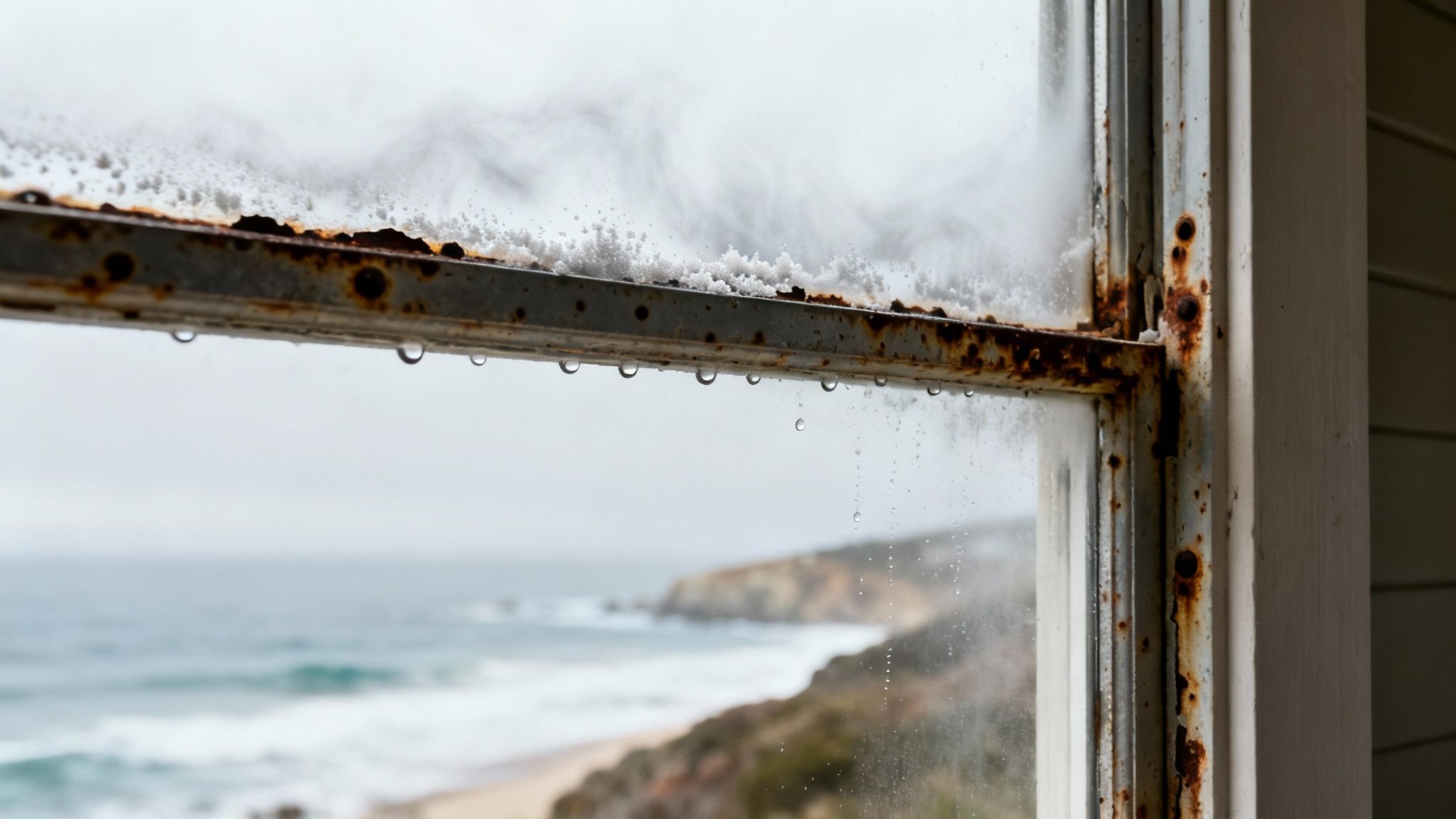
The two main culprits are salt and moisture. The sea breeze carries tiny salt particles that settle on your home’s surfaces. Think of it as a slow-acting acid that eats away at metal hardware and window frames, a daily reality for homes in exposed areas.
How Different Materials Hold Up to the Coast
Not all windows are created equal, which becomes very clear in our coastal climate. Materials that work well in drier areas often fail quickly here. For example, wood frames can soak up moisture from the fog, which leads to rot, swelling, and warping.
Many homeowners in coastal zones notice faster window frame corrosion, reduced energy efficiency, and even fog between the panes. The lifespan of common window materials can be cut by 30-50% in our coastal environment. An aluminum-clad window that might last 20 years elsewhere can show rust in just 10-12 years here, as experts at Sea Island Builders have documented.
To put this into perspective, here's a rough comparison of how window materials fare in our area versus a typical inland location.
Coastal vs. Inland Window Lifespan Comparison
| Window Material | Average Inland Lifespan | Average Coastal Lifespan (Monterey County) |
|---|---|---|
| Wood | 30+ years | 15-20 years |
| Standard Vinyl | 20-40 years | 15-25 years |
| Aluminum | 20-25 years | 10-15 years |
| Fiberglass | 50+ years | 30-40+ years |
As you can see, the difference is huge. Choosing a material that can stand up to local conditions is key to getting a good return on your investment.
Local Expertise Makes All the Difference
Many homeowners in Salinas and Monterey don't realize their windows are failing until they see fog between the panes or feel a draft. By then, the damage is already done. This is why picking the right materials from the start is so important.
This is where having a local, family-operated business really helps. A pro who understands our area can guide you to products built to last. To see what works best, check out our guide on Monterey's top window design trends for coastal homes.
With over 24 million aging homes in the U.S. now reaching prime remodeling age, the need for region-specific upgrades is rising fast, especially in coastal towns. Choosing windows suited for the local climate is one of the smartest investments a homeowner can make.
At Signature Glass and Windows, we specialize in durable, coastal-ready solutions like fiberglass frames and impact-resistant glass. Our local knowledge allows us to recommend products that last longer and perform better in Monterey County's unique environment.
The 4 Coastal Culprits Waging War on Your Windows
To understand why windows wear out so fast along the coast, you need to know what you’re up against. It's not just one thing; it's a team of four forces constantly at work on your Salinas or Monterey home. Let's break down what your windows face every day.
1. Salt Air Corrosion
That refreshing ocean breeze carries a hidden passenger: salt. Tiny salt particles float in the air and settle on your window frames, glass, and hardware. Think of it as a slow, microscopic sandblaster grinding away at every surface.
This salty film is very corrosive, especially to metal. It's why steel hinges and locks rust so quickly and why aluminum frames get a chalky, pitted look.
2. High Humidity and Fog
Our famous coastal fog is beautiful, but it's also a big source of moisture damage. The constant dampness helps water get into the smallest cracks in your window frames. This is a huge problem for wood windows.
Once moisture gets into the wood, it starts to swell, soften, and rot from the inside. Even with other materials, this dampness can lead to mold and mildew.
One of the clearest signs of moisture is condensation between the panes of glass. This means the airtight seal has failed, letting damp air inside and hurting your window's ability to insulate.
This "seal failure" is a common problem for homes in foggy spots like Pacific Grove and Carmel. If you're seeing fogging, our guide on what causes windows to fog up explains this warning sign.
3. Intense UV Exposure
Living on the coast means big windows with beautiful views. The downside is a large dose of the sun’s ultraviolet (UV) rays. Just like sunlight can damage your skin, it also harms your windows.
This constant UV exposure leads to a few key problems:
- Fading: It bleaches the color out of wood and vinyl frames. It also fades your drapes, floors, and furniture.
- Material Breakdown: UV rays make plastics and vinyl brittle and more likely to crack or warp.
- Seal Degradation: The sun's heat is tough on the seals around the glass, causing them to dry out and crack.
4. Strong Coastal Winds
The winds coming off the Pacific are another strong force your windows face. Even a steady wind puts a lot of stress on your windows, especially if they are older.
This constant pressure can loosen frames and sashes over time, causing rattling. The bigger problem is wind-driven rain, which pushes water against your windows with great force.
Warning Signs Your Coastal Windows Are Failing
How can you tell if your windows are losing the battle against the Monterey Bay? The coastal climate often leaves subtle clues that your windows are nearing the end of their life. Spotting these signs early can save you from bigger problems down the road.
Learning to read these signs helps you fix small issues before they become major, expensive problems. Let’s walk through the most common things to look for.
Visible Signs of Wear and Tear
Often, the most obvious signs are right in front of you. The constant attack of salt, moisture, and sun leaves a unique mark on window materials not built for our coastal environment.
Here’s what to look for on your window frames and glass:
- Chalky Film or Pitting on Metal Frames: Look closely at your aluminum or metal frames. A dull, white, chalky residue or tiny pockmarks means corrosion from salt air is breaking down the metal.
- Fog or Condensation Between Panes: This is a major red flag. If you see fog or moisture trapped between the glass of a double-pane window, the airtight seal has failed.
- Soft, Warped, or Discolored Wood: For those with wood windows, moisture is the enemy. Press firmly on your frames; if the wood feels soft, that's rot.
Catching these issues early is key to protecting your home. For a deeper look, check out our guide on the signs you need new windows.
Functional Problems You Can Feel
Sometimes, the first hint of trouble is what you experience when using your windows. The stress from our climate can cause parts to seize up and frames to shift.
These problems almost always point to a deeper issue:
- Difficulty Opening or Closing: Does your window stick or require force to operate? This usually means the frames have warped from moisture or salt has gummed up the moving parts.
- Drafts or Increased Noise: Stand next to your closed windows on a windy day. If you feel a draft or hear more noise from outside, it's a sign that the seals have worn out.
- Locks and Latches That Won't Engage: Hardware is often the first victim of salty air. If your locks are rusty, stiff, or don't line up, your home's security is at risk.
By regularly checking for these warnings, you can get a clear picture of your windows' health. Recognizing these symptoms helps you know when it's time to consider an upgrade.
Choosing the Best Window Materials for Coastal Homes
You've seen what our coastal weather can do. The next step is picking a material that can fight back. When it comes to how long your windows will last in Monterey County, the frame material is the most important decision you'll make.
This is a long-term investment in your home's protection. Some materials that work fine inland simply can't handle the daily salt, fog, and sun on the coast.
Materials to Avoid by the Ocean: Wood and Standard Aluminum
Wood windows look classic, but in a damp place like Carmel or Pacific Grove, they are a lot of work. Wood soaks up moisture, causing it to swell, warp, and rot. It needs constant upkeep like sanding and painting.
Standard aluminum windows are also not suited for our salty air. Aluminum corrodes easily when exposed to salt, leading to a chalky, pitted finish that signals the metal is breaking down.
These common issues are a direct result of environmental stress. Picking the right material is your best defense.
Modern Vinyl: A Strong Coastal Contender
Today's vinyl windows are a great choice for coastal living. Made from a tough plastic called PVC, these frames are naturally immune to salt and moisture. They won't absorb water, so rot and swelling aren't a concern.
Modern vinyl frames are also designed for energy efficiency, with internal chambers that help insulate your home. Best of all, they are low-maintenance. A quick wash is all it takes to keep them looking sharp, saving homeowners in Salinas and Marina time and effort.
Fiberglass: The Ultimate Coastal Champion
While high-quality vinyl is a solid pick, fiberglass is the best choice for coastal durability. It's a tough material made from glass fibers and resin, designed to handle extreme conditions. This makes it a perfect match for the challenges along Monterey Bay.
Here’s why fiberglass is our top recommendation:
- Impervious to Salt and Moisture: Fiberglass doesn't absorb water, so it will never rot, swell, or warp. It also won’t pit or corrode from salt.
- Exceptional Strength and Stability: It’s eight times stronger than vinyl and expands at nearly the same rate as glass. This prevents seals from breaking and reduces fogging between panes.
- Unmatched Longevity: A well-made fiberglass window can easily last 50 years or more, even in our harsh climate.
To make it easier to see how these materials stack up, here’s a quick side-by-side look.
Window Material Performance in a Coastal Climate
| Material | Salt Resistance | Moisture Resistance | Maintenance Level | Best For |
|---|---|---|---|---|
| Fiberglass | Excellent | Excellent | Very Low | Homeowners wanting maximum durability and longevity with minimal upkeep. The "set it and forget it" option. |
| High-Quality Vinyl | Excellent | Excellent | Very Low | Those seeking a cost-effective, durable, and maintenance-free solution that performs well against salt and moisture. |
| Standard Aluminum | Poor | Good | High | Not recommended for coastal areas due to inevitable corrosion. Susceptible to pitting and structural weakening from salt. |
| Wood | Poor | Poor | Very High | Not recommended for coastal homes unless you are committed to constant, rigorous maintenance to prevent rot and warping. |
Homeowners should consider switching to low-maintenance, weather-resistant window materials like vinyl or fiberglass. They offer superior resilience in salty environments.
Deciding on the right material is a big deal. For a deeper look, check out our detailed window material comparison guide.
For those of us living on the coast, investing in a resilient material like fiberglass or high-quality vinyl is the smartest move you can make.
Upgrades That Fortify Your Windows Against the Coast
A tough coastal window is more than just a strong frame. To handle our local weather, you have to look at the whole system. A high-performance window is like a well-built ship; every part must work together to keep the elements out.
Picking a durable material like fiberglass or vinyl is a great start. But a few key upgrades can turn a good window into a coastal fortress, saving you from failure and repairs.
Reinforcing Against Storms and Salt
Hardware is often the first thing to fail on a window by the sea. Standard steel or aluminum hinges and locks can rust shut or crumble after just a few years in Pacific Grove.
That’s why corrosion-resistant hardware is a must-have. Typically made from stainless steel, this hardware ensures your windows will open, close, and lock smoothly for years.
Another key upgrade is advanced weatherstripping. Modern weatherstripping is made from durable, flexible materials that form an airtight seal. It blocks wind-driven rain and stops corrosive salt spray from getting inside.
The Power of Specialized Glass and Coatings
The glass you choose plays a huge role in protecting your home. For areas with strong winds, impact-resistant glass is a great investment. It’s a type of laminated glass built to hold together even if hit by debris during a storm.
Just as important are Low-E (low-emissivity) coatings.
Think of a Low-E coating as sunscreen for your house. It's a microscopically thin, transparent layer that reflects harmful UV rays, which are responsible for up to 40% of interior fading according to the U.S. Department of Energy.
By blocking the sun, Low-E coatings protect your furniture and prevent UV rays from damaging the window's seals. This one addition can greatly extend the life of the entire window unit. To see how these parts work together, explore our guide on choosing the right windows for Monterey County.
Of course, protecting your home goes beyond the window itself. It’s also smart to look at broader strategies for ensuring your home is leak-proof to build a complete defense against moisture.
Proactive Maintenance to Extend Your Window's Life
Even the toughest windows need some help to stand up to our coastal environment. Think of routine maintenance as a protective shield against salt and fog. For homeowners in Salinas and Monterey County, a few simple habits can add years to your windows' lifespan.
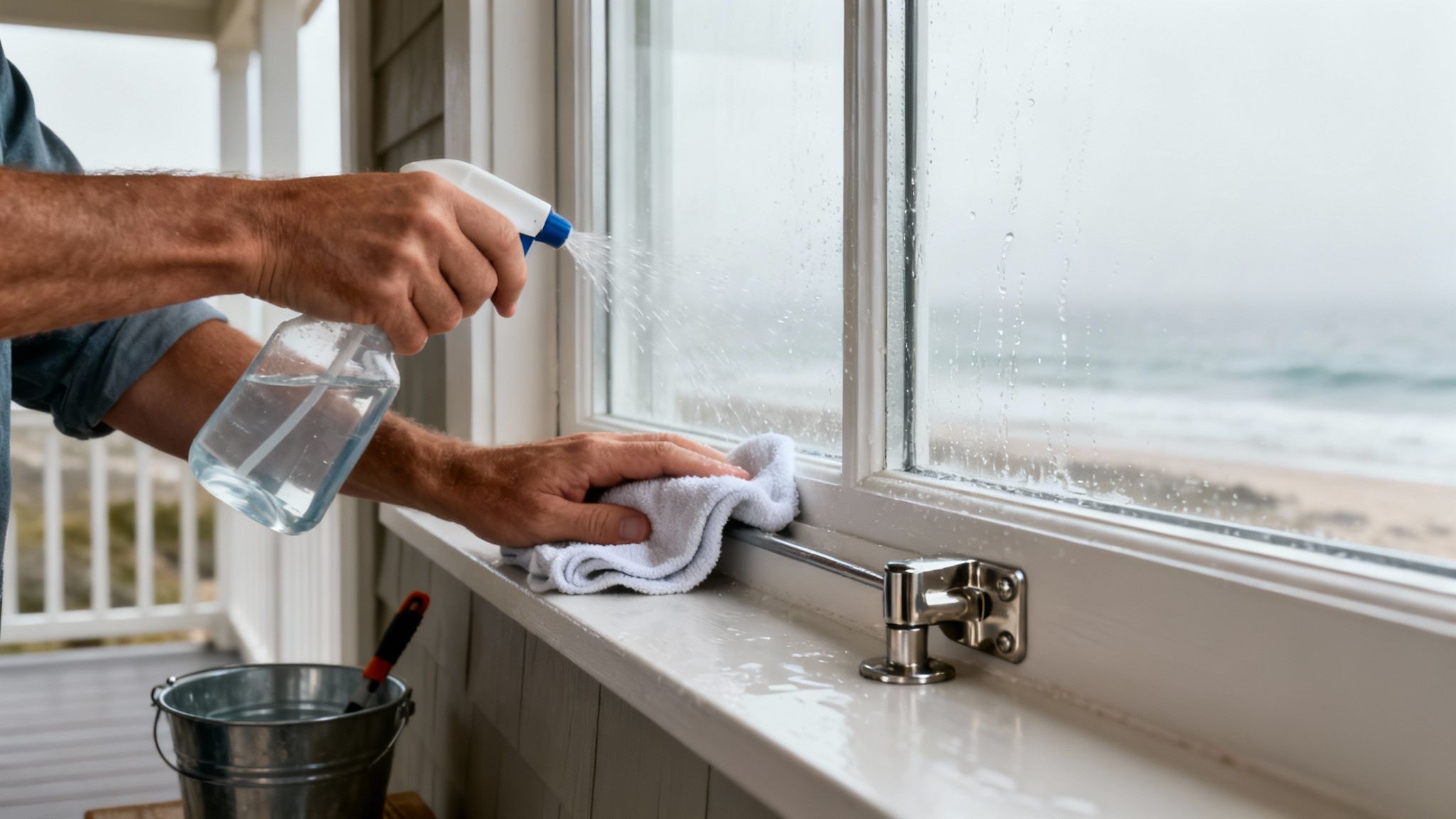
These practical steps are simple and effective. Building these habits is just as important as choosing the right materials.
Your Simple Coastal Window Checklist
Following a simple seasonal checklist can make a big difference. The main goal is to stop corrosive elements from settling on your windows and to catch minor issues early.
Here are a few easy, do-it-yourself tasks:
- Wash Away Salt Deposits: At least twice a year, wash your window frames and glass with fresh water and mild soap. This simple step rinses away the salt film that eats away at the finish.
- Inspect and Clear Weep Holes: Look at the bottom of your exterior window frame. Those little slots are weep holes that let rainwater drain out. Make sure they aren't clogged with dirt or grime.
- Check Your Seals and Caulking: The sealant around your window frame is its first line of defense. Once a season, look for any signs of cracking, peeling, or shrinking.
Keeping an eye on your seals is very important. Understanding proper caulking techniques can greatly improve your window's defense.
Taking just 15-20 minutes each season to run through these checks is a smart way to protect your windows. It’s a small investment of time that pays off by delaying the need for expensive repairs.
By being proactive, homeowners from Carmel to Marina can fight back against the harsh coastal climate.
Frequently Asked Questions About Coastal Windows
Living here in Monterey County, we get a lot of the same great questions from homeowners about their windows. The coastal environment is no joke, so it's smart to be asking. Here are some straightforward answers to help you.
What kind of warranty should I look for with coastal windows?
Read the fine print on the warranty. You need one that specifically covers coastal issues like corrosion on hardware, seal failure, and finish problems caused by sun and salt spray. A good warranty shows the company is confident its product can handle life in places like Marina and Carmel.
Is impact-resistant glass necessary in Monterey County?
While we don't have hurricanes, our Pacific storms bring high winds and flying debris. Impact-resistant glass is your best defense against that. This type of glass is also great at blocking outside noise and offers superior UV protection, which stops your furniture from fading.
How much more do coastal-rated windows cost?
You can expect to invest a bit more for windows built for our coastal climate. Materials like fiberglass frames and corrosion-resistant hardware will run about 15-25% more than standard windows. Think of it as a long-term investment to avoid a costly replacement down the road.
Can strong storms really shorten my window lifespan?
Absolutely. Severe weather is a huge factor. According to industry data, major coastal weather events can slash a window's expected life by 40-60%. A single storm can break a window, and the saltwater exposure can speed up corrosion on surviving windows by as much as 50%. Research on enhanced building standards in harsh climates shows how much of a beating they take.
Why is professional installation so important on the coast?
Proper installation is critical here. A professional installer who knows the Monterey coast will use the right flashing and sealants to create a watertight barrier. This is key to preventing salt and moisture from getting into your walls, which can cause rot and structural damage—a much bigger problem than the window itself.
If you live near the coast, now’s the time to check your windows for signs of damage or corrosion. Reach out to Signature Glass for a free coastal window evaluation and personalized material recommendations for your Monterey County home. Contact Signature Glass and Windows today for a free in-home consultation.
Give us a call today at 831-754-8855 or schedule your consultation online at https://signatureglassandwindows.com.